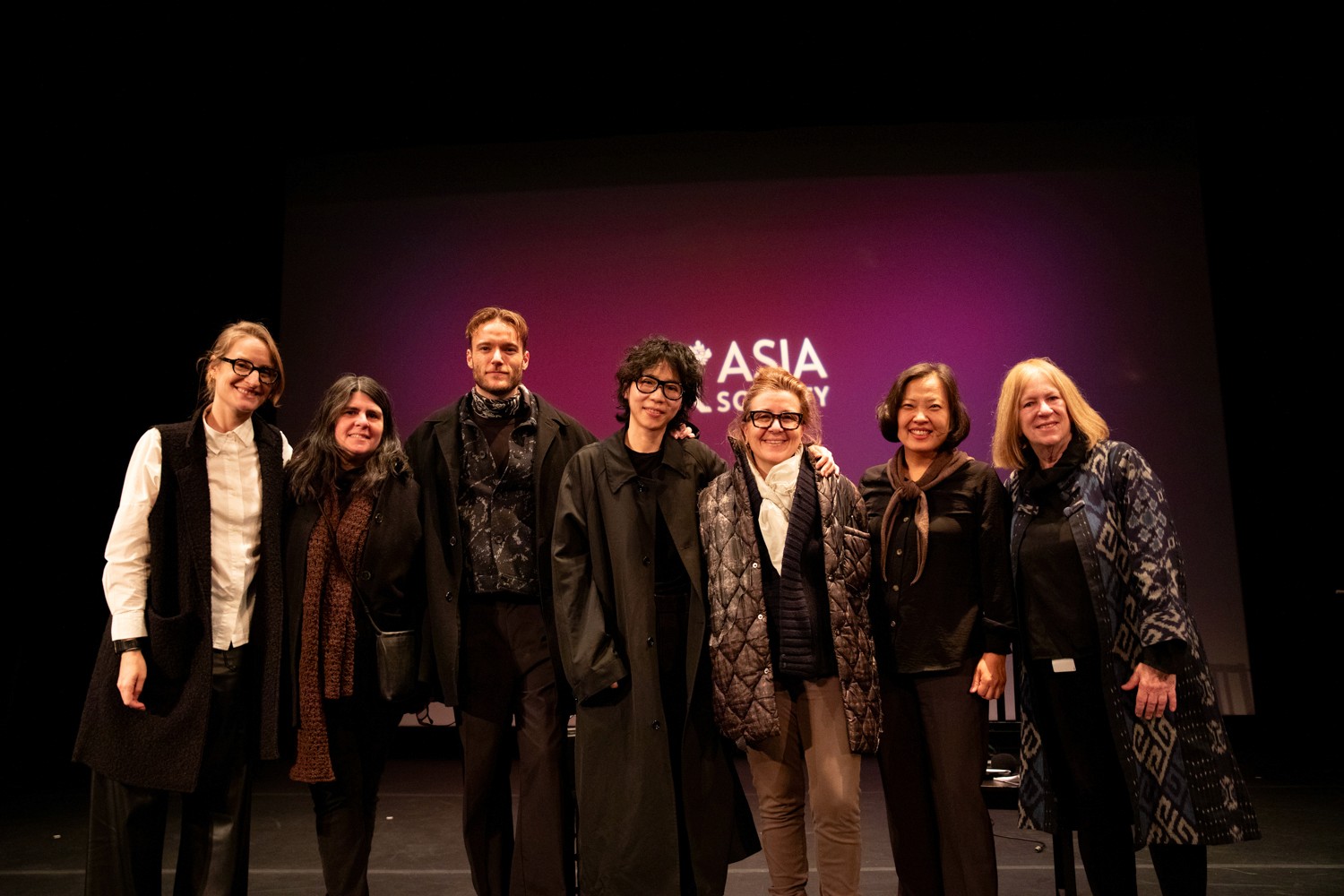
Sojung Jun Reimagines the Nine Tailed Fox at Asia Society
Sojung Jun Reimagines the Nine Tailed Fox at Asia Society

At Asia Society New York, Korean artist Sojung Jun transformed one of East Asia’s most enduring mythical figures into a vessel for memory, displacement, and survival.
Presented as part of Performa 2025, I Do Nine-Tailed Fox unfolded as an opera in nine nonlinear chapters. Set in the speculative year of 2075, the performance brought together live music, film, historical fragments, and Korean narrative traditions to consider what remains when a community is displaced and its stories are scattered across generations.
Rather than treating the nine tailed fox as a figure confined to folklore, Jun approached it as an evolving identity. Traditionally represented as mysterious, deceptive, or threatening, the gumiho survives by altering its form. In Jun’s work, this power of transformation becomes closely aligned with the experience of people who have had to cross borders, adapt to unfamiliar environments, and reconstruct their identities without abandoning the memory of where they came from.
A Myth That Refuses to Disappear
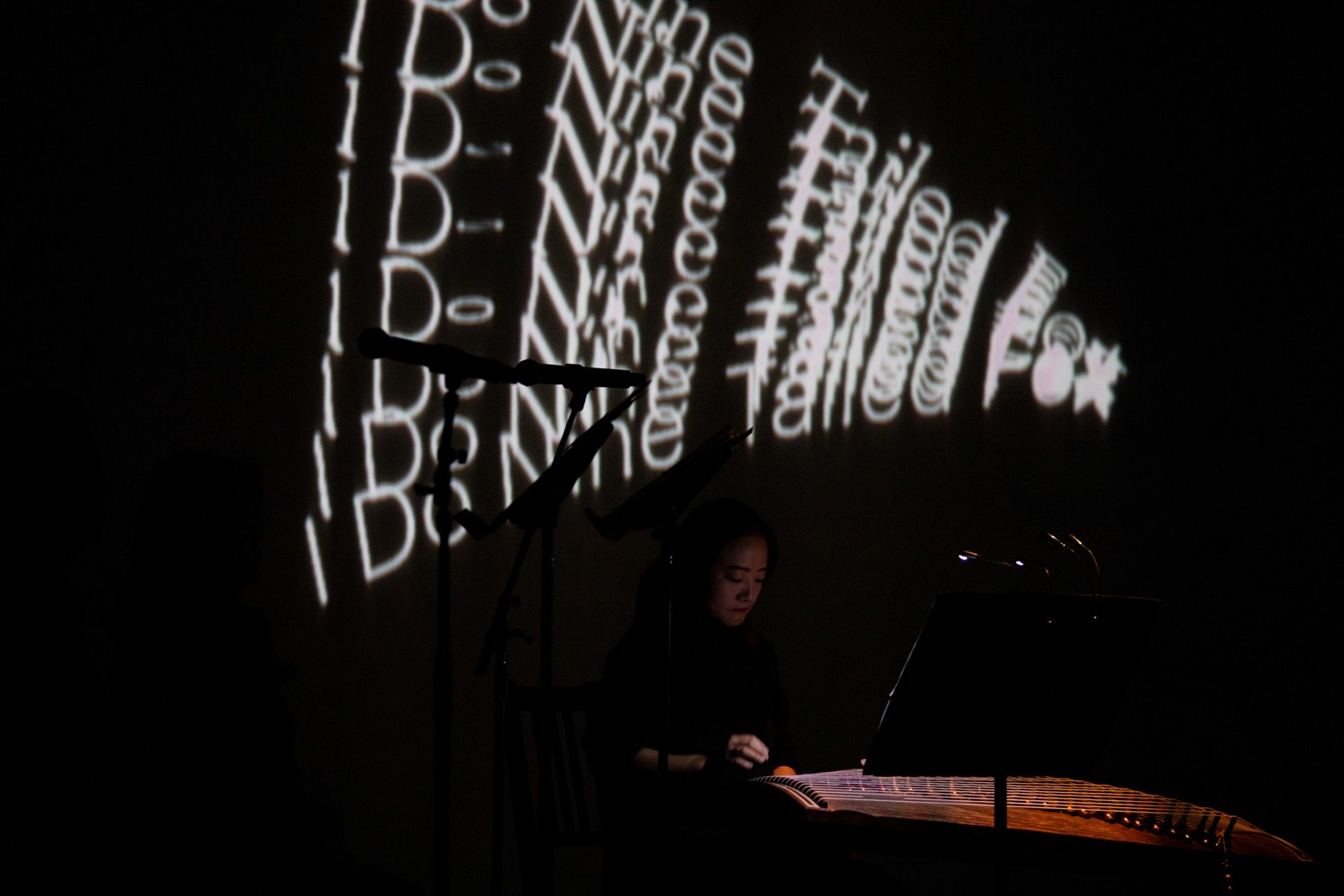
The work draws from the writings of the late Korean poet and archaeologist Heo Su-kyung, whose life and literature often moved between Korea, Germany, ancient civilizations, exile, and longing. Jun places Heo’s poetic imagination alongside the history of the Koryo Saram, ethnic Koreans who were forcibly deported from the Soviet Far East to Central Asia under Joseph Stalin in 1937.
Central to this history is the Koryo Theater. Established in Vladivostok in 1932 as the Soviet Union’s first Korean language theater, the company was relocated to Kazakhstan following the deportation of the Korean community. It continues to exist in Almaty, preserving a cultural lineage shaped by both loss and reinvention.
For Jun, the survival of the theater parallels the gumiho’s ability to shift shape. Both persist not by remaining unchanged, but by responding to unfamiliar political, geographical, and linguistic conditions. The theater becomes more than an institution. It operates as a living archive carried across borders by performers, families, gestures, voices, and inherited memory.
Excavating Sound
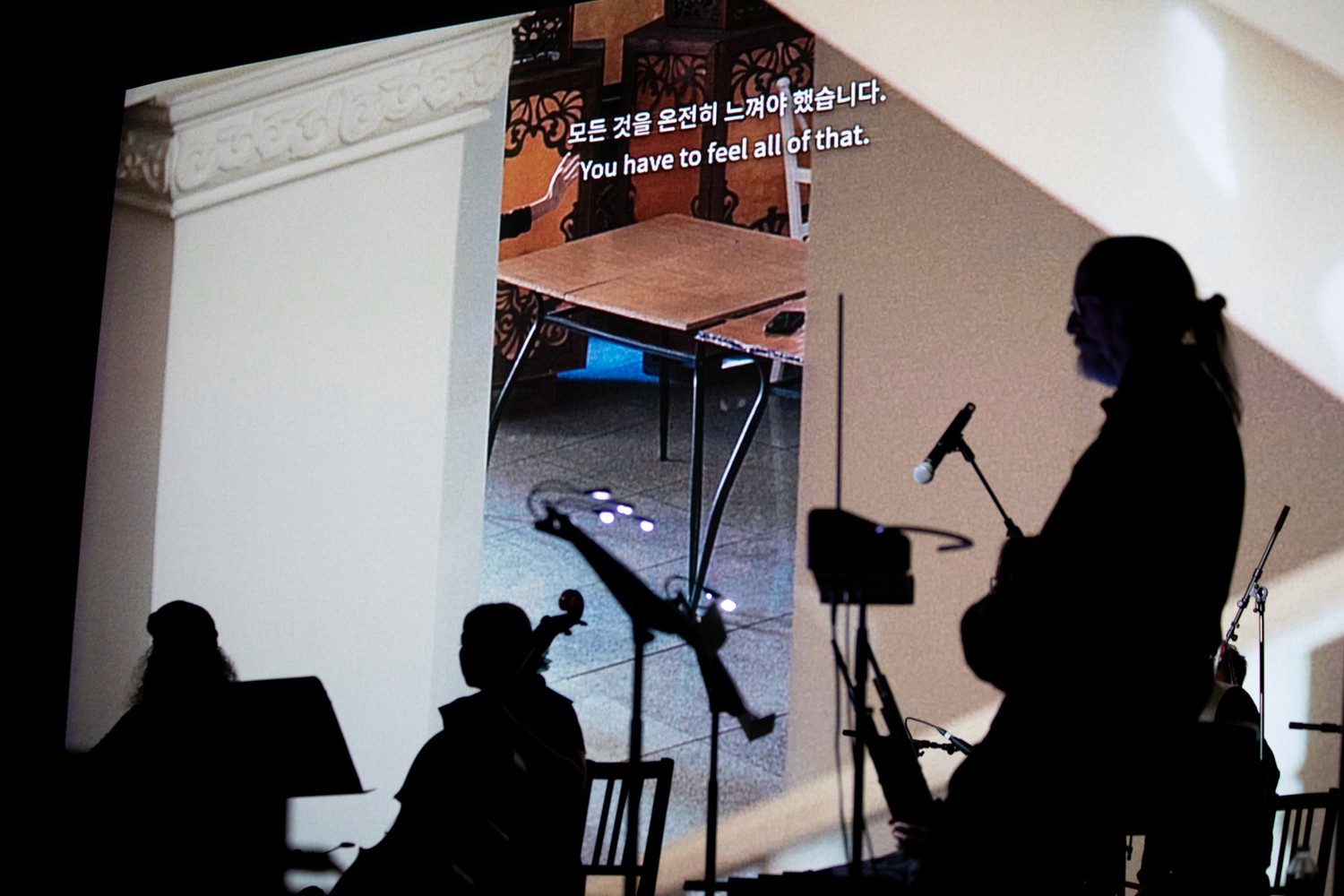
The performance was guided by the figure of a sound archaeologist, an imagined presence excavating voices and fragments from different periods of time. Instead of recovering history as a complete and stable narrative, the work assembled it through echoes, interruptions, and layered sonic encounters.
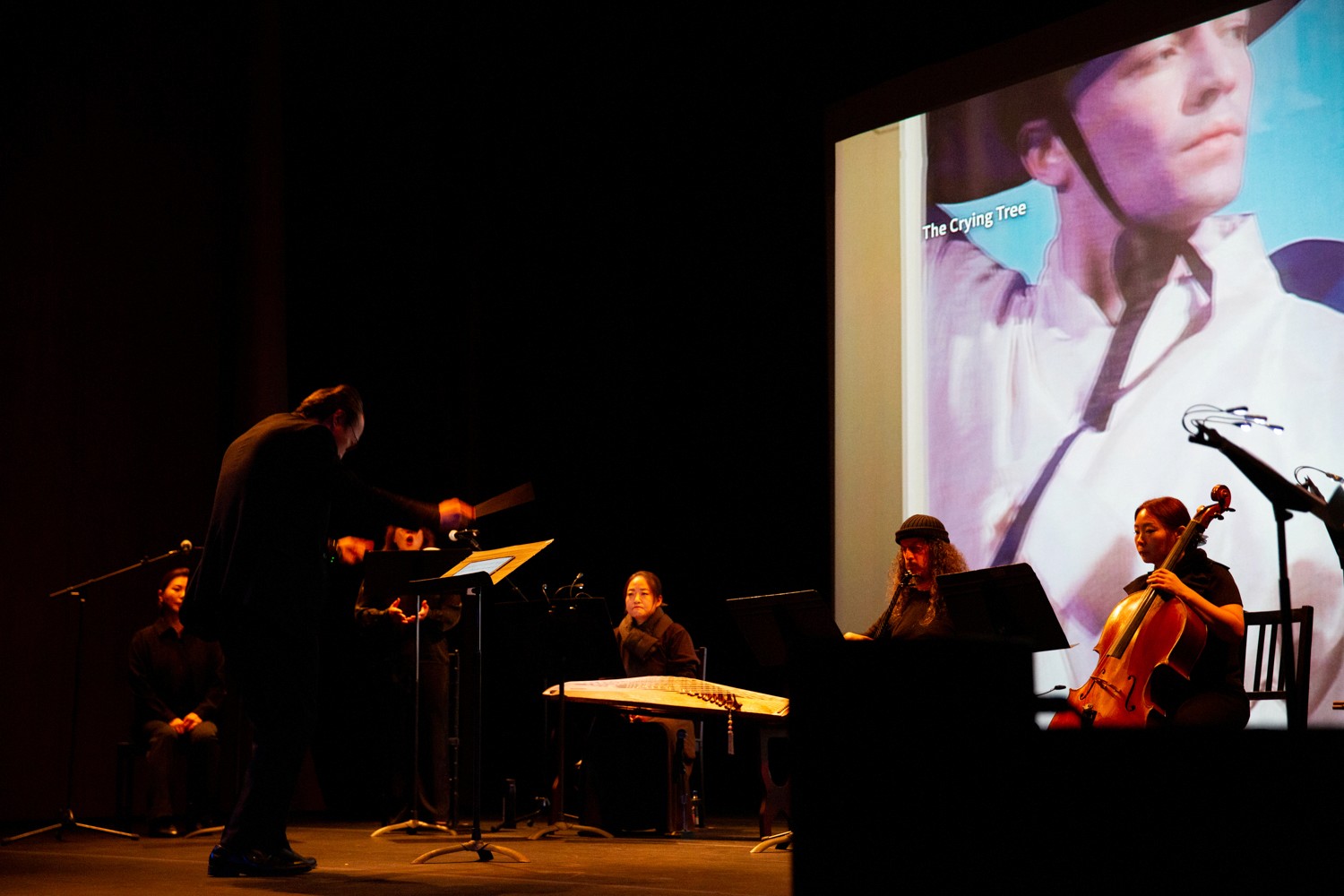
Its musical structure was rooted in pansori, the Korean narrative tradition in which voice, speech, rhythm, and dramatic storytelling are inseparable. Jun expanded this foundation through an ensemble incorporating soprano, saenghwang, gayageum, theremin, cello, Korean percussion, dombra, and a conductor. The result moved between recognizable tradition and unfamiliar resonance, allowing instruments from different musical and geographic histories to coexist on the same stage.
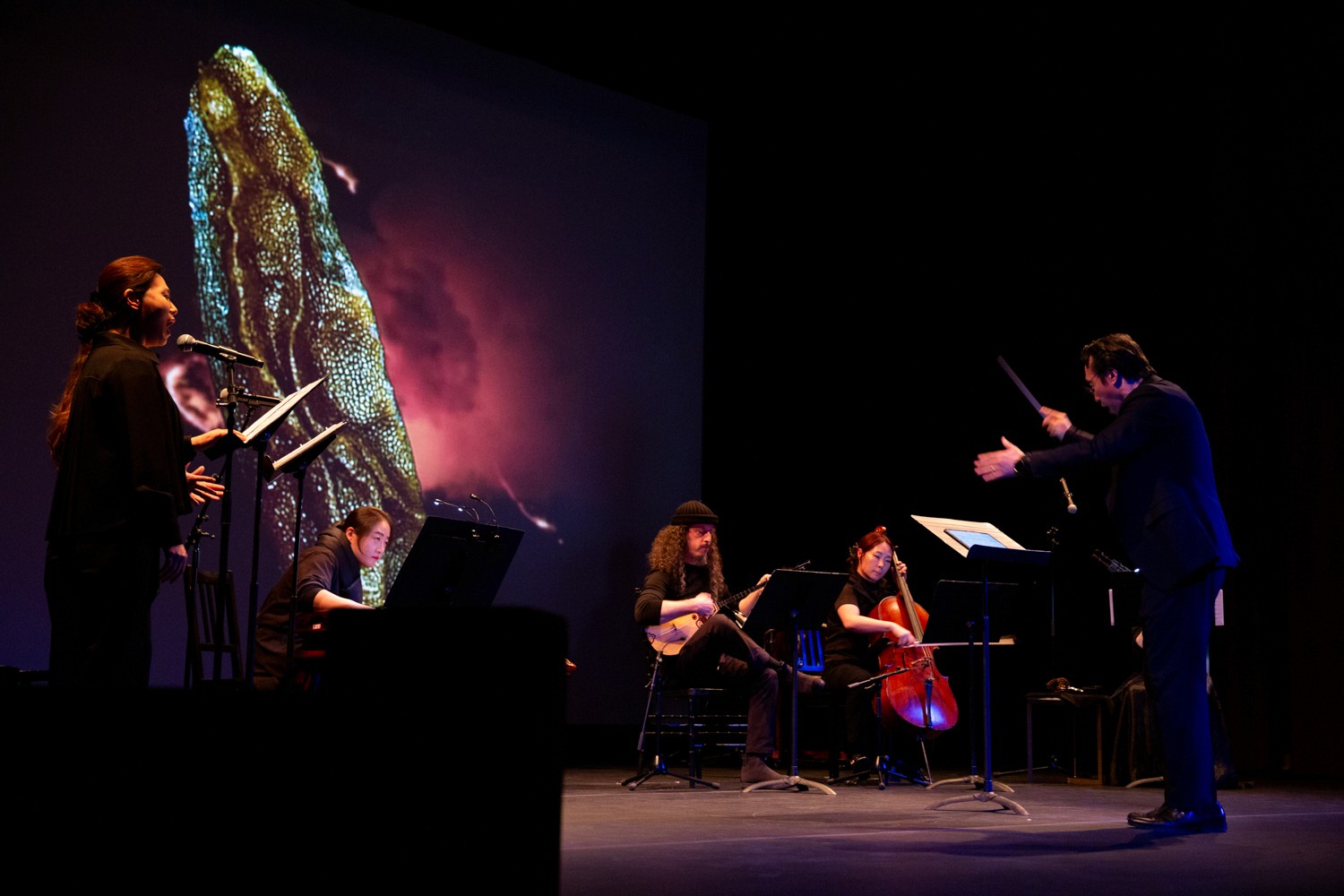
The participating artists included conductor Hana Kim, pansori vocalist Junghee Oh, soprano Jinwon Park, gayageum musician Song Eun Shin, percussionist Woosung Jung, cellist Gloria Kim, theremin performer Rob Schwimmer, dombra performer Geoff Gersh, and saenghwang musician Tsujui Carrie Chin. The music was composed by Soo Jung Shin and Célia Huet.
These sounds did not merely accompany the images. They functioned as historical materials in their own right. A sustained vocal note could suggest a memory stretched across generations. An electronic tone could interrupt the expectation of cultural authenticity. Percussion could evoke ritual while simultaneously destabilizing the timeline of the work.
What emerged was not a reconstruction of a lost homeland, but an acoustic territory in which several homelands, languages, and periods could temporarily inhabit one another.
Women Within the Archive
Film played an equally important role in the performance. A newly commissioned moving image work foregrounded the legacies of women associated with the Koryo Theater, including Kim Rimma, Pen Ekaterina, and Yugay Angelina. Their images represented the matrilineal cultural knowledge maintained within dispersed Koryo Saram communities.
Jun employed artificial intelligence during the film’s scene transitions, allowing images to transform, dissolve, and move between visual states. Yet technology was not presented simply as a symbol of progress. It became a device through which the reliability of the image itself could be questioned.
Archive and invention began to overlap. Historical figures entered speculative landscapes. Faces and settings became unstable. The past was neither restored nor erased, but continuously renegotiated.
Like the nine tailed fox, the film refused a single fixed appearance.
Beyond Folklore
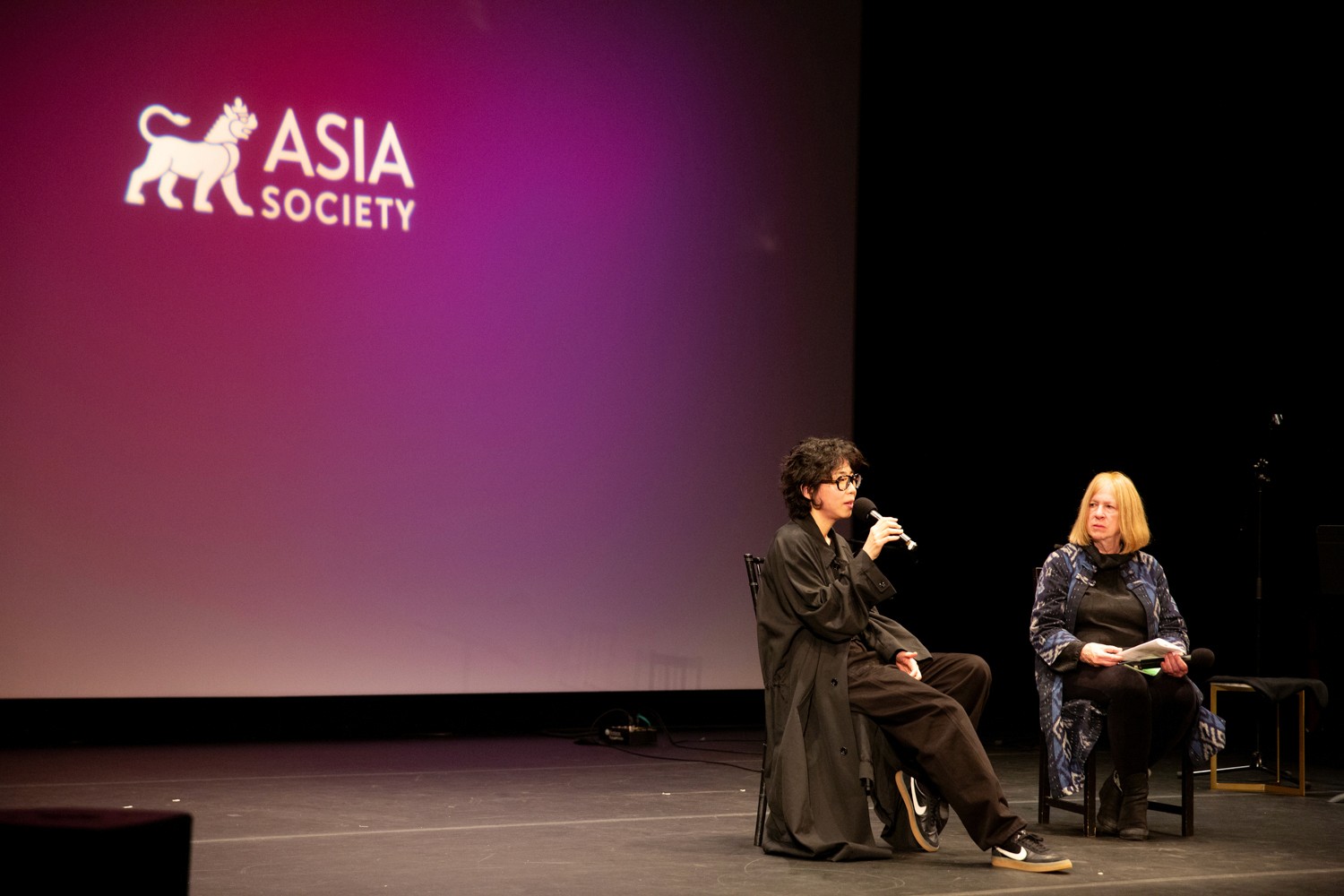
Jun’s practice frequently examines physical and psychological borders, forgotten individuals, political histories, and values that remain invisible within dominant narratives. Working across film, sound, sculpture, writing, and performance, she constructs nonlinear environments in which personal experience intersects with larger historical forces. Her work has been presented by institutions including the National Museum of Modern and Contemporary Art Korea, Seoul Museum of Art, Atelier Hermès, Leeum Museum of Art, Palais de Tokyo, and the Gwangju Biennale.
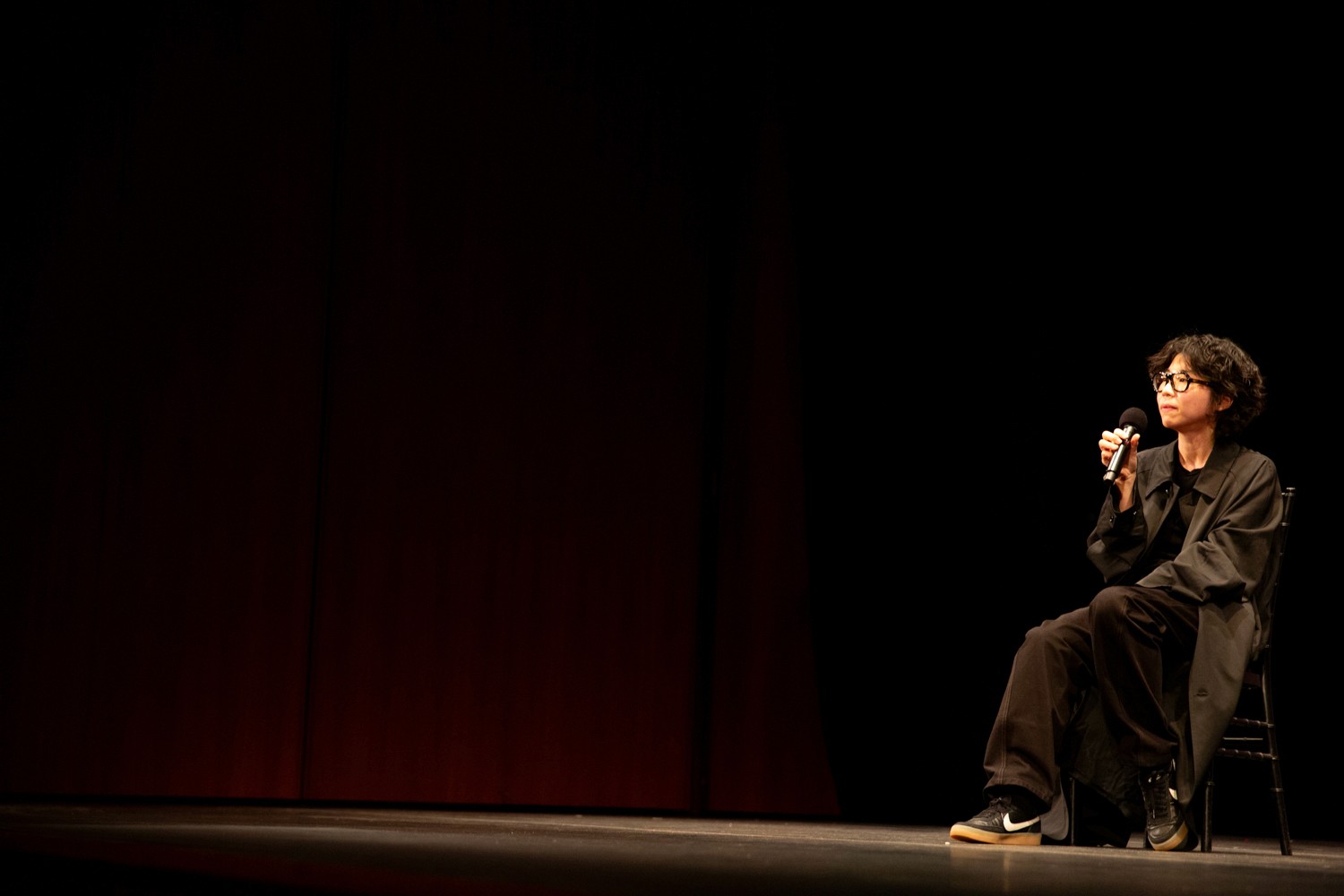
At Asia Society, I Do Nine-Tailed Fox demonstrated how folklore can function as more than cultural inheritance. In Jun’s hands, myth becomes a method of historical inquiry. It provides a language for experiences that cannot be fully contained by official records, geographic borders, or conventional chronology.
The performance did not ask its audience to believe in the nine tailed fox. It asked what the fox might remember.
Across live voices, transformed images, inherited instruments, and interrupted histories, Jun created a world in which survival was not defined by permanence. It was found in the ability to move, adapt, translate, and return in another form.
In this sense, the nine tailed fox was not a creature arriving from the distant past. It was already living among the displaced, the forgotten, and the stories still waiting to be heard.