NYAFF at 25: The People Building Asian Cinema’s Next Chapter
Sanghee Gil
A Festival That Refuses a Single Definition
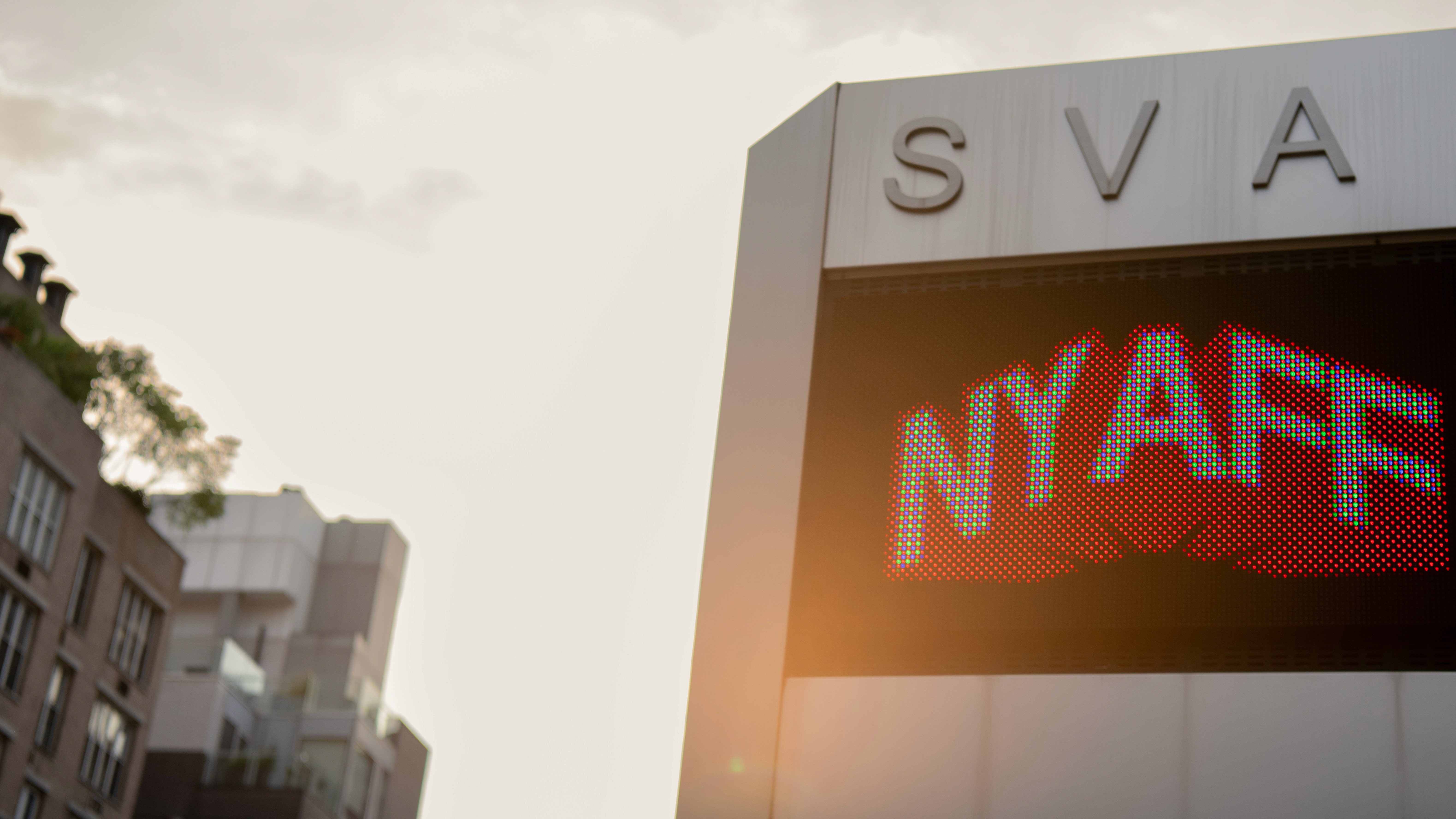
For twenty-five editions, the New York Asian Film Festival has resisted the temptation to define Asian cinema through a single genre, country, generation, or aesthetic.
It has instead built its identity through contrast. Commercial blockbusters appear alongside uncompromising independent films. Restored classics converse with first features. Horror, romance, political memory, queer experience, family drama, animation, and action are presented not as isolated categories, but as interconnected expressions of societies in motion.
Founded in 2002, the festival has grown from a grassroots gathering of Asian film enthusiasts into a major North American platform for contemporary cinema from Asia and its diasporas. Presented in collaboration with Film at Lincoln Center since 2010, NYAFF has established an international reputation for identifying filmmakers before global recognition fully arrives, while continuing to make space for the popular cinema often overlooked by traditional art institutions.
That openness has always been its distinction. NYAFF does not treat Asian cinema as a cultural supplement to the international film calendar. It presents it as a central and continually evolving force within global cinema.
Twenty-Five Years Across New York

The 2026 edition unfolded from July 10 through July 26 across five venues: Film at Lincoln Center, SVA Theatre, IFC Center, Anthology Film Archives, and the Korean Cultural Center New York.
The return to Anthology Film Archives, where the festival began in 2002, and to IFC Center, one of its formative homes, gave the anniversary a sense of return without nostalgia. The festival looked back at its history while remaining firmly directed toward what comes next.
More than 100 films from Asia, the Asian American community, and the wider Asian diaspora were presented during the 17-day program. Admissions surpassed 20,000, representing a 35 percent increase from the previous year and confirming that New York’s appetite for Asian cinema is not temporary or confined to a single national wave.
The numbers were significant, but they were not the entire story. The festival’s growth reflected a deeper cultural shift. Audiences arrived not only for recognizable stars, but for filmmakers, producers, writers, jurors, and newly discovered works that may not yet possess international distribution or global publicity campaigns.
NYAFF’s anniversary edition demonstrated that meaningful film culture can still be built through curiosity.
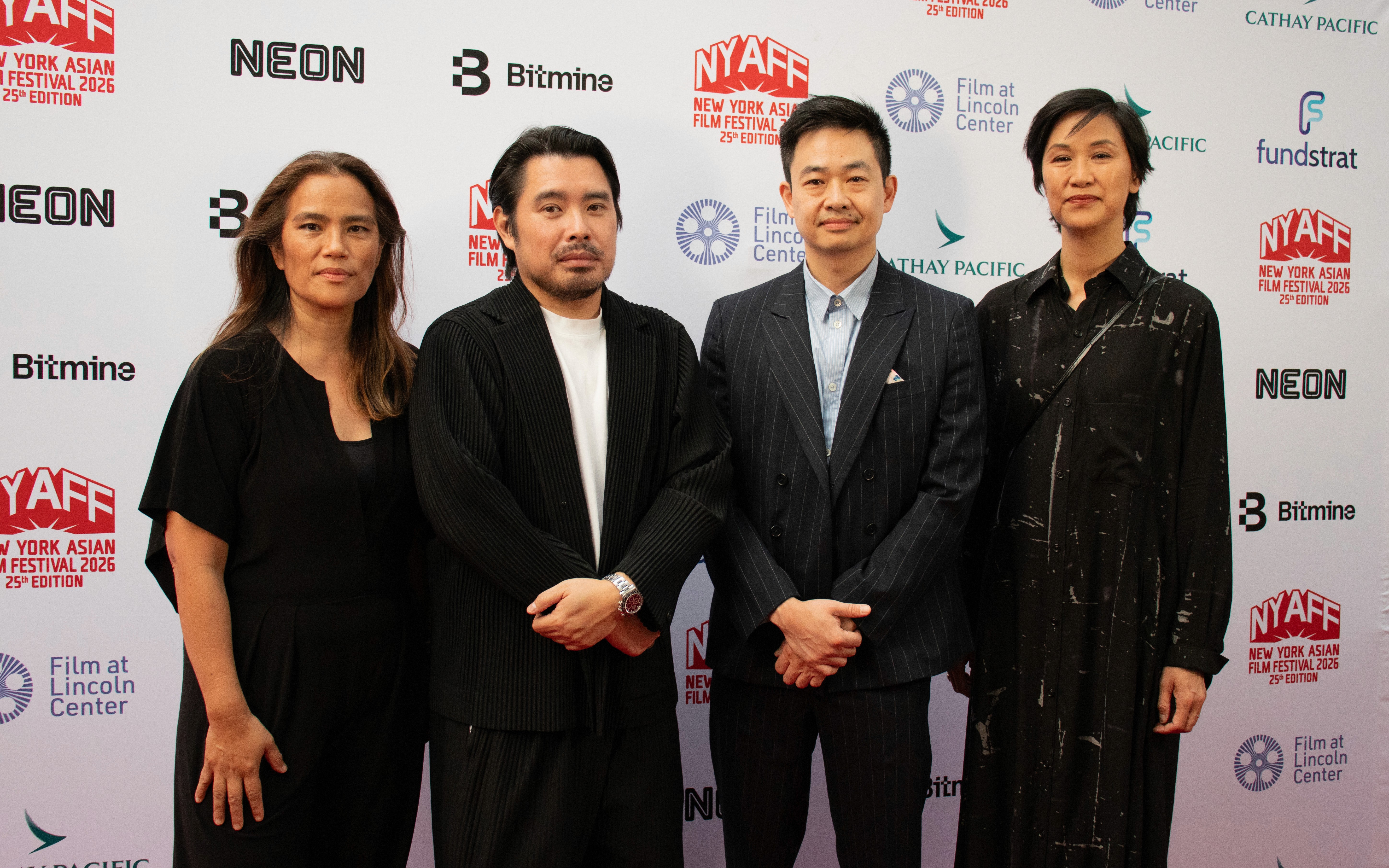
Jurors NYAFF-Diane Paragas & Bao Nguyen & Dan Truong & Cindy Cheung
Opening With a Global Korean Moment
The festival opened with the North American premiere of Yeon Sang-ho’s Colony, following its world premiere in the Midnight Screenings section at Cannes.
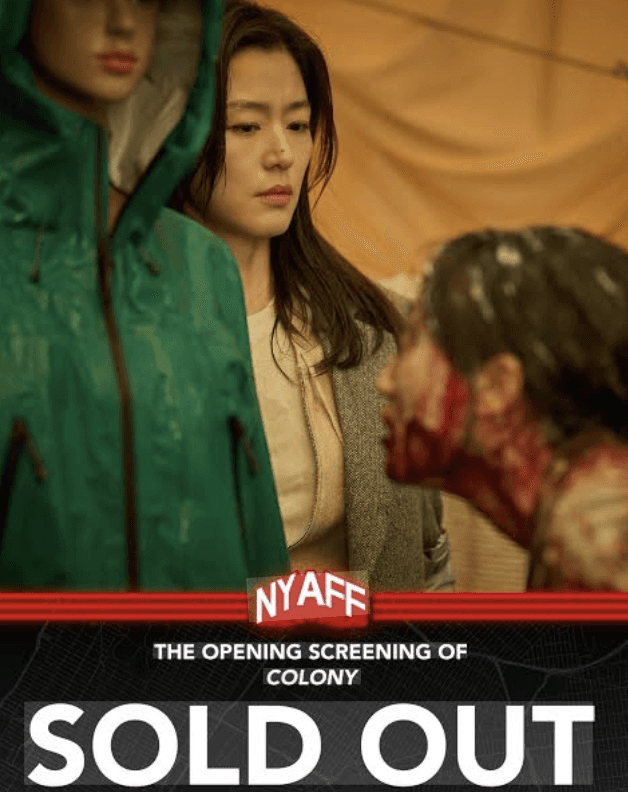
Gianna Jun appeared alongside Yeon for the Opening Night presentation, bringing one of Korean cinema’s most globally recognizable performers to Lincoln Center. The festival also honored Jun with the Extraordinary Star Asia Award and presented a new 4K restoration of My Sassy Girl, the 2001 film that transformed her into an international star.
The combination of Colony and My Sassy Girl captured NYAFF’s broader curatorial method. A major new production was placed in conversation with the film that defined an earlier chapter of Korean popular culture. Rather than treating restoration as an exercise in nostalgia, the festival used the past to illuminate how careers, genres, and national cinemas travel through time.
The anniversary gala further honored Joan Chen with the Star Asia Lifetime Achievement Award. Her career, extending from Chinese cinema to The Last Emperor, Twin Peaks, Lust, Caution, directing, and a new generation of Asian American storytelling, embodied the transnational history that NYAFF has long sought to recognize.
Taiwanese actor Joseph Chang received the Star Asia Award. Hong Kong actor, director, and producer Daniel Wu was presented with the Best from the East Award, while Angela Yuen and Sara Minami received Screen International Rising Star honors.
These awards did more than celebrate celebrity. Together, they formed a map of Asian cinema across languages, industries, and generations.
Restorations, Discoveries, and Expanding Borders
The 2026 program was constructed around movement between discovery and memory.
The 25th Anniversary Rediscoveries series returned to titles connected to the festival’s earliest years, including Shaolin Soccer, You Shoot, I Shoot, Mon-Rak Transistor, Ichi the Killer, and the restored My Sassy Girl. A 10th anniversary presentation of Train to Busan accompanied a wider focus on the cinema of Yeon Sang-ho.
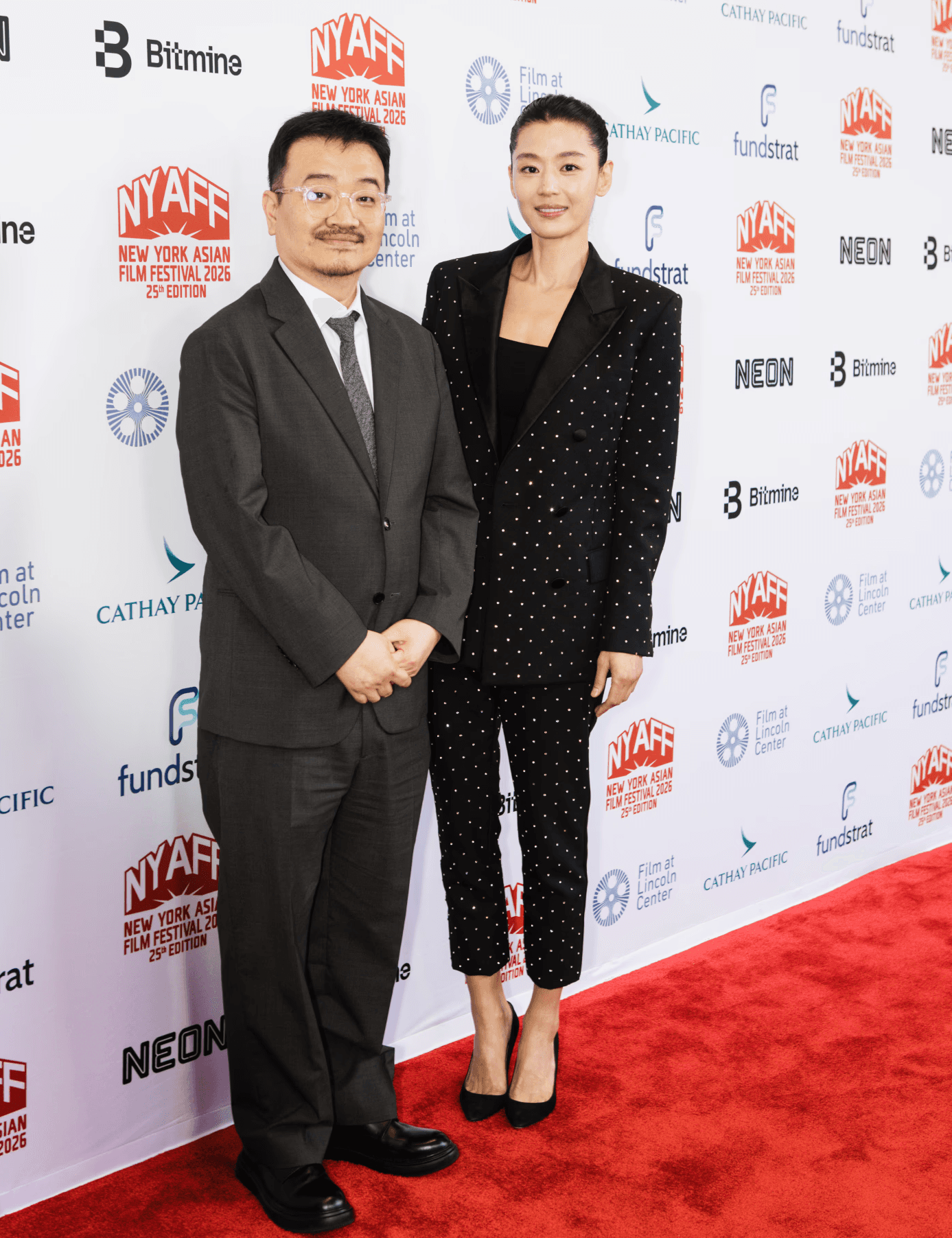
NYAFF_DIR Yeon Sang-ho,Jiana Jun (Actor)_(Colony)
Hong Kong filmmaker Andrew Lau was featured through screenings and a masterclass, connecting new audiences with the visual language and commercial ambition that helped shape modern Hong Kong cinema.

Photo : NYAFF_Li Si Tong (Actor)_(Dear you)
At the same time, NYAFF introduced its first dedicated Spotlight on Vietnam. Films including Leon Le’s Ky Nam Inn, Ham Tran’s Red Thread, Mr. Hero, and Tony Bui’s A Life in Cinema presented Vietnamese filmmaking not as an occasional national showcase, but as a cinema possessing its own histories, formal ambitions, and contemporary voices.
The Queer Unbound program, the Horrorscope selection, the Beyond Borders section, and four short film programs further extended the festival beyond the dominant East Asian industries. The full lineup moved through South Korea, Japan, China, Hong Kong, Taiwan, Thailand, the Philippines, Indonesia, India, Kazakhstan, Vietnam, and diasporic communities across North America and beyond.
In this context, geography became a point of departure rather than a limitation.
The Films That Carried the Awards
The festival’s principal competition, the Uncaged Award for Best Feature Film, was presented to Taichi Kimura’s Japanese drama Fujiko.
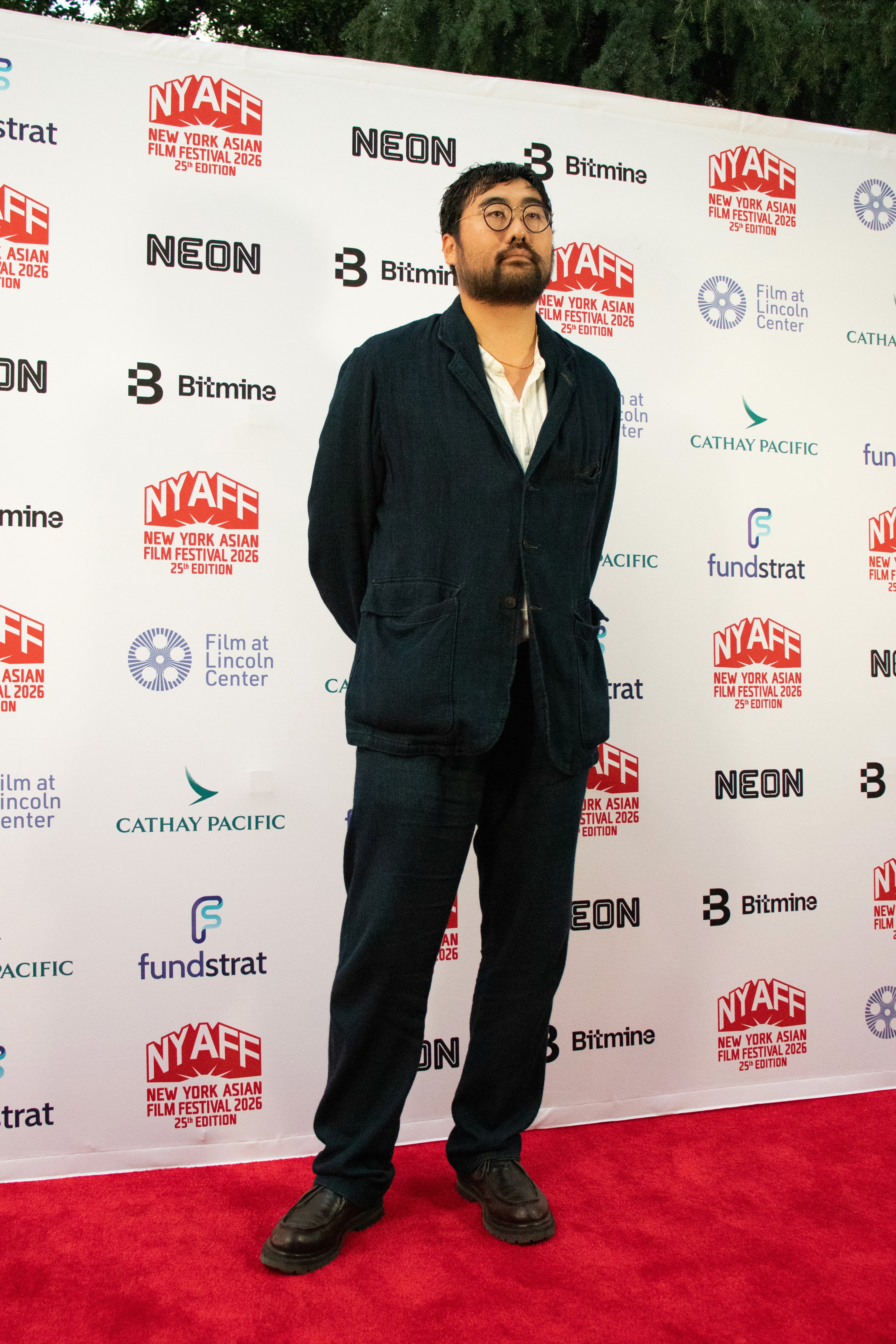
Set against the expectations placed upon women in 1970s Japan, the film follows an imperfect and determined mother through an expressive combination of live action, animation, color, and music. The jury recognized its visual confidence and its refusal to simplify a complicated woman into an easily admired heroine.
Kazakh filmmaker Adilkhan Yerzhanov received a Special Jury Mention for Turgaud, praised for its forceful visual storytelling, dark humor, and distinctive portrait of Kazakhstan.
The Audience Award went to veteran South Korean filmmaker Chung Ji-young’s My Name. The film connects the experiences of a teenager confronting violence and shame with his mother’s suppressed memories of the Jeju 4.3 tragedy. Its reception suggested that historical trauma can reach international audiences most powerfully when it is allowed to remain personal, unresolved, and human.
The Closing Night film Dear You, directed by Lan Hongchun, and Xiaodan He’s Montreal, My Beautiful, starring Joan Chen, were named Audience Award runners-up.
Within the shorts competition, Hao Zhou’s Correct Me If I’m Wrong received Best Short Film. Cami Kwan’s stop motion work Paper Daughter and Yijian Shan’s Si Shui (Still Water) received Special Jury Mentions.
The awards reflected no single aesthetic. Their subjects ranged from motherhood and identity to queer family conflict, immigration, grief, political memory, and national history. What united them was not style, but an insistence that cinema can hold contradictions without resolving them too easily.
Na Hong-jin and the Scale of Expectation
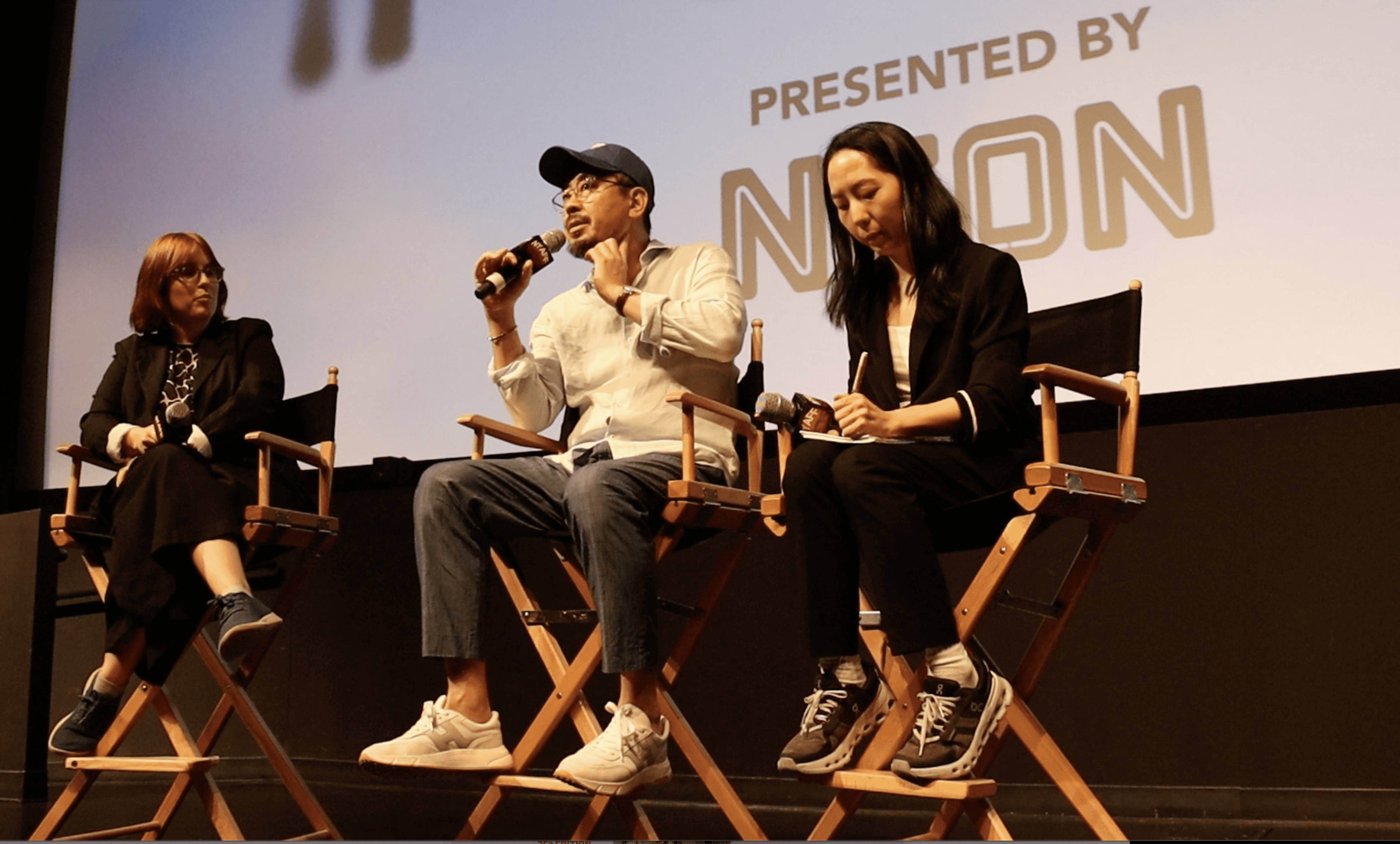
One of the festival’s most anticipated events was the North American premiere of Na Hong-jin’s Hope, presented as the 2026 Centerpiece by NEON.
Na received the Daniel A. Craft Award for Excellence in Action Cinema, joining an honor associated with filmmakers whose command of action extends beyond physical spectacle. In Na’s films, movement is never merely decorative. It becomes fear, moral instability, social pressure, and the increasingly desperate attempt to survive forces that cannot be fully understood.

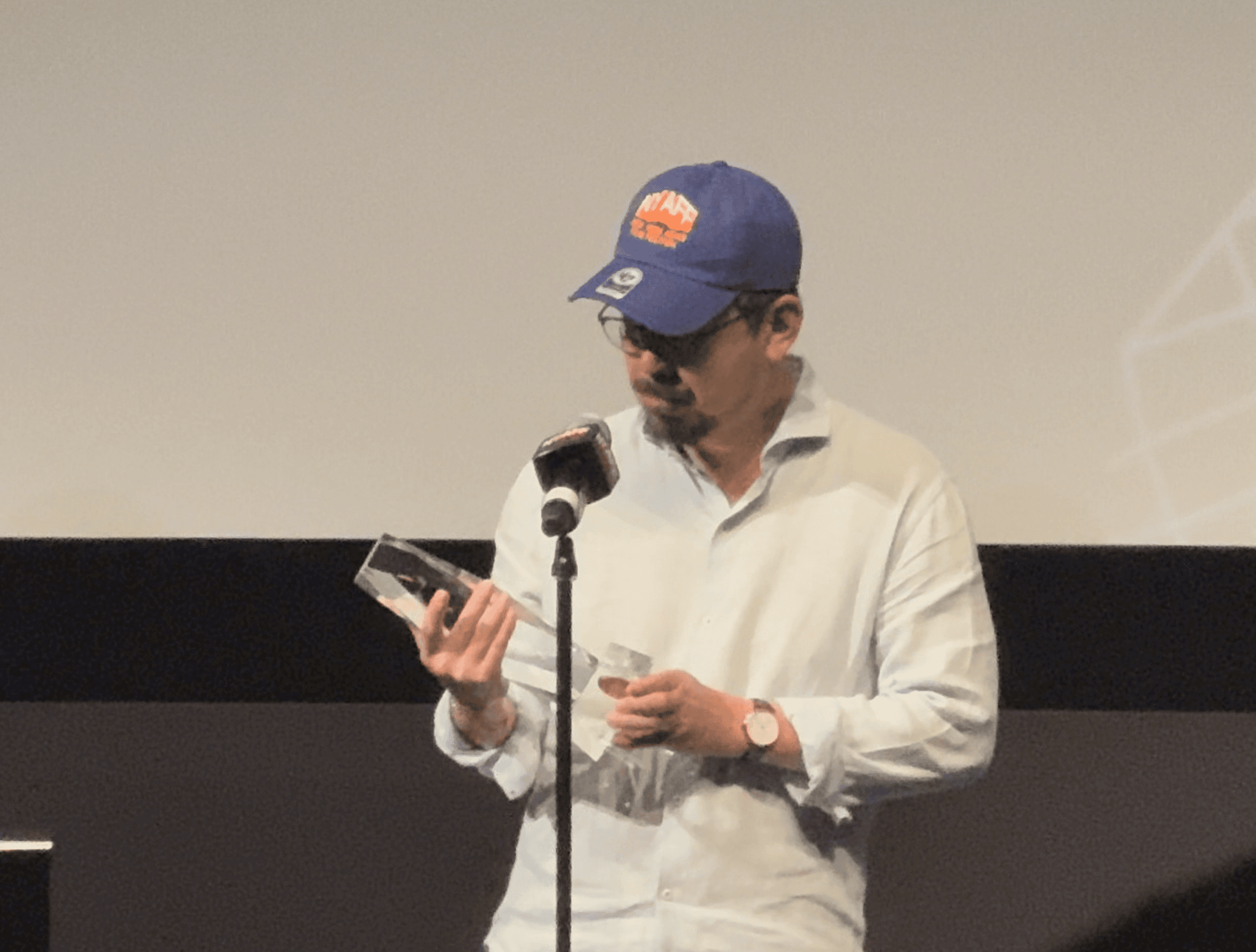
The presentation of Hope alongside retrospective screenings of The Chaser, The Yellow Sea, and The Wailing allowed audiences to view the new work not as an isolated event, but within the evolution of one of contemporary Korean cinema’s most uncompromising filmmakers.
Closing Night and the People Behind the Frame
The festival concluded at SVA Theatre with the sold out North American premiere of Dear You. Director Lan Hongchun appeared with actors Li Sitong and Wang Yantong and producer Zheng Xuanxuan, bringing the 17-day edition to its final presentation.
Yet the most revealing aspect of the Closing Night red carpet was not simply the arrival of another cast.
Directors stood beside producers. Jurors crossed paths with programmers. Established filmmakers shared the same space as artists presenting their first or second feature. The carpet became a portrait of cinema as collective labor.
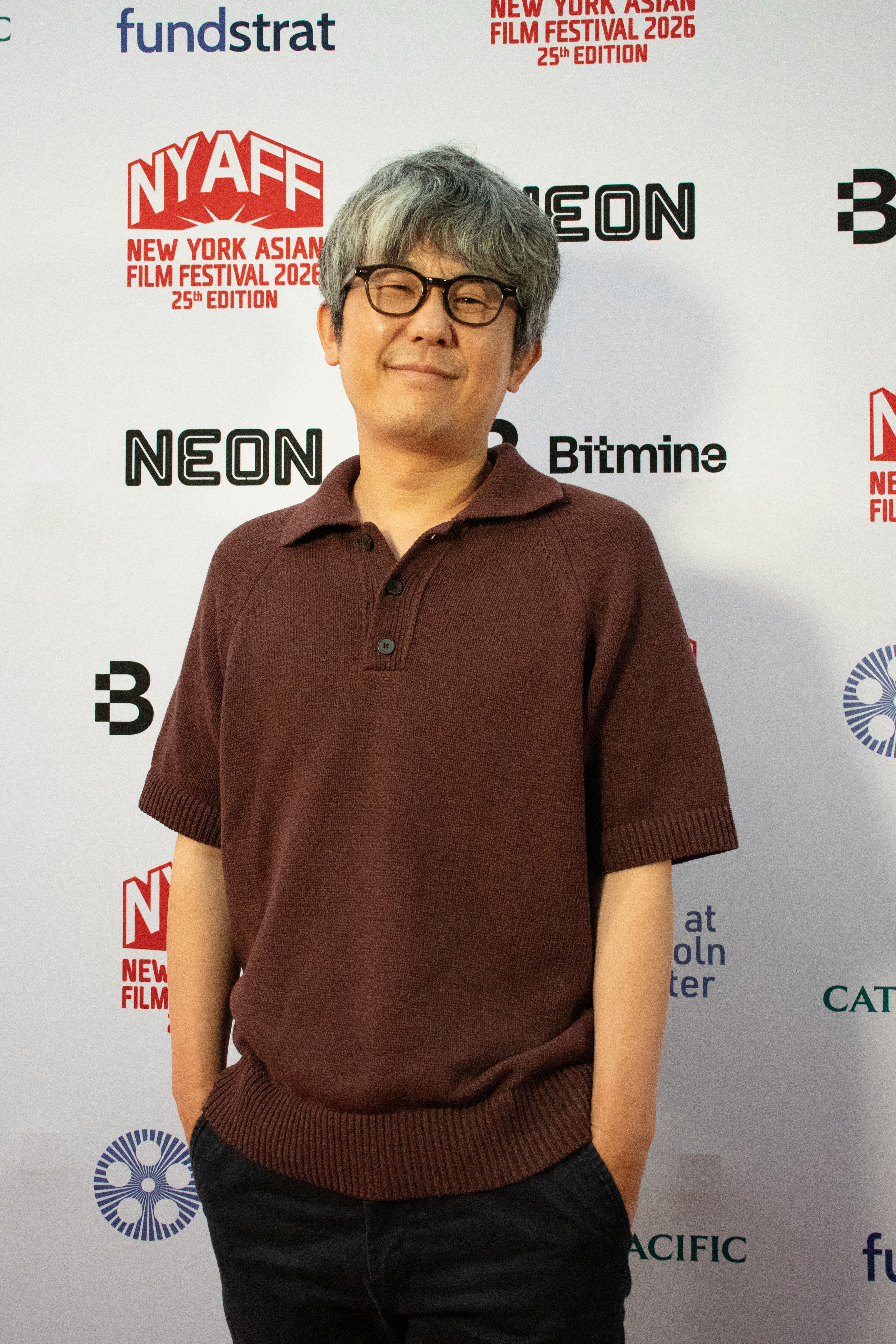
NYAFF-DIR.Kim Jong-kwan
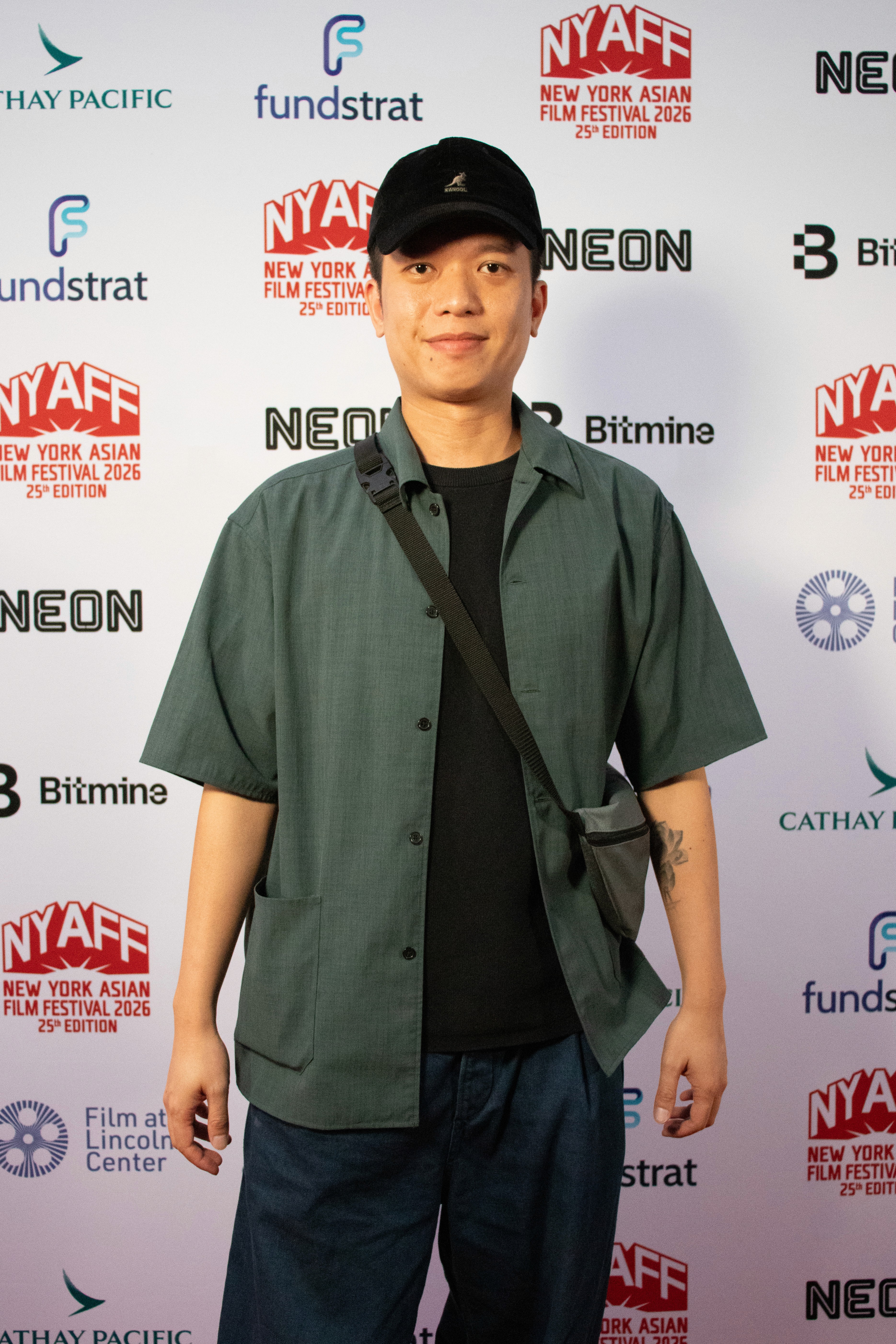
NYAFF_DIR. Chao Koi Wang
Brunch Magazine’s Closing Night photographs turn toward these figures.
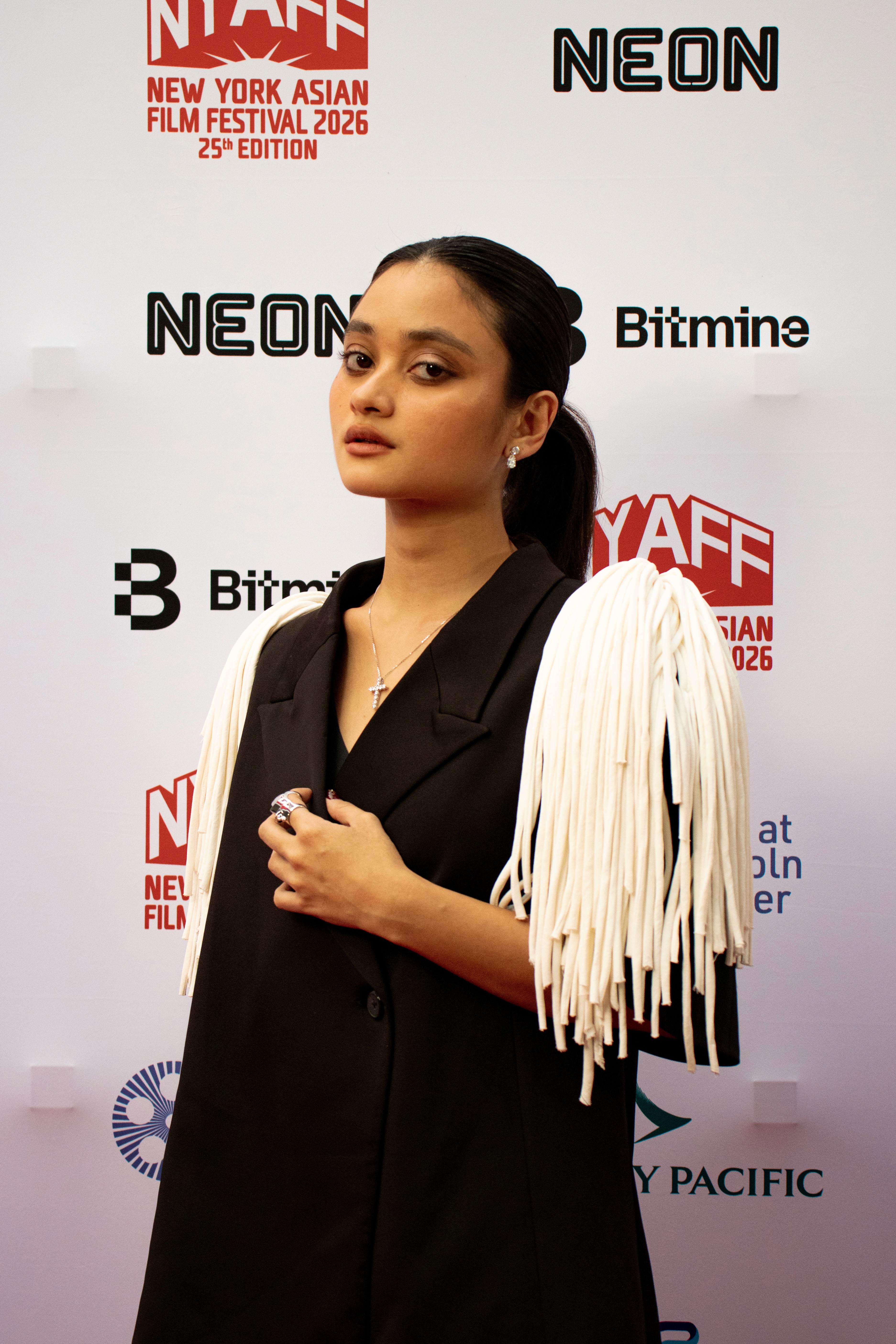
NYAFF_ Agapito's Hooshmand (Actor)
Film culture is frequently narrated through actors and singular auteurs, but every completed film is also the result of less visible acts of conviction. Producers protect ideas before they become financially or practically possible. Programmers create the context in which unfamiliar work can be encountered. Festival teams negotiate the distances between countries, languages, industries, and audiences.
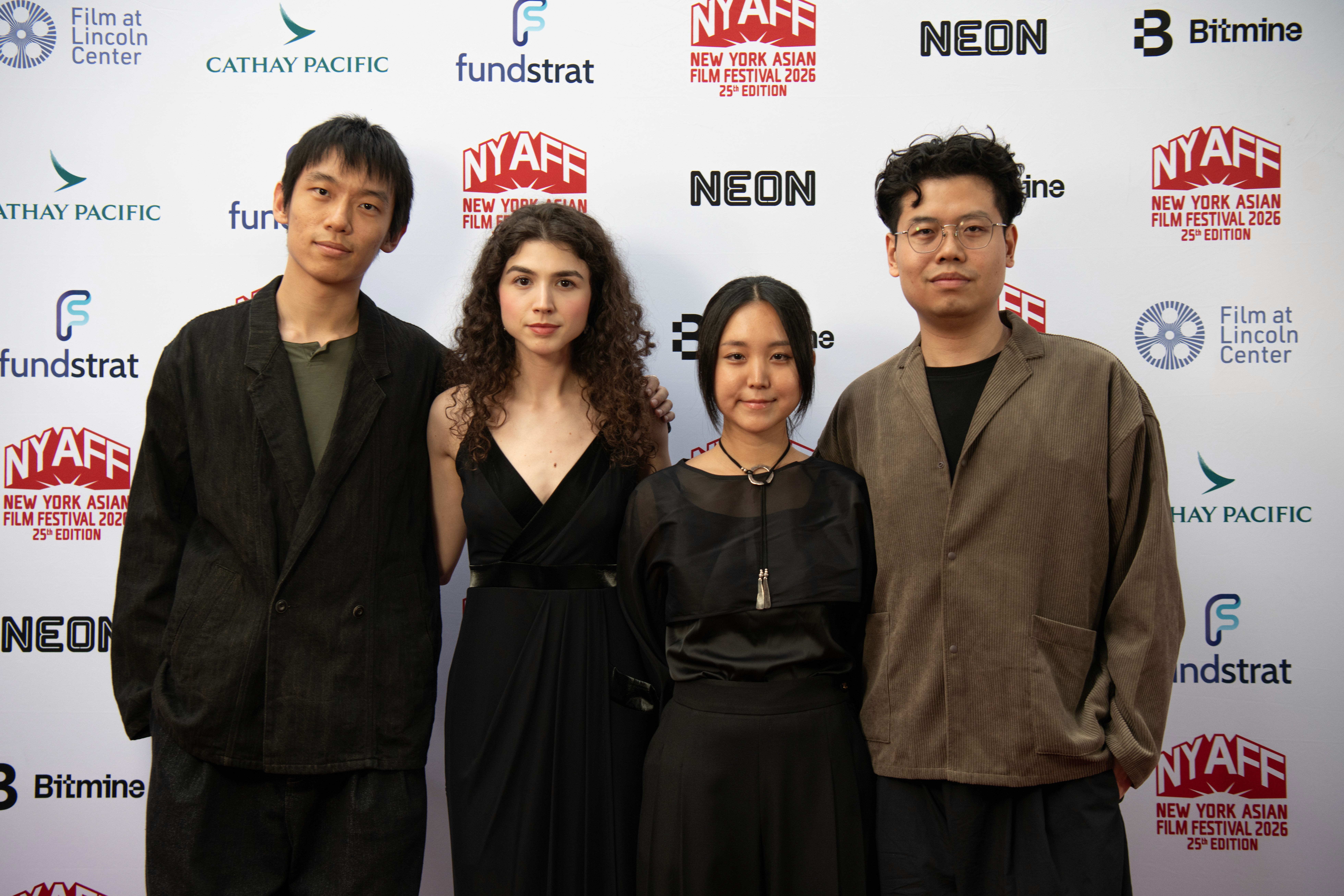
NYAFF_DIR. Yan Kunao & Tonghuan Zhao & Maria Müller & Sanho Kang
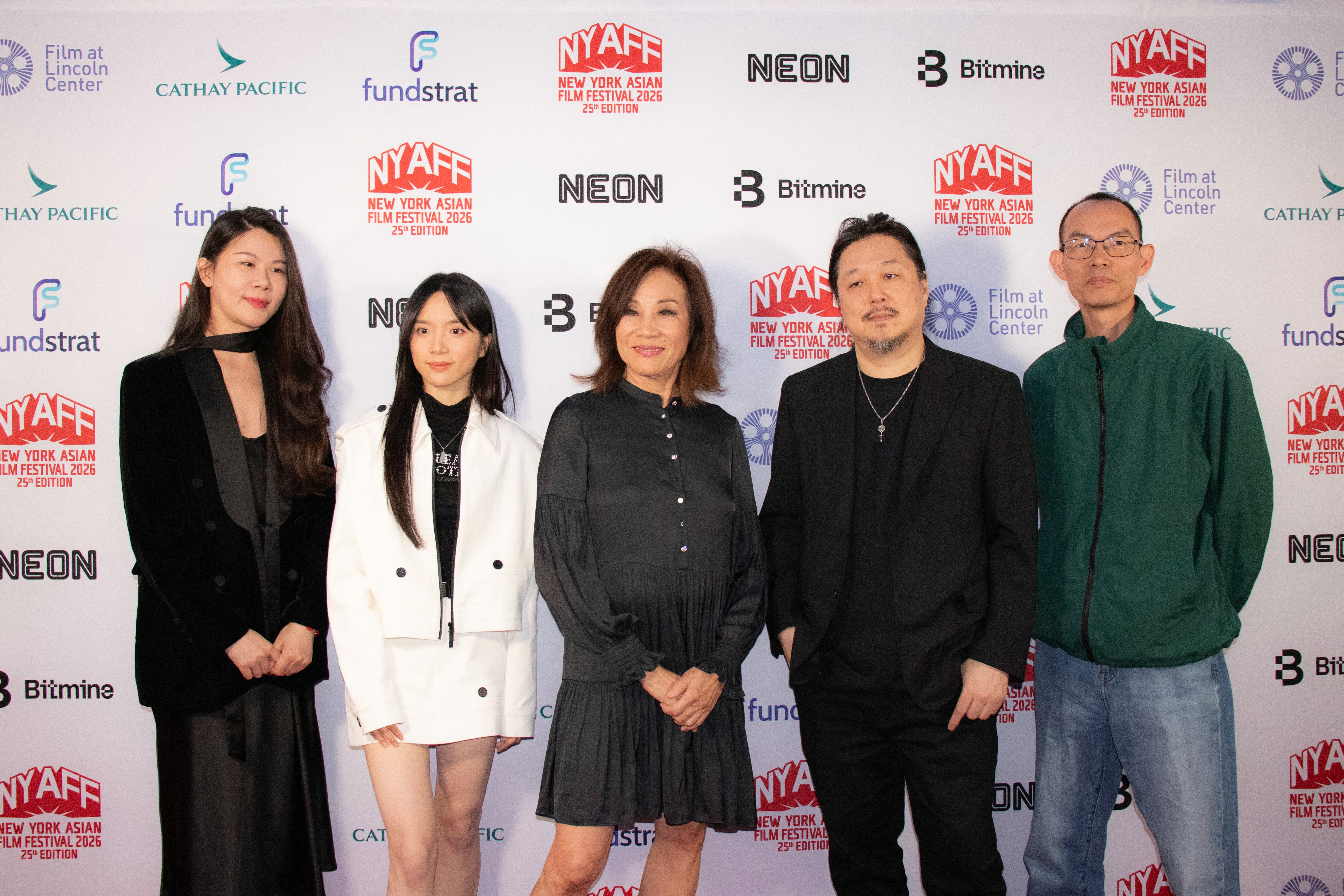
NYAFF_Zheng Xuanxua & Li Si Tong & Janet Yang & Samuel Jamier & DIR. Lang Hong Chun
Their presence on the final red carpet was not secondary to the festival’s story. It was the story.
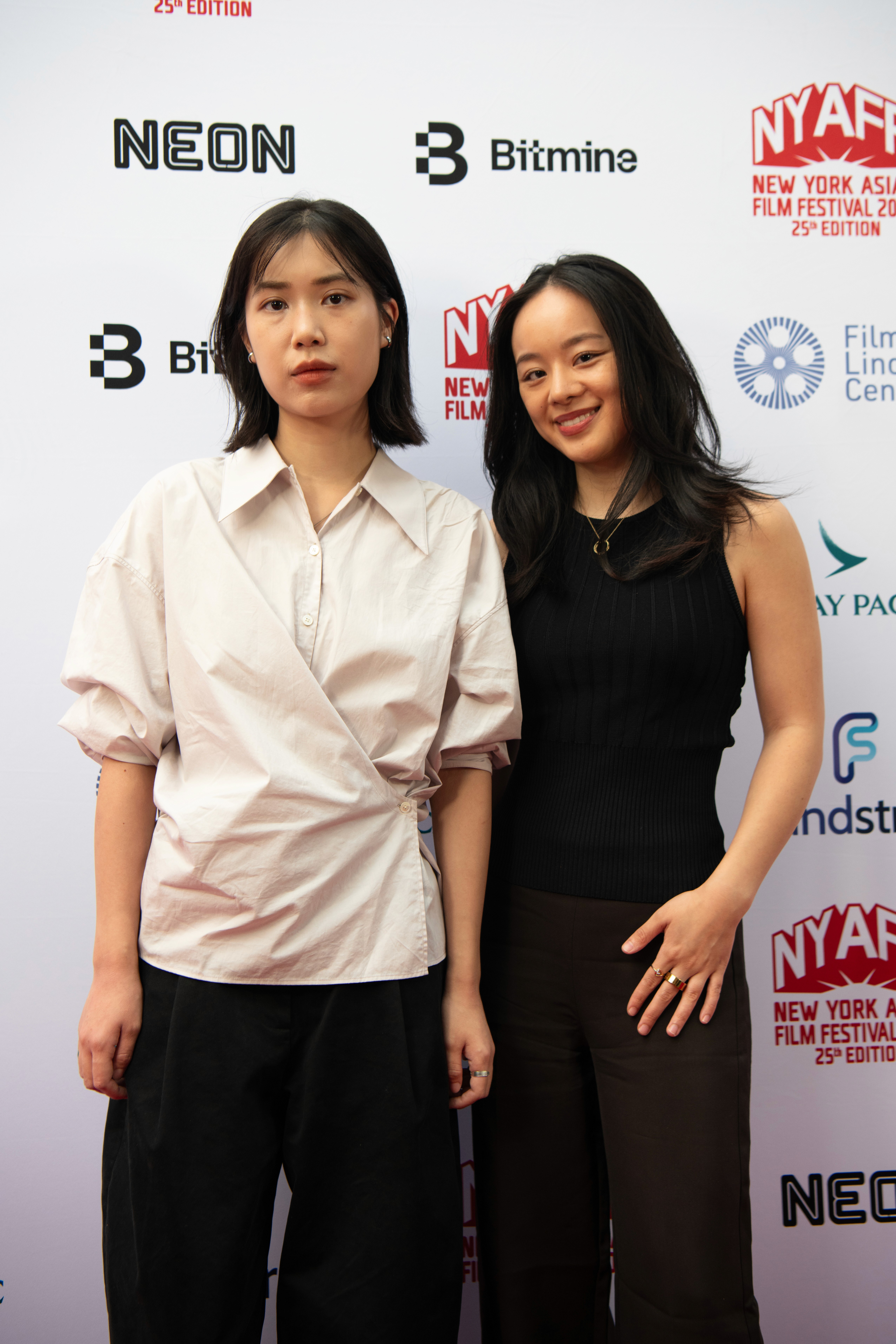
NYAFF_Yijian Shan & Eloise NG
What the 25th Edition Revealed
NYAFF entered its anniversary year at a moment when “Asian cinema” has become an increasingly powerful commercial and cultural phrase. Streaming platforms, international distributors, fashion houses, and global festivals now look toward Asia with unprecedented attention.
Visibility, however, does not automatically produce understanding.
The value of NYAFF lies in its refusal to reduce that visibility to a few internationally familiar industries or personalities. Its programming argues that Asian cinema is not a trend awaiting Western validation. It is a vast and internally diverse cinematic landscape shaped by different political histories, languages, markets, memories, and forms of imagination.
At twenty-five, the festival’s most important achievement may not be its longevity. It is the community of attention it has built around films that might otherwise remain separated by borders and distribution systems.
A festival ultimately survives not because it preserves a fixed identity, but because it continues to ask what cinema is becoming.
In 2026, NYAFF answered with more than one hundred possibilities.
© 2026 Brunch Magazine. All rights reserved. Unauthorized reproduction, distribution, publication, or use of any text or photographs is strictly prohibited and may result in legal action.
