BECOMING: Where Memory Learns to Move
Sanghee Gil
BECOMING: Where Memory Learns to Move

At Palazzo Isimbardi, the brightest presence in the courtyard did not behave like an object.
It appeared to inhale.
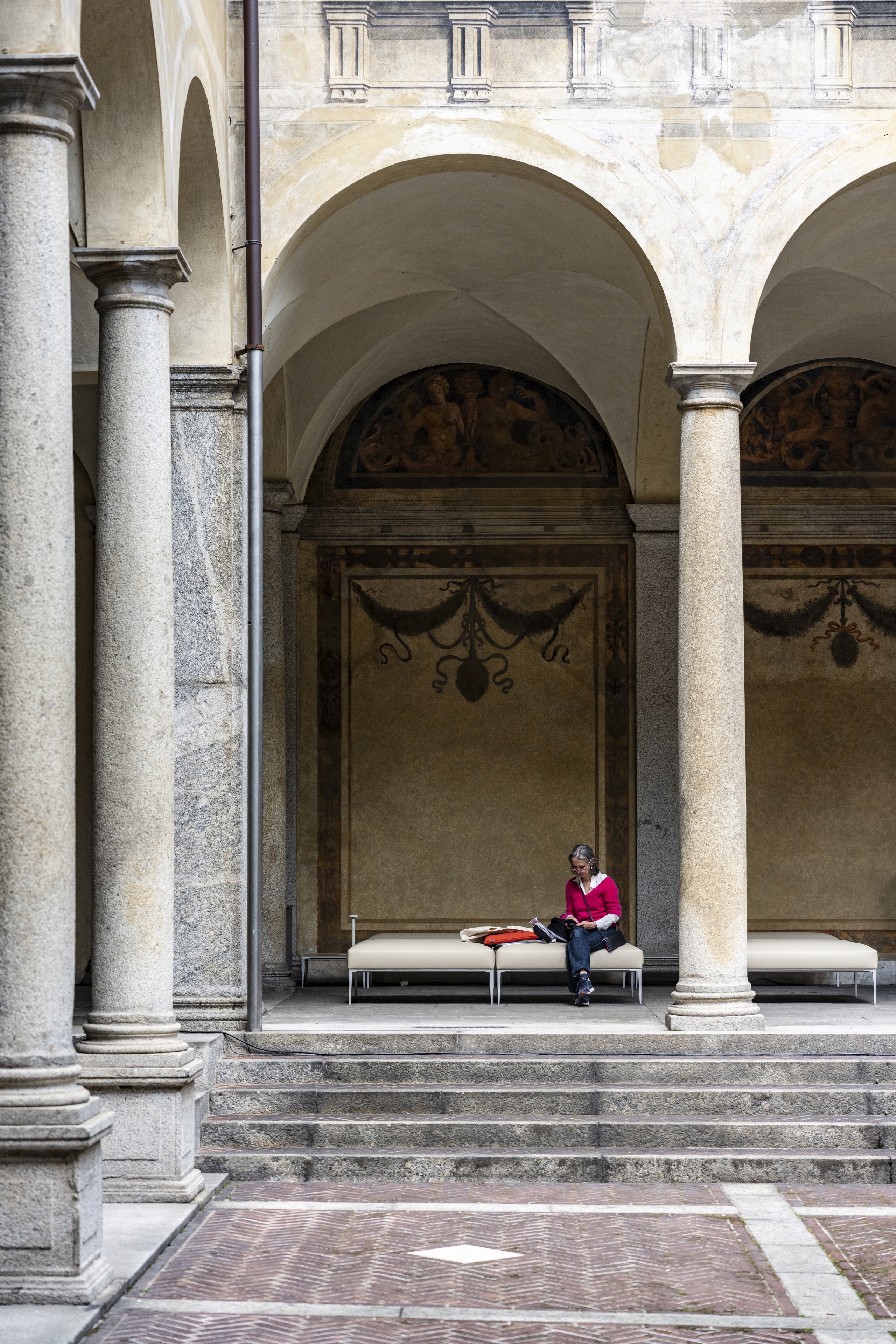
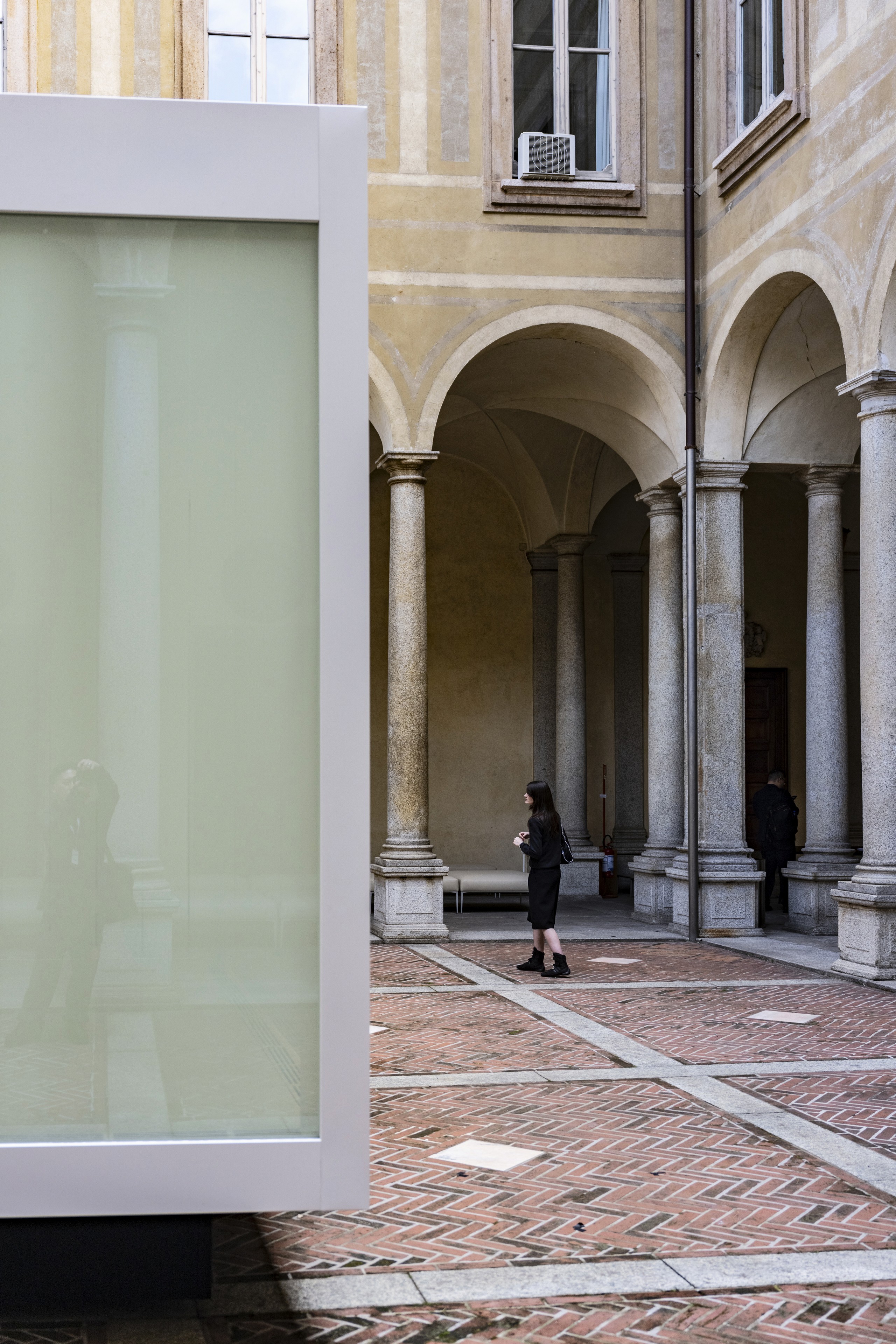
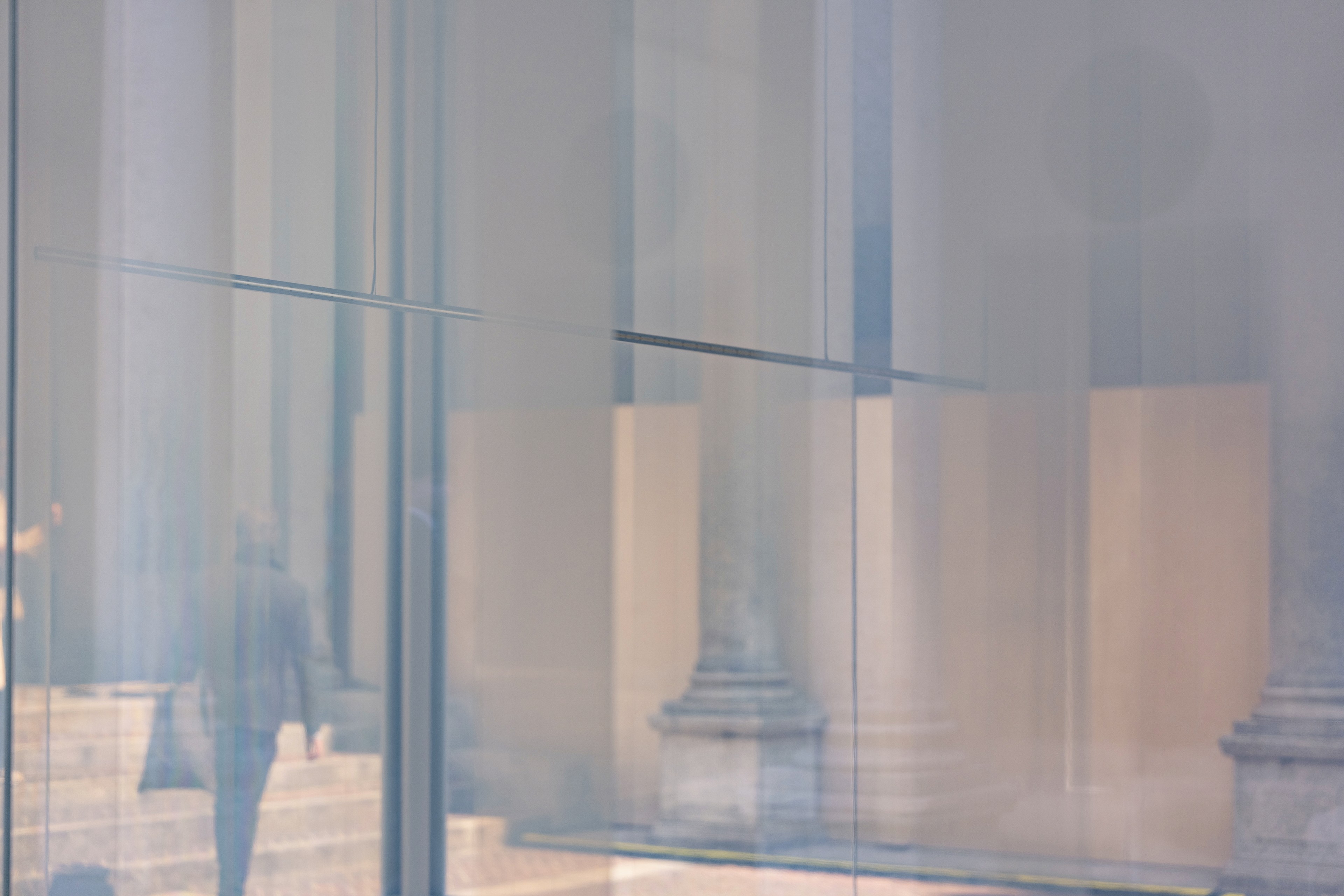
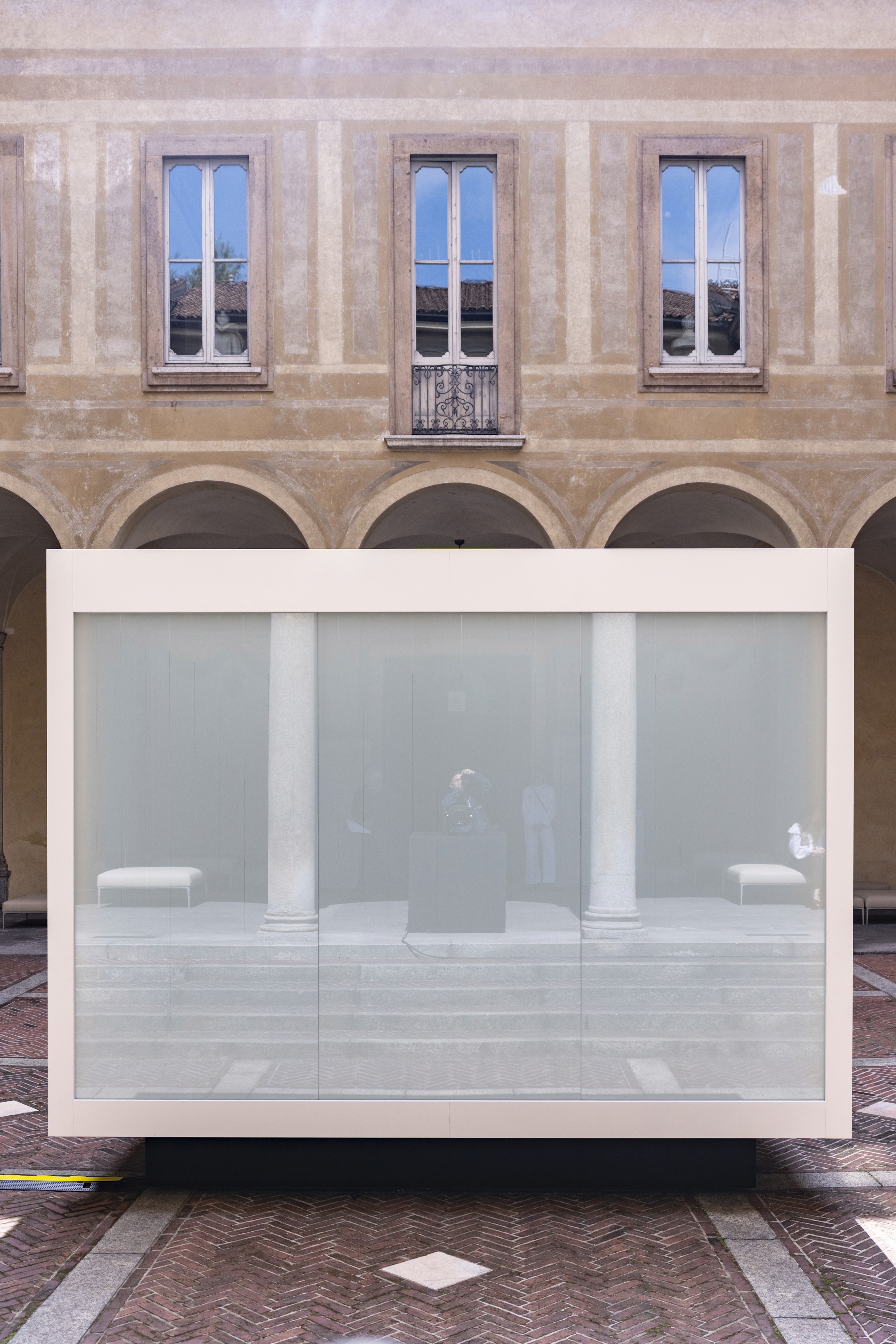
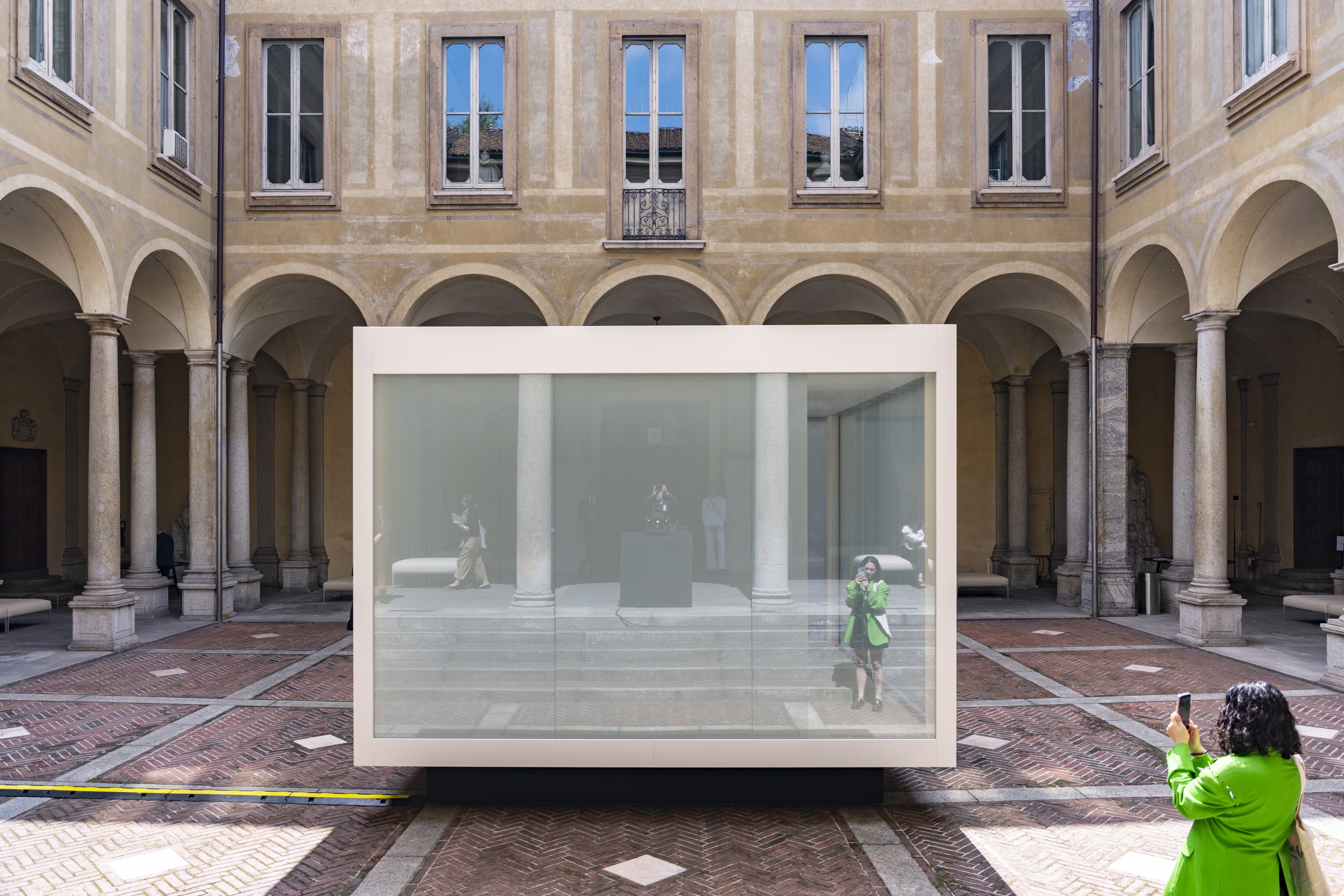
A luminous structure stood quietly between the historic arches, revealing and concealing the silhouettes moving behind its translucent walls. It seemed solid from one angle and almost absent from another. As sunlight shifted across the courtyard, the installation changed with it—less a completed form than a condition continually coming into being.
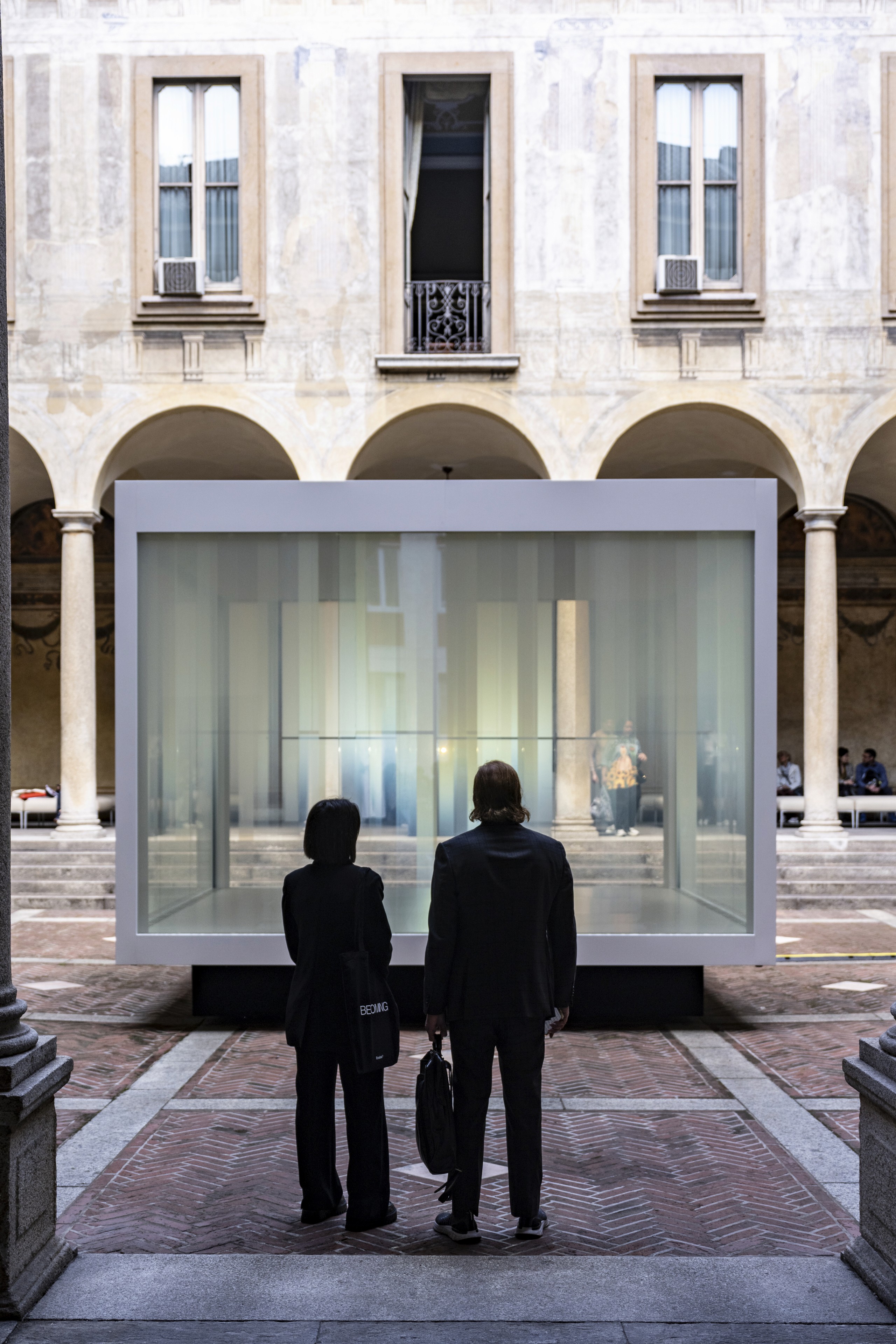
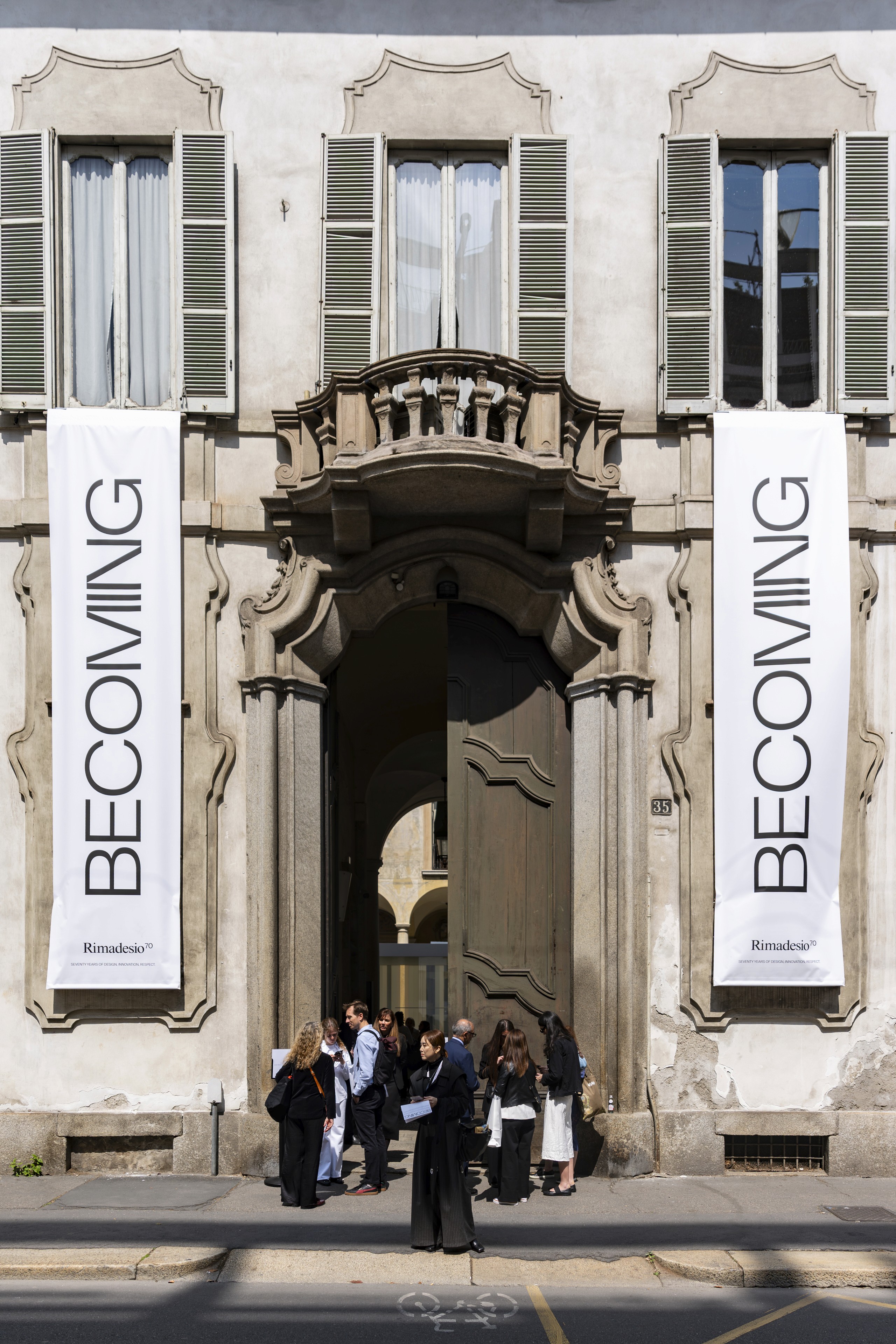
This was Aedes Memoriae, the site-specific installation created by Swiss audiovisual art studio Encor Studio for BECOMING, Rimadesio’s seventieth-anniversary project presented during Milan Design Week 2026. Made from glass, sunlight, electrochromic film, steel and digital control systems, the five-by-five-metre structure gradually altered its density and transparency, inviting visitors to experience light, sound, time and memory as the true materials of the work.
An Anniversary Written as a Verb
Rimadesio could have approached its seventieth anniversary as a retrospective—a chronological display of milestones, products and achievements.
Instead, it chose a verb.
BECOMING does not describe a finished identity. It suggests movement, continuity and the possibility that an institution can retain its principles without remaining fixed in its past.
Founded in Desio in 1956 by Francesco Malberti and Luigi Riboldi under the name Rima Vetraria, the company began with the processing and decoration of glass for furniture. Engraving, gilding and hand-applied colour established an early culture of material precision. Over seven decades, that knowledge evolved into a broader architectural language of doors, sliding systems, partitions and furnishings that define space while preserving visual openness.
For BECOMING, Rimadesio invited visitors not simply to observe this history, but to enter it—to stand inside a relationship between what has endured and what is still changing.
The project was conceived and art-directed by Juma, the creative studio responsible for Rimadesio’s image and communication for three decades. Rather than constructing a single commemorative display, Juma distributed the story across art, audiovisual experience, product evolution and architecture, connecting the company’s material origins with its future ambitions.
Glass as a Threshold

In Aedes Memoriae, glass was neither a neutral surface nor a simple demonstration of technical skill.
It became a threshold.
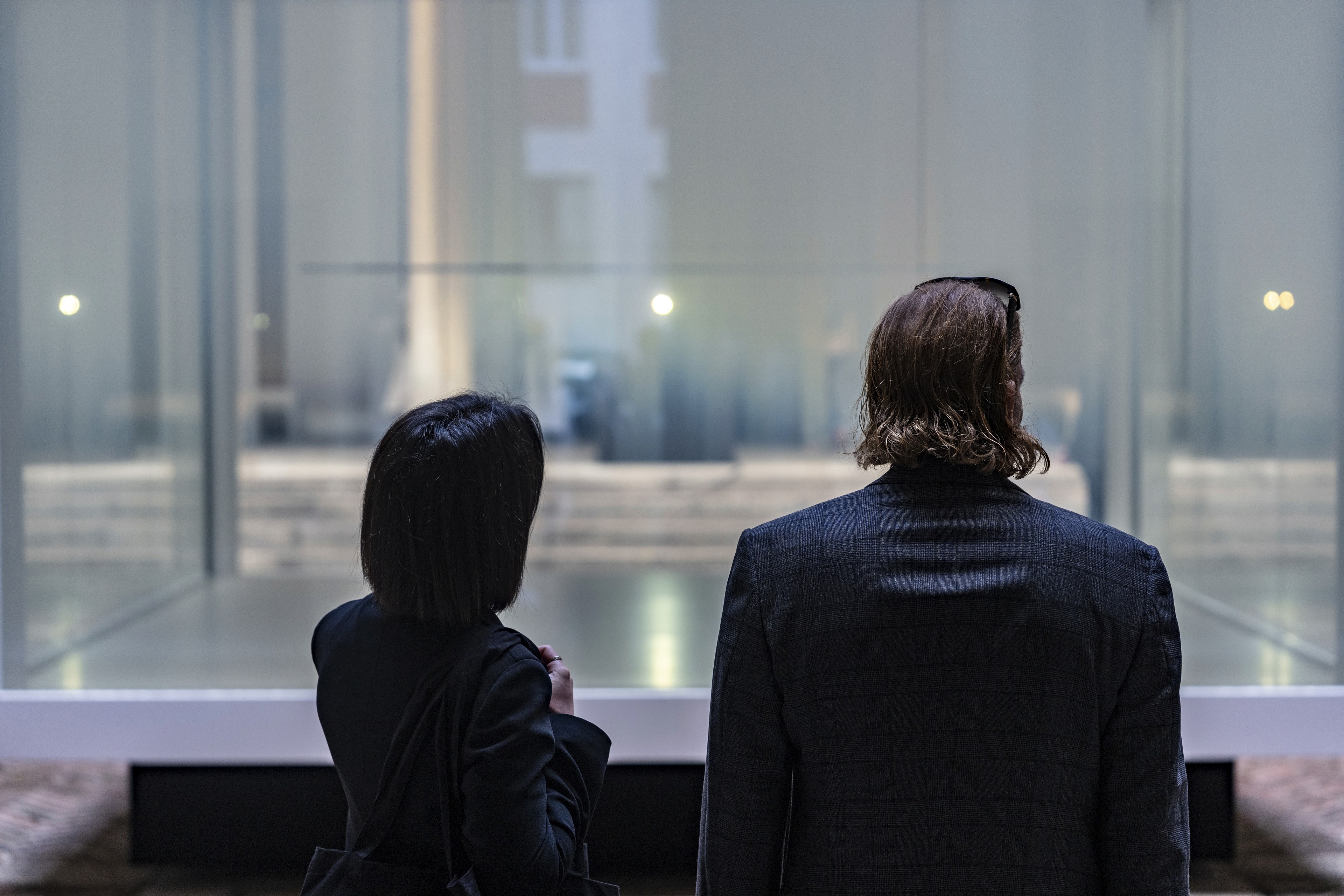
The installation’s electrochromic layers moved between opacity and transparency, allowing human forms, daylight and architectural details to emerge slowly and then recede. Visitors were required to wait. The work did not offer itself all at once.

This gradual disclosure distinguished it from the highly accelerated visual language that often surrounds global design weeks. There was no immediate image to consume and leave behind. Perception unfolded through duration.
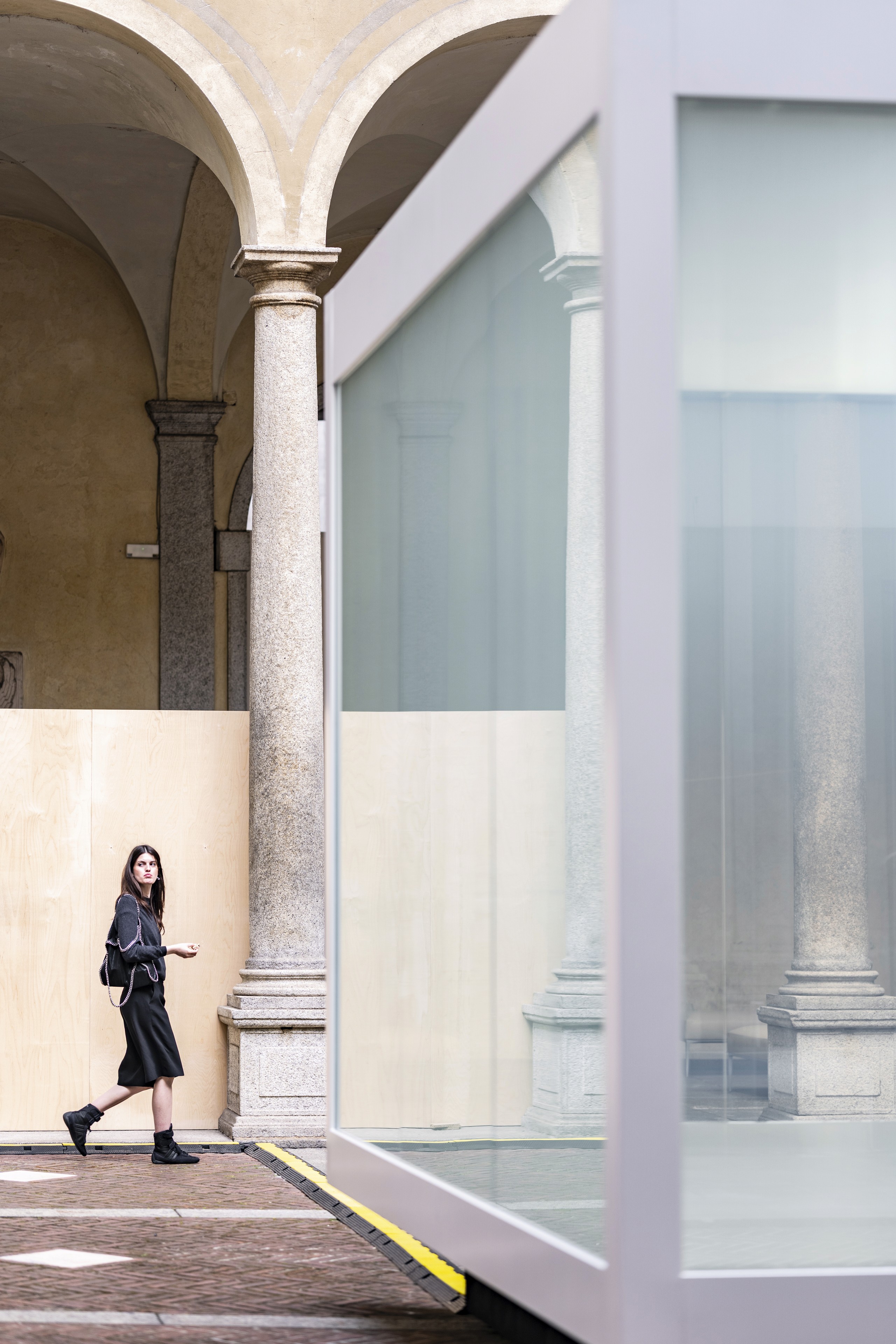
Encor Studio described the work as an experience in which glass transforms into living matter, mediating between physical space and intimate memory. Light and sound filtered through the structure so that presence and absence appeared to occupy the same surface. What remained visible was inseparable from what had already disappeared.
The title Aedes Memoriae evokes a house—or temple—of memory. Yet there was nothing monumental in the traditional sense. Its power came from restraint. Light moved, transparency deepened, figures became shadows, and the courtyard seemed to hold time for a moment before releasing it again.

Here, memory was not presented as an archive of stable images. It was shown as something repeatedly rewritten by the present.
From Silence to Immersion
From the courtyard, visitors entered the Palazzo’s Sala Affreschi, where the atmosphere changed.
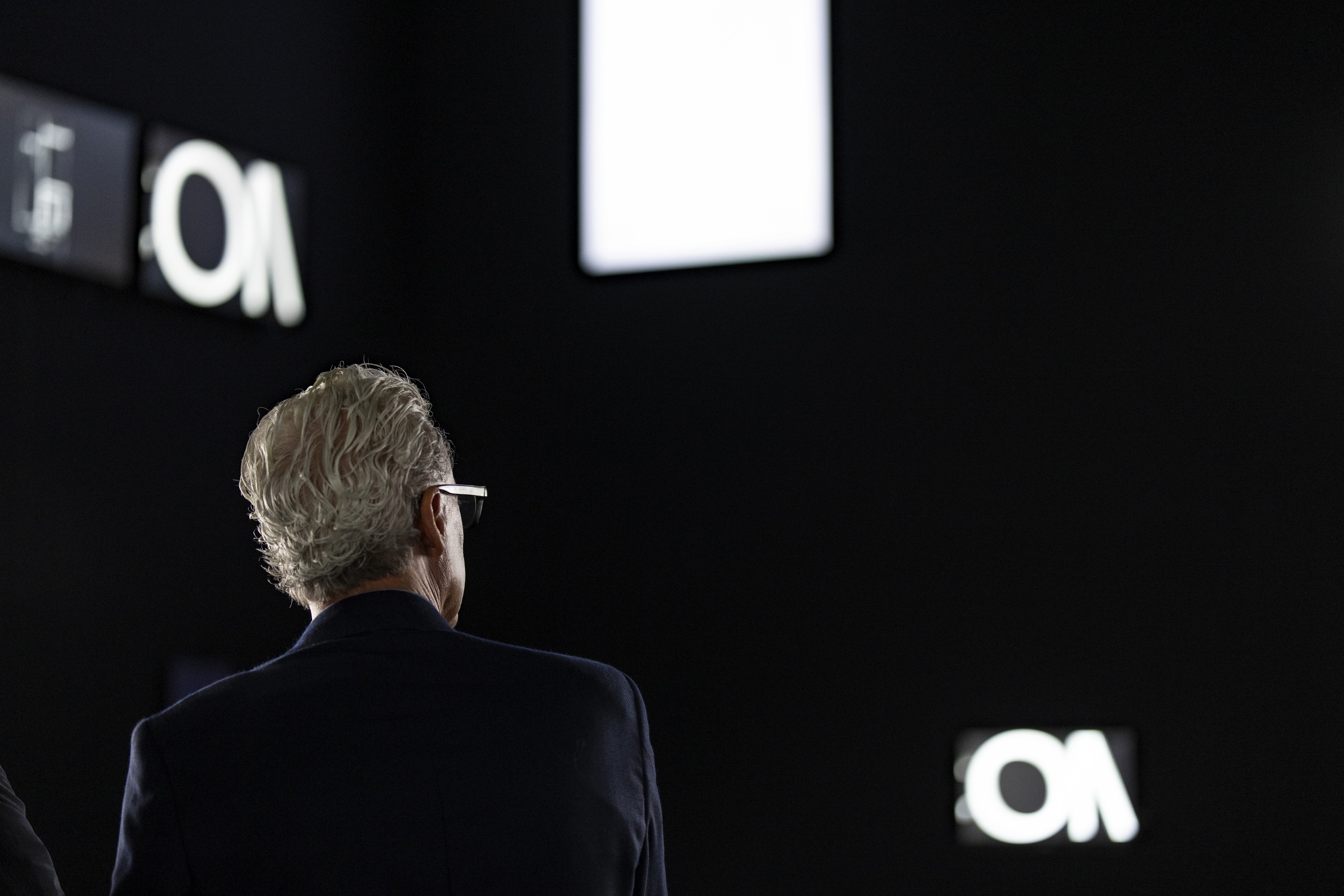
The quiet materiality of Aedes Memoriae gave way to R-Paradigm, an immersive environment curated by Juma through moving images, sound and visual sequences. The room traced Rimadesio’s evolution across its collections, technological development, international presence and the architectural plans for its new headquarters.
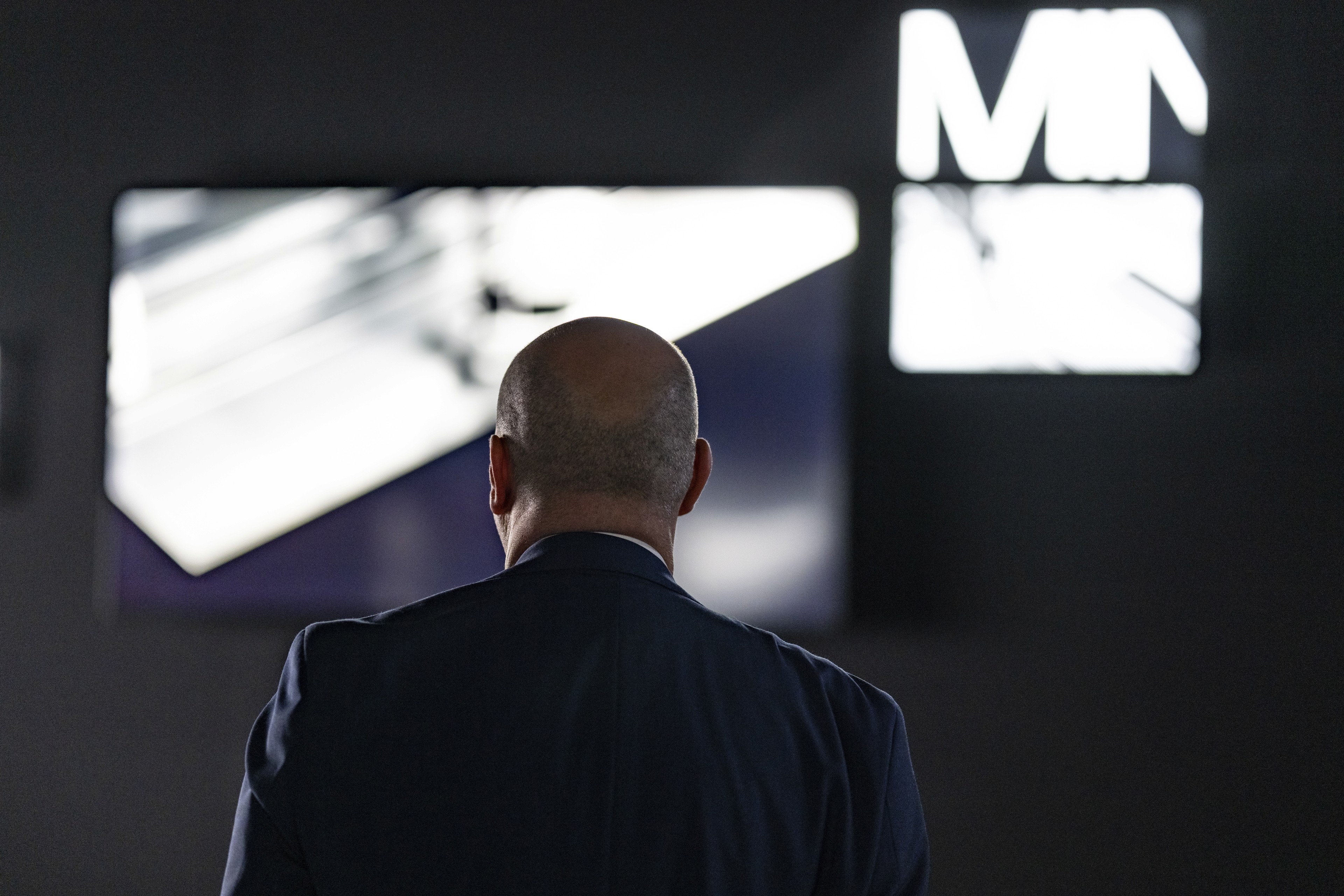
The narrative was intentionally non-linear. Past, present and future appeared not as separate chapters, but as simultaneous forces shaping one another. Industrial processes became moving images; products became fragments of a larger system; architecture became evidence of an identity still under construction.
The contrast between the two installations was essential.
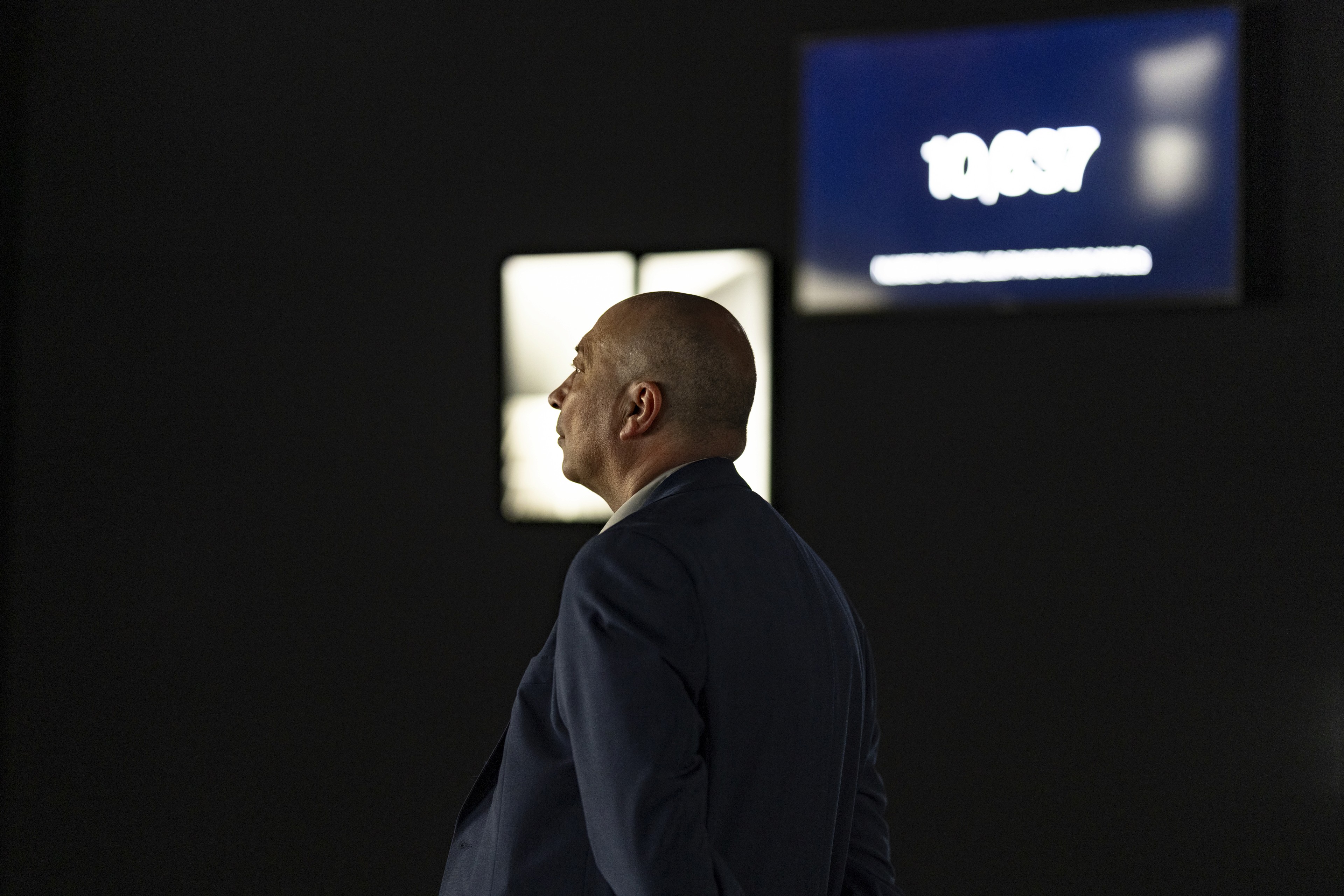
Aedes Memoriae asked the visitor to slow down and perceive. R-Paradigm expanded that perception into information, rhythm and collective history. One approached memory through material; the other through narrative. Together, they transformed a corporate anniversary into an experience of continuity rather than a declaration of completion.
Thirty-Five Years of a Design Language
BECOMING also extended to Rimadesio’s flagship store on Via Uberto Visconti di Modrone, where the company presented additions to the collection designed by architect and art director Giuseppe Bavuso.
Bavuso’s collaboration with Rimadesio has continued for approximately thirty-five years, helping establish a recognisable language based on rigorous proportions, advanced production technology and a controlled relationship between aluminium, glass and interior architecture. For Milan Design Week 2026, the collection was expanded through new materials, finishes, systems and furniture pieces.
The significance of this partnership lies not only in individual products, but in its consistency. Doors, partitions, shelving and furniture are understood as interconnected elements of a spatial system. The object does not dominate the room; it establishes conditions through which the room can be experienced differently.
In this sense, the collection reflects the same principle as BECOMING itself: identity is created not through a single definitive gesture, but through the accumulation of precise decisions over time.
Architecture as the Next Chapter
The project’s future-facing dimension extends beyond Milan to Giussano, where the new Rimadesio Campus is being developed by ACPV Architects Antonio Citterio Patricia Viel.
Conceived through the regeneration and integration of an existing industrial complex, the campus brings together production, landscape, working environments, cultural spaces, exhibitions, training and community. It is architecture not simply as a container for manufacturing, but as an expression of how a company understands its relationship with people, place and time.
After Milan Design Week, Aedes Memoriae was planned to continue through Rimadesio’s international flagship and monobrand locations before ultimately arriving at the Giussano campus as a symbol of the anniversary. The artwork therefore shares the project’s refusal to remain static. It travels, changes context and gathers new associations before reaching its permanent destination.
What Remains, What Transforms
The most meaningful anniversaries do not simply confirm what an institution has already become. They expose the distance between memory and possibility.
BECOMING succeeded because it resisted the language of conclusion.
Its glass alternated between visibility and disappearance. Its history moved through fragments rather than timelines. Its collection evolved through continuity rather than rupture. Its future headquarters emerged from an existing industrial landscape instead of turning away from it.
Across these different scales, design was presented not as a final answer but as a disciplined, continuous act of interpretation.
For a few days in the courtyard of Palazzo Isimbardi, seventy years of history appeared almost weightless. Light passed through glass. Human figures became shadows and returned. The past remained present, but never entirely still.
Perhaps that is what it means t
o endure in design: not to preserve a form unchanged, but to preserve the capacity to transform.
The future begins where identity remains capable of becoming.
© 2026 Brunch Magazine. All rights reserved. Unauthorized reproduction, distribution, publication, or use of any text or photographs is strictly prohibited and may result in legal action.
