Hermès and the Architecture of Patience at Milan Design Week 2026
Sanghee Gil

Milan Design Week is often defined by abundance. Historic buildings become stages, courtyards open into temporary worlds, and design expands across architecture, fashion, art, and public life.
At La Pelota, Hermès chose restraint.
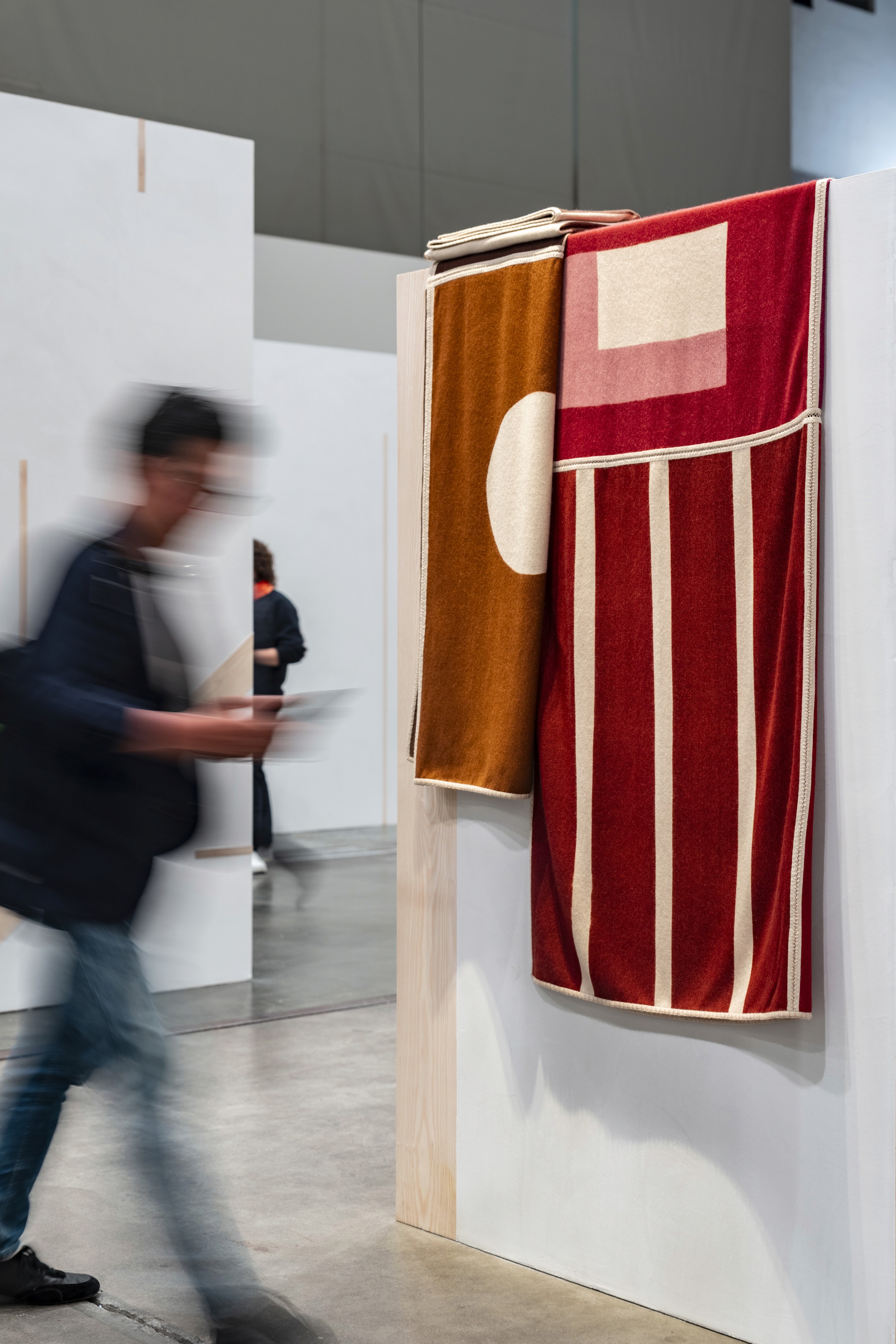
For Milan Design Week 2026, the French maison transformed the former sporting hall into a quiet architectural landscape composed of plaster and beechwood. Geometric structures rose throughout the space like fragments of an unfinished city. Some became platforms for objects, while others formed walls, corridors, and changing perspectives.
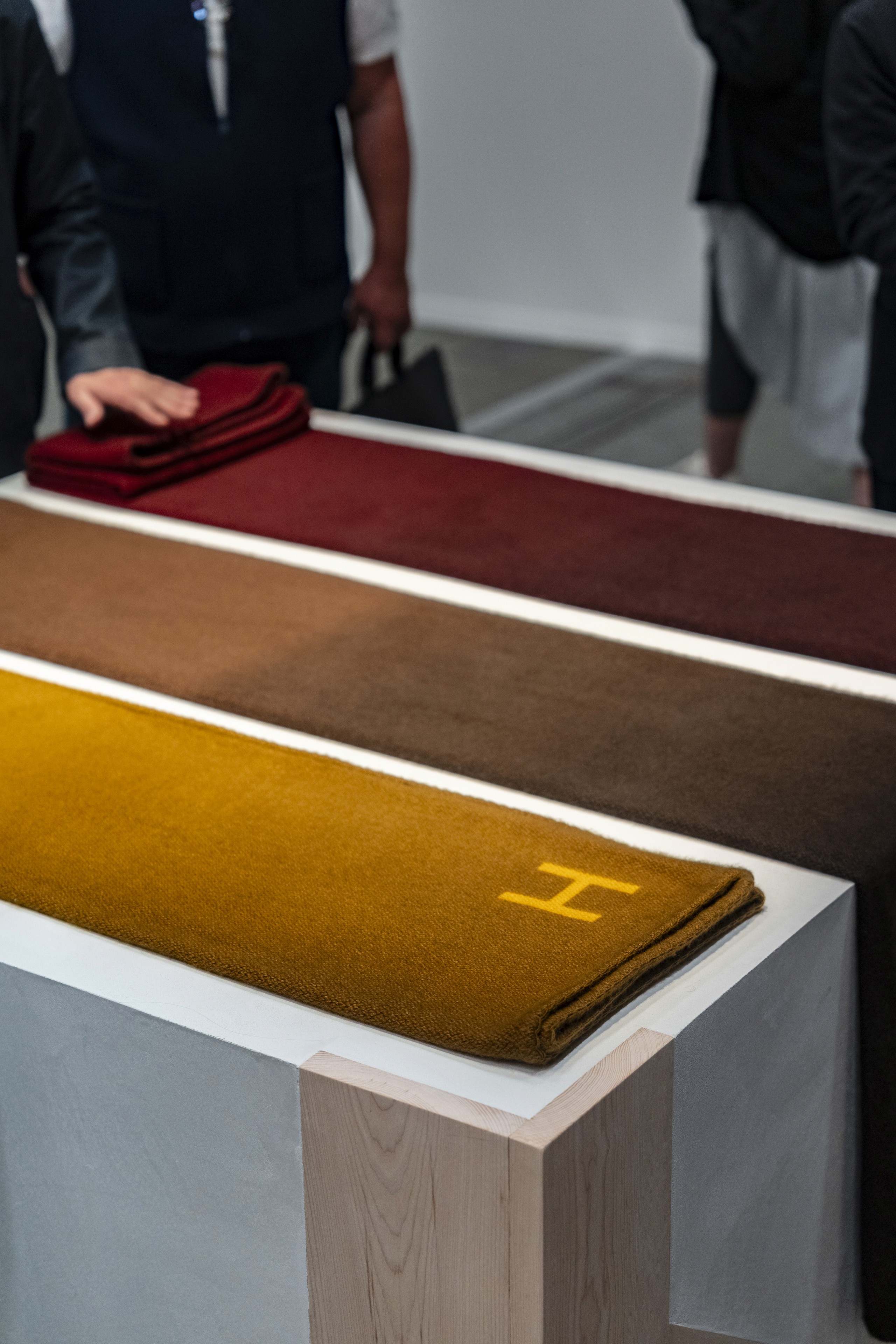
Rather than presenting a conventional domestic interior, Hermès created a space that encouraged visitors to move slowly. Each object appeared gradually through distance, shadow, and carefully measured intervals.
From Object to Space

The exhibition was guided by the idea From Object to Space.
Hermès imagined a traveller entering an open landscape and establishing the first elements of a place to inhabit. Through alignment, measurement, and repetition, simple forms became points of orientation. The vast hall gradually acquired rhythm, direction, and meaning.

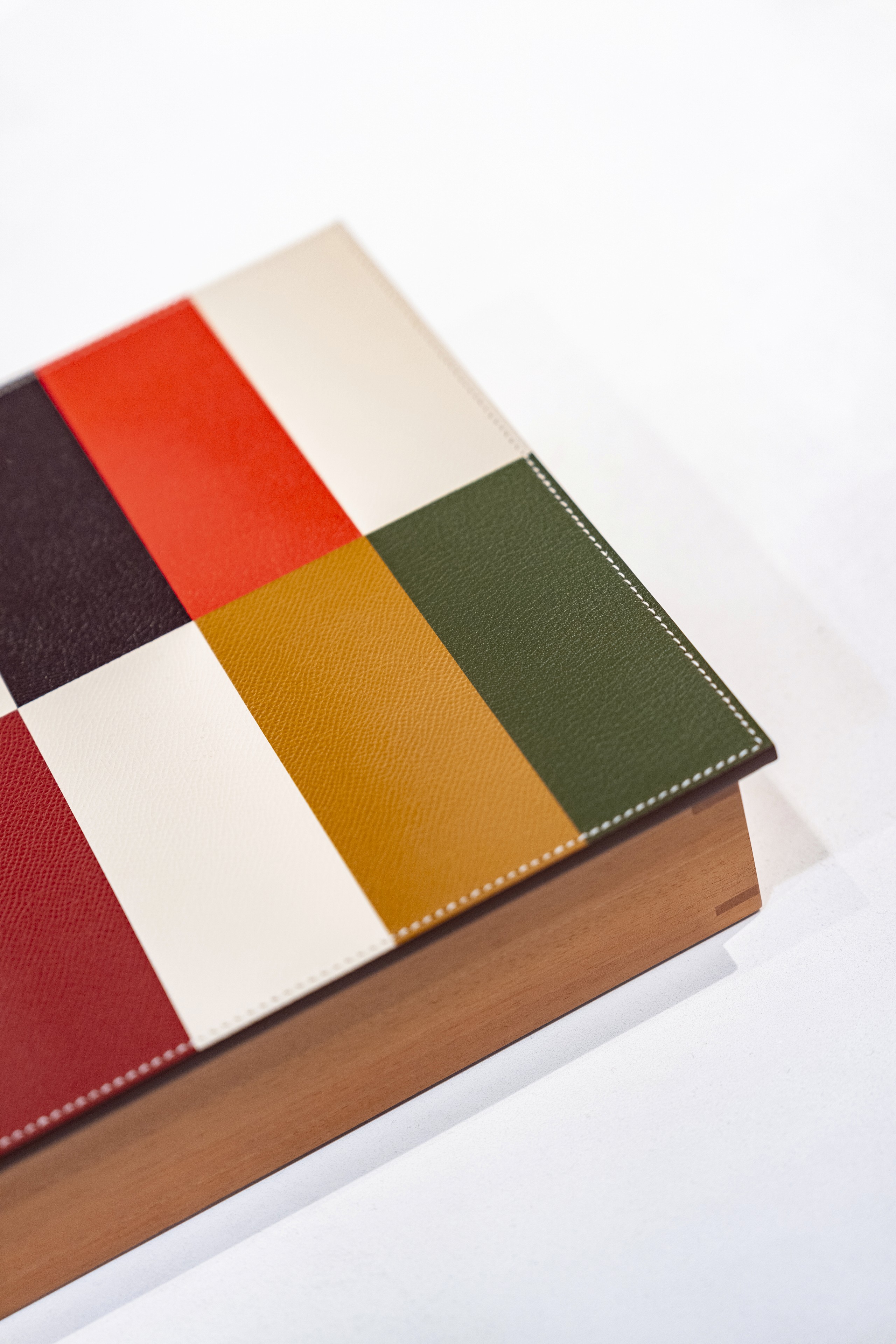
The installation did not recreate a living room, dining room, or bedroom. Instead, it considered the instinct that comes before architecture: the desire to organize space and create relationships with the objects placed within it.
This approach shaped the entire experience. Objects were not displayed as part of a continuous catalogue. Each piece occupied its own position within the architecture, allowing material, proportion, and craftsmanship to be observed independently.
The grain of wood, the veins of marble, the reflection of metal, and the softness of cashmere were given space to speak.

Stadium d’Hermès
At the center of the collection stood the Stadium d’Hermès table, designed by Edward Barber and Jay Osgerby.
Its elongated figure of eight form recalls the curve of a horse’s back and the oval movement of a racetrack. These references connect the table to the equestrian heritage of Hermès without relying on literal decoration.

The table combines Carrara Venato marble with deep green Verde Alpi through precise marble marquetry. The contrast continues down its slender legs, where alternating sections of stone create a subtle rhythm reminiscent of equestrian jumping poles.
Marble is traditionally associated with weight and permanence. Here, its narrow profile and continuous curve create an unexpected impression of lightness. The natural veins of the stone introduce movement, while the sculptural silhouette gives the table a presence beyond function.
Color is not applied to the surface. It emerges from the material itself.
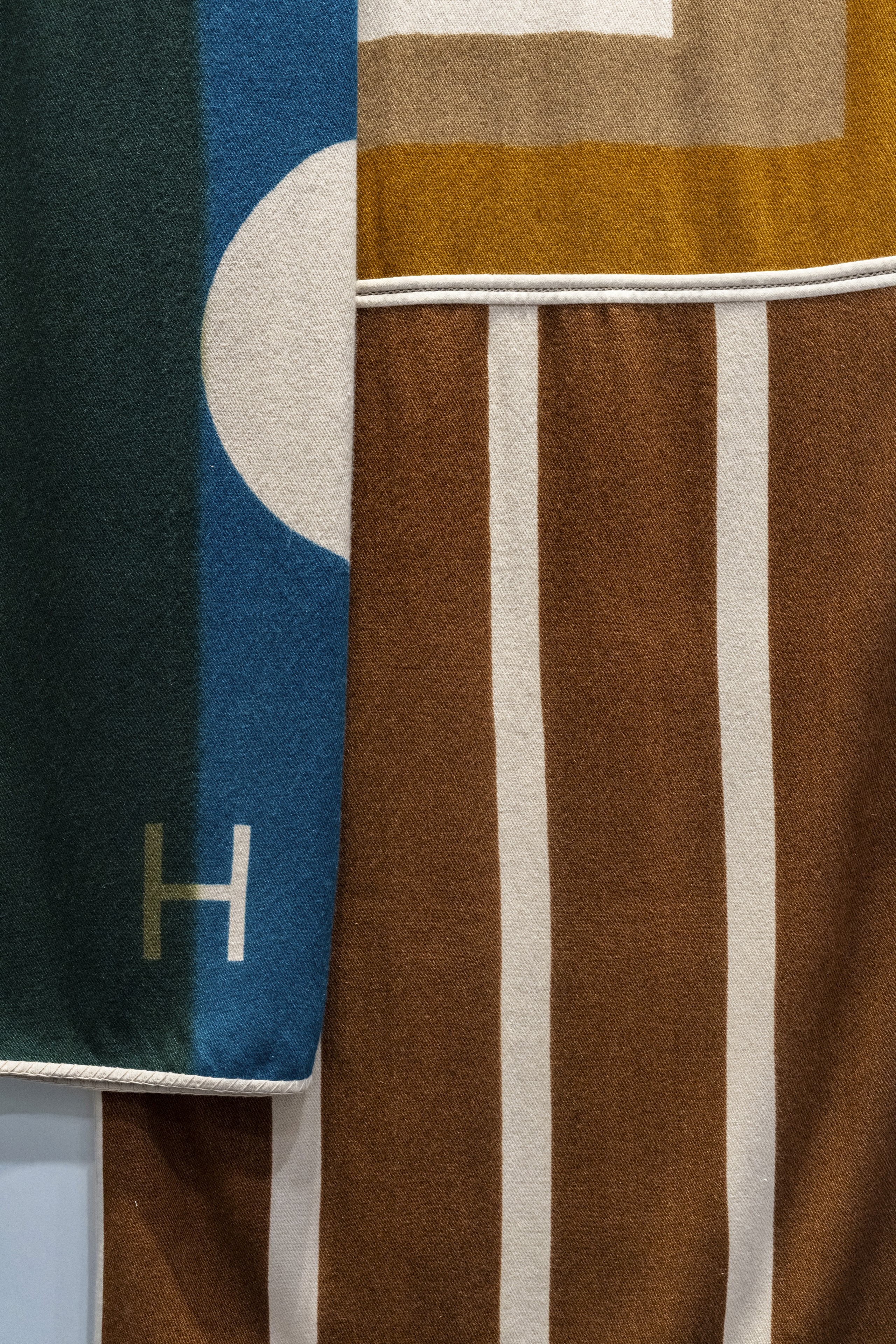
White and green marble become structure, pattern, and ornament at once.
The Trace of the Hand
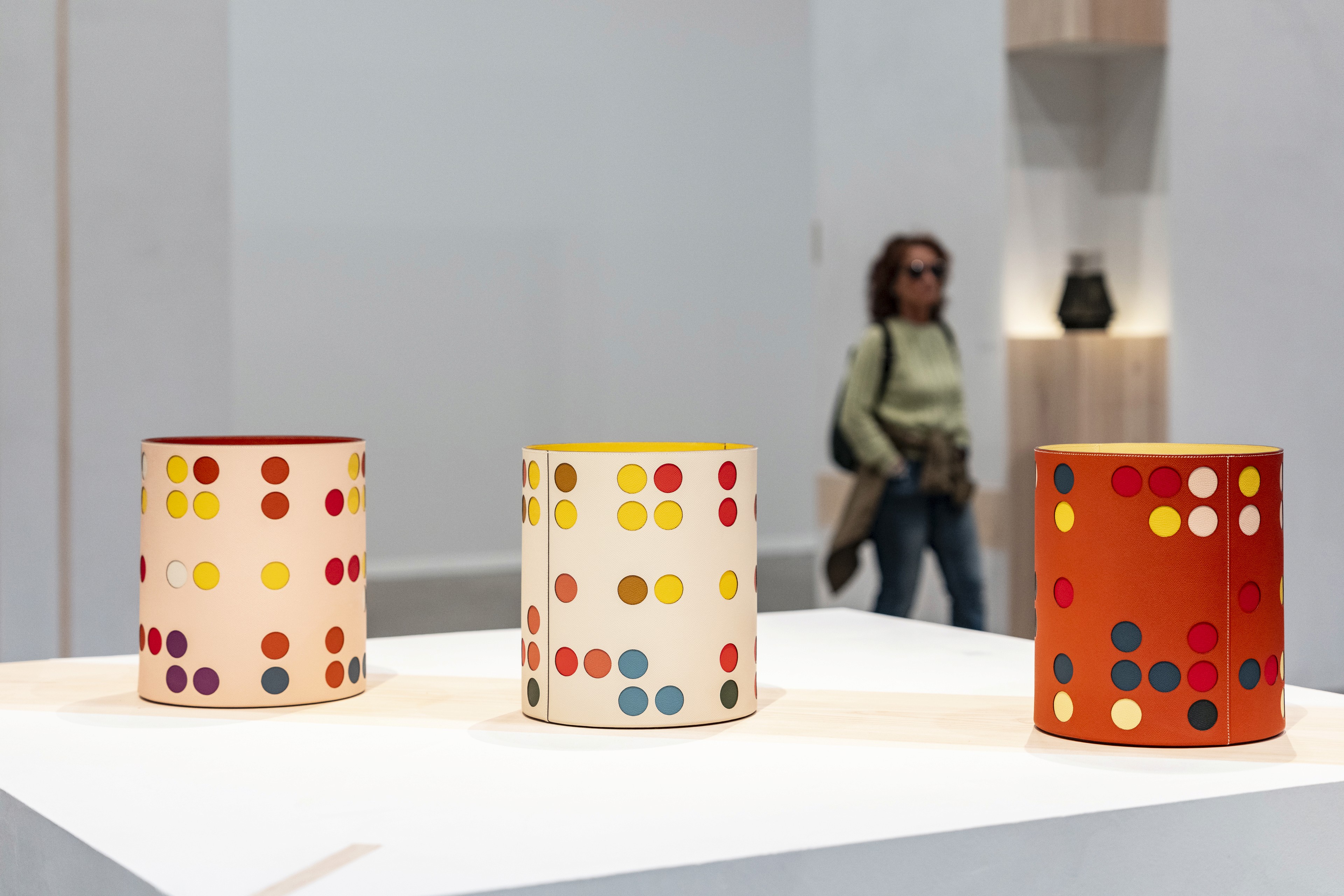
The Palladion d’Hermès collection introduced a different material language.
Centerpieces, jugs, and vases were created in hand hammered metal with a palladium finish, combined with leather, horsehair, and wood. Every mark left by the silversmith remained visible, allowing the making process to become part of the finished form.
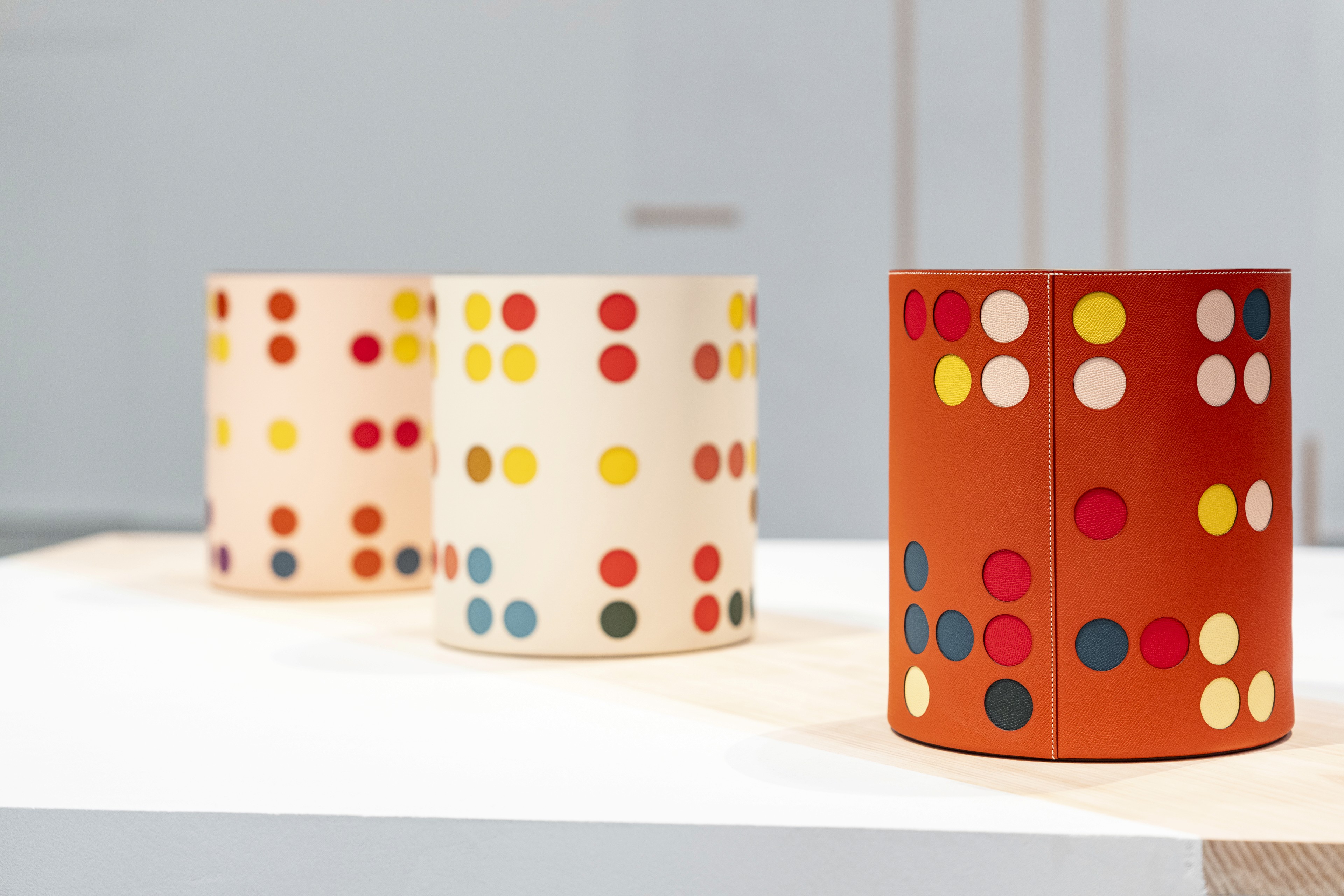
Light moved across the uneven metal surfaces, changing with the position of the object and the movement of the viewer. Leather brought warmth, horsehair referenced the equestrian origins of the maison, and wood introduced natural variation.
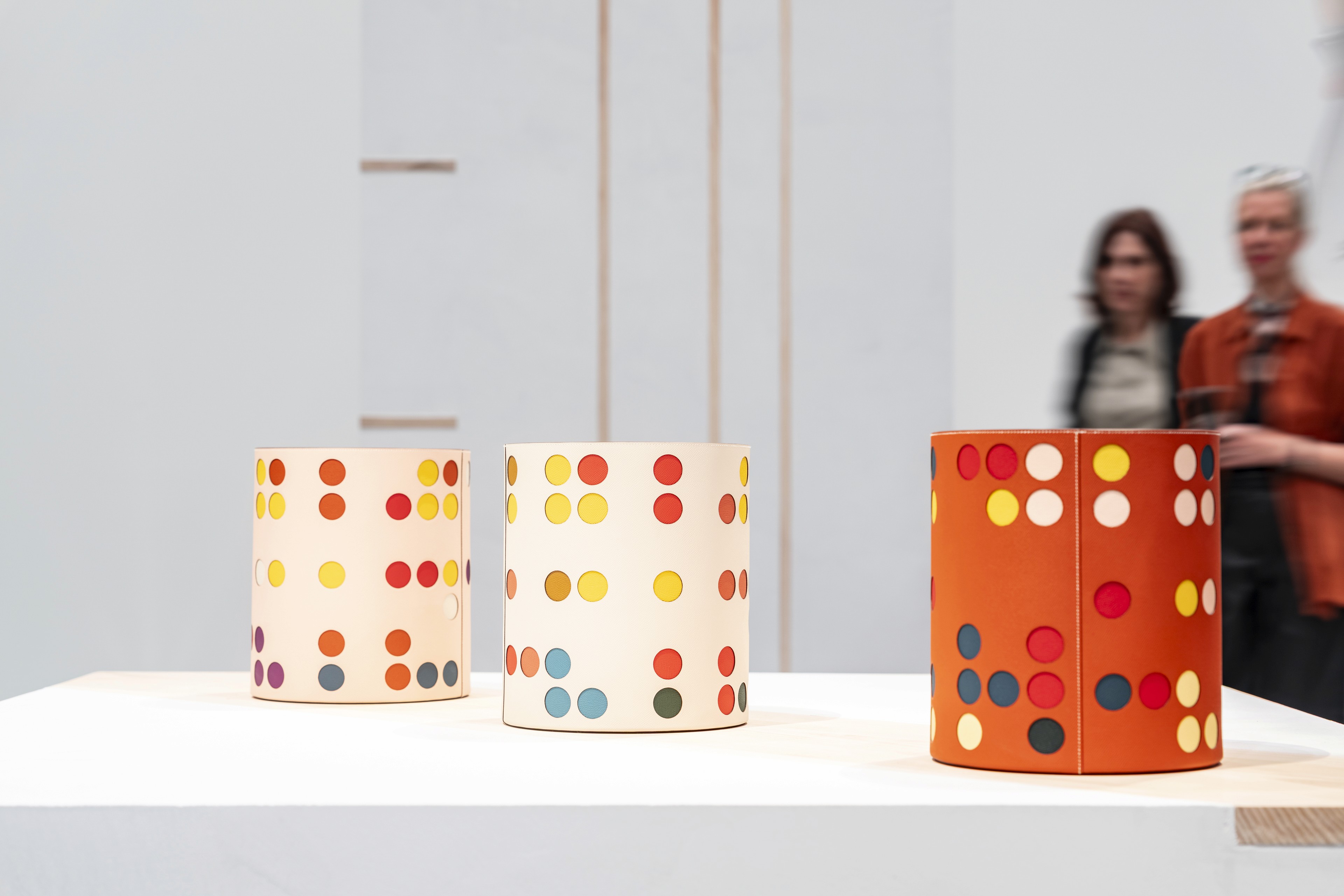
These objects revealed a central principle of the Hermès home collection.
Craftsmanship was not hidden beneath perfection. It was expressed through the controlled irregularity of the material and through the precise meeting of different techniques.
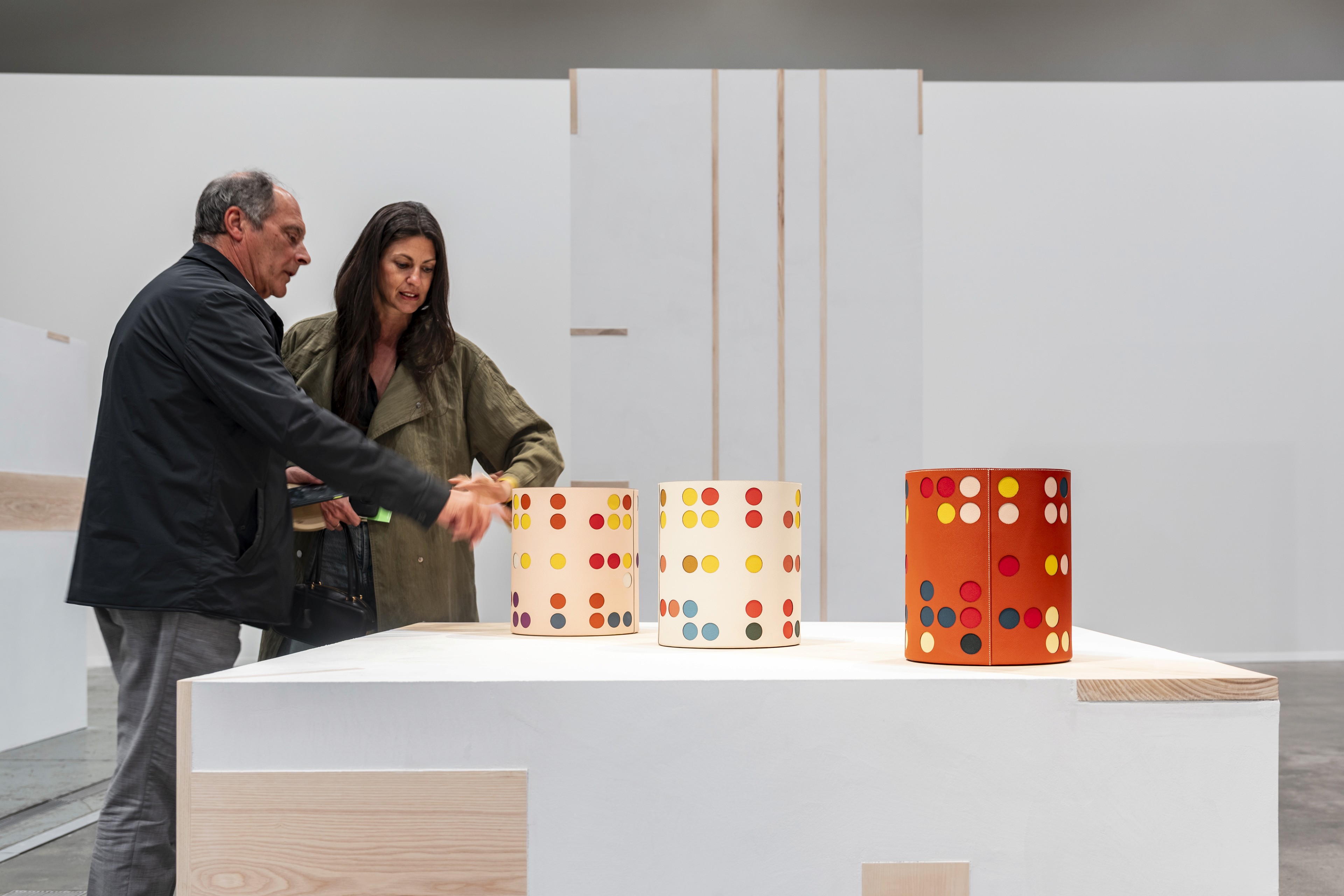
Hyunjee Jung and the Language of Bojagi
Among the most meaningful works in the collection was the H Letter throw by South Korean artist Hyunjee Jung.
The work draws upon bojagi, the Korean tradition of joining pieces of fabric to create wrapping cloths and textile compositions. In bojagi, visible seams are not concealed. They become part of the identity and structure of the work.
For the H Letter throw, panels of linen voile and cashmere were connected with colored silk thread. Transparent and opaque sections formed a delicate composition in which an enlarged letter H appeared almost like a watermark.
The letter did not dominate the textile. It had to be discovered.
This subtlety reflected the larger philosophy of the exhibition. Meaning was not announced through spectacle. It emerged through attention.
Jung’s work demonstrated how a traditional technique can enter a contemporary design context without being reduced to decoration. The logic of bojagi shaped the entire composition.
Seams became lines. Panels became planes. Transparency became space.
Through this process, the textile could be understood almost as a form of architecture.
Luxury Measured in Time
Throughout the exhibition, material was never treated as a passive surface.
The veins of marble were revealed through cutting. Hammered metal preserved the movement of the hand. Horsehair formed natural lines. Textile seams established geometry through construction.
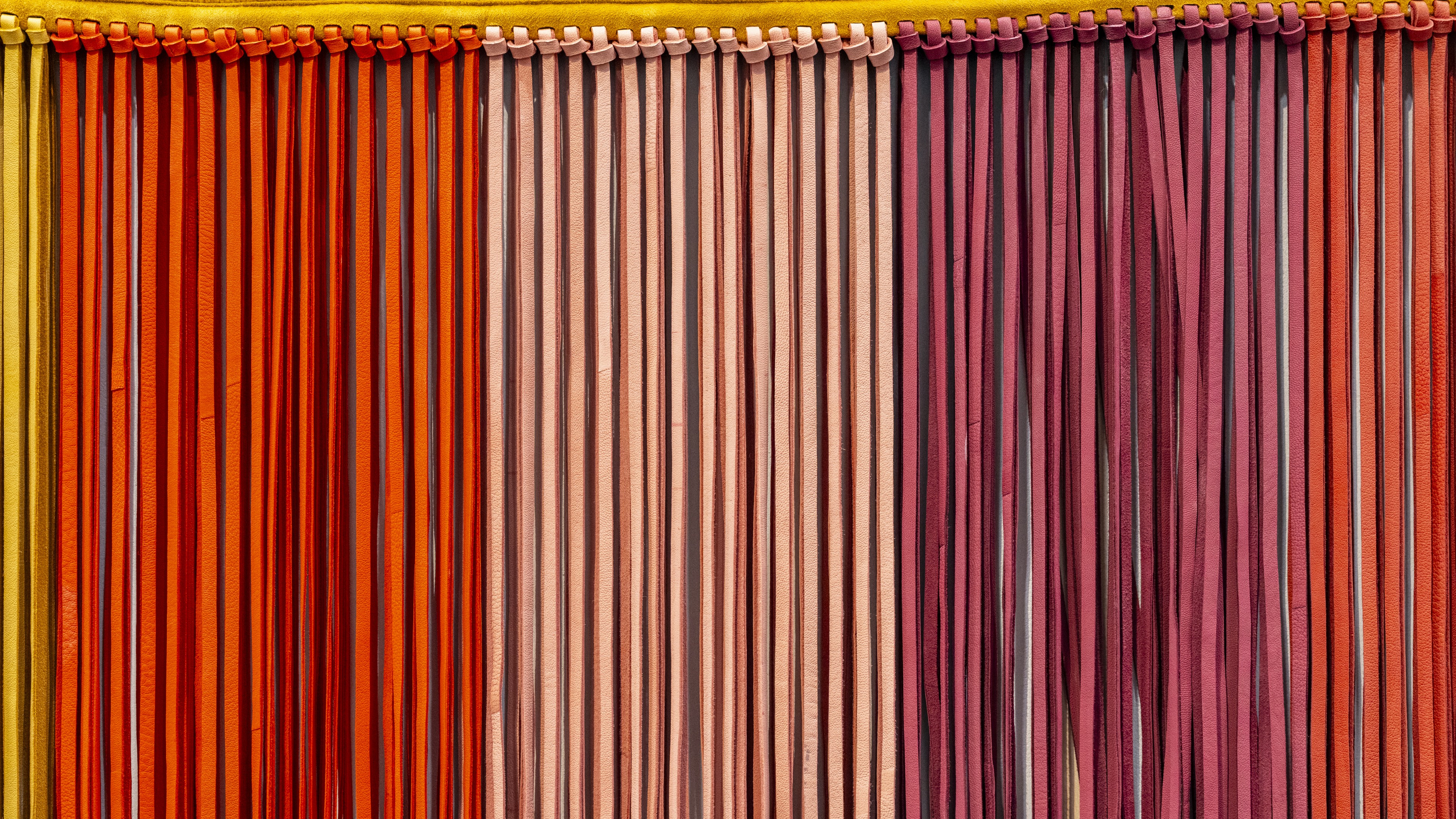
Decoration was not added after the object had been made. The process of making generated its visual identity.
Hermès also offered a quieter definition of luxury.
Luxury could be the time required to hammer a metal surface by hand. It could be the patience needed to connect textile panels with silk thread. It could be the technical knowledge necessary to continue marble marquetry across a curved tabletop and down its slender legs.
It could also be the decision to leave space around an object.
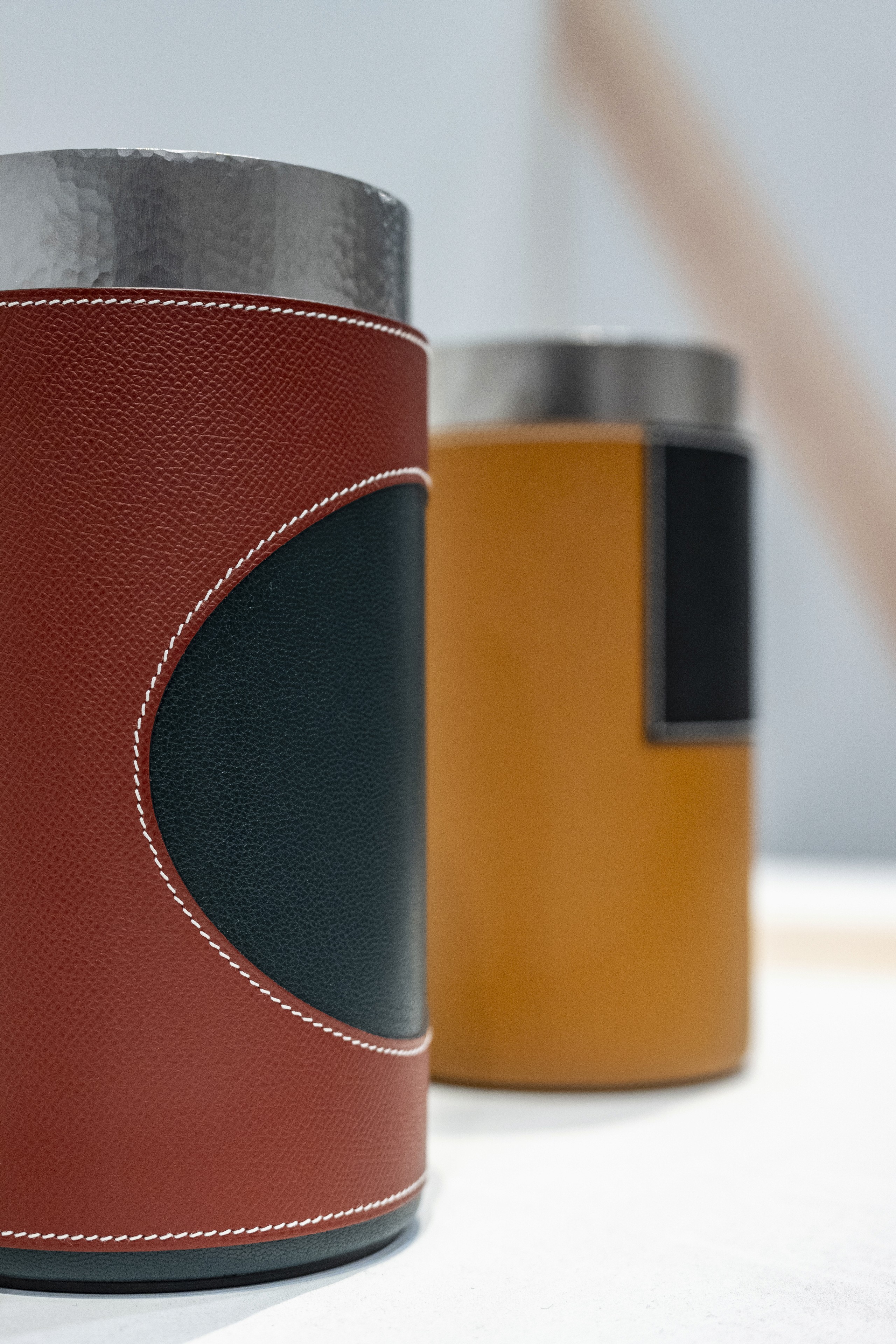
At La Pelota, the distance between works became as important as the works themselves. The installation slowed the visitor’s attention and made craftsmanship visible through proximity.
A Quiet City of Objects

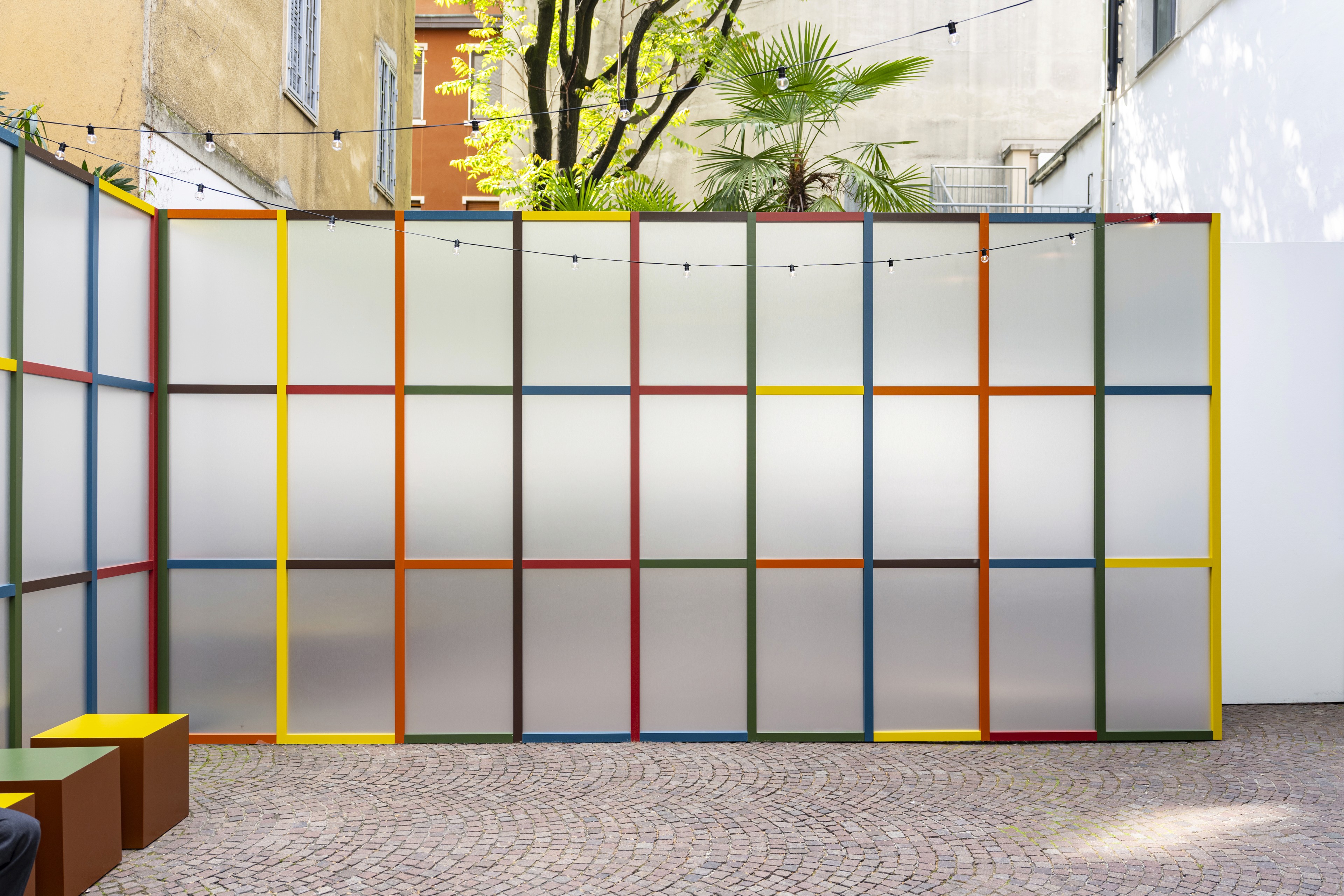
The Hermès presentation succeeded because it did not separate architecture from object, or object from process.
The plaster and beechwood structures established paths. The paths created changing viewpoints. Those viewpoints revealed the collection gradually.
Together, they formed a quiet city within the city of Milan.
Yet this was not a city built through density. It was created through intervals.
In the empty spaces between marble, metal, textile, and wood, visitors were given time to look. During a week filled with images designed for immediate impact, Hermès created an experience that resisted instant understanding.
The presentation asked for movement, proximity, and patience.
At Milan Design Week 2026, Hermès presented more than a collection for the home. It offered a philosophy of inhabiting space.

Objects become meaningful not only through how they are made, but through the relationships they form with the people who live beside them. Over time, they receive touch, memory, and the traces of daily life.
The objects at La Pelota appeared complete, yet their meaning remained open.
They were waiting for time.
Editor’s Reflection
The most memorable spaces during Milan Design Week are not always the loudest.
At La Pelota, Hermès created an environment where silence became a form of precision. The restrained architecture allowed visitors to notice what is often overlooked: the irregularity left by a hammer, the movement of a marble vein, and the nearly invisible letter formed within a hand stitched textile.
The H Letter throw by Hyunjee Jung was especially resonant. Through bojagi, individual fragments became a unified composition while every connection remained visible.
In many ways, the entire Hermès presentation could be understood through the same principle.
Objects, materials, architecture, and empty spaces were joined without losing their individual identities. Each remained distinct, yet together they created a larger and more meaningful whole.
Hermès did not attempt to predict the future of the home.
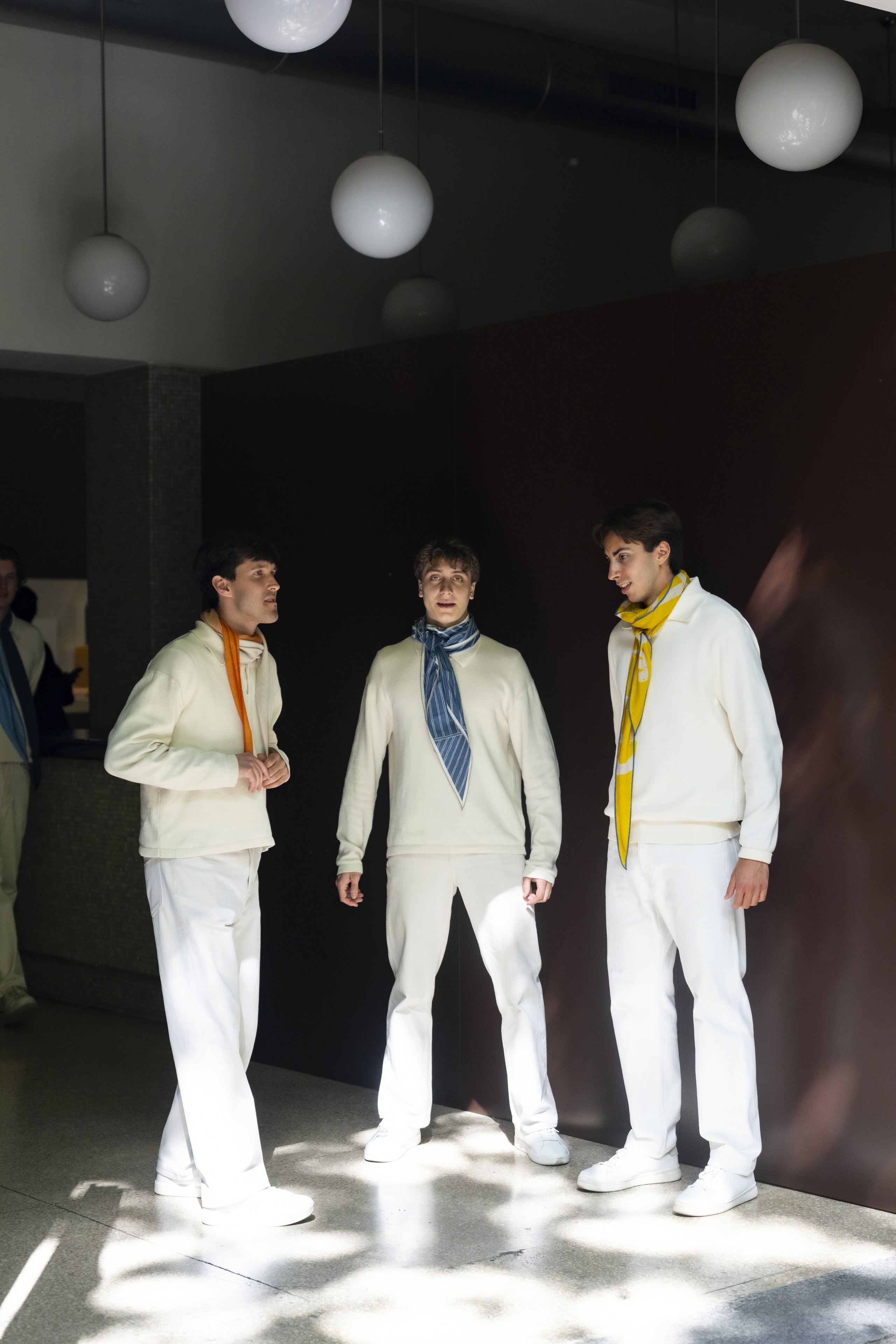
Instead, it returned to something more enduring.
A meaningful space begins with attention. A meaningful object begins with material. True craftsmanship begins with time.
© 2026 Brunch Magazine. All rights reserved. Unauthorized reproduction, distribution, publication, or use of any text or photographs is strictly prohibited and may result in legal action.
