Beyond Florence: Siena and the Renaissance Rewritten in Bronze
At The Frick Collection, an extraordinary gathering of Renaissance bronzes restores Siena to a history long told through the eyes of Florence.

NEW YORK — History remembers Florence as the birthplace of the Renaissance. Its artists became synonymous with innovation, its patrons with cultural ambition, and its achievements with the emergence of modern artistic thought. Yet just forty miles to the south, another city was pursuing an equally remarkable vision of art.
That city was Siena.
At The Frick Collection, Siena: The Art of Bronze, 1450–1500 brings together nearly forty works to reconsider the artistic achievements of a city whose contribution to the Renaissance has long been overshadowed by its powerful neighbor.
Organized by Giulio Dalvit, Associate Curator at the Frick, the exhibition presents sculptures, reliefs, medals, and decorative objects, many of which have never traveled beyond Tuscany. More than an exhibition of exceptional craftsmanship, it is an invitation to reconsider how artistic reputations are established, how historical narratives endure, and whose achievements are remembered.
A Renaissance Written by the Victors
The familiar history of the Italian Renaissance has largely been told through Florence. In his influential Lives of the Artists, Giorgio Vasari positioned Florence at the center of artistic progress. His account helped establish a hierarchy that would shape the understanding of Renaissance art for centuries.
But as Dalvit emphasized during the exhibition's press preview, this history was never entirely separate from politics.
Vasari wrote under the patronage of Cosimo I de' Medici, whose expanding territorial ambitions culminated in the conquest of Siena in 1555. The city's political independence disappeared, and its artistic identity was increasingly interpreted through the perspective of its conqueror.
Dalvit suggested that Siena's reputation as a city perpetually behind Florence may owe as much to political circumstances as to artistic reality.
Fifteenth-century Siena was prosperous, intellectually active, and internationally connected. Situated along the Via Francigena, a major pilgrimage route linking northern Europe with Rome, it participated in a continuous exchange of people, ideas, and technologies.
Its artists were not isolated from the broader Renaissance. They were contributing to its development in ways that the traditional narrative has often failed to recognize.
The exhibition begins by challenging that absence.

Giovanni di Tofano (ca. 1390 – in or by 1471)
Bell
1454
Bronze
Diam. of mouth 43 5/16 in. (110 cm)
Chiesa dei Santi Costanzo e Martino, Torrita di
Siena, Diocesi di Montepulciano -Chiusi -Pienza
When Bronze Was a Political Choice
Bronze occupied an unusual position in Renaissance society.
It was expensive, technically demanding, and highly desirable, not only for sculpture but also for bells, artillery, and military equipment. Artists, metal founders, and cannon makers frequently shared workshops, expertise, and production methods.
During the press presentation, Dalvit offered a striking observation: when looking at a Renaissance bronze, one should imagine the cannon that might otherwise have been made from the same material.
The decision to commission a sculpture was therefore more than an artistic gesture. It represented a choice about how a city would invest its resources, express its ambitions, and define its public identity.
The exhibition makes this relationship tangible through a monumental bell weighing approximately one thousand pounds, drawings for artillery by Francesco di Giorgio, and archival records documenting the considerable expense of manufacturing cannons for the Republic of Siena.
These objects reveal a world in which the boundaries between art, engineering, and military technology were remarkably fluid.
They also illuminate the extraordinary technical knowledge that Sienese craftsmen brought to their artistic practice.

Donatello (Italian, ca. 1386 – 1466)
Tomb Slab of Giovanni di Bartolomeo Pecci,
Bishop of Grosseto and Istia d’Ombrone ca. 1452
Medium -tin bronze (slab) , with patinated copper
and traces of polychrome enamels or resins
98 1/4 × 42 1/16 × approx. 1 in. (249.5 × 106.8 × approx. 2.5– 3 cm)
Cathedral of Santa Maria Assunta, Siena
Donatello and the Limits of a Florentine Narrative
Among the exhibition's most significant loans is Donatello's bronze funerary monument for Bishop Giovanni Pecci, traveling outside Italy for the first time.
In an astonishingly shallow relief, Donatello represents the deceased bishop as though lying upon his funeral bier. The illusion of depth transforms a thin sheet of bronze into an image of solemn physical presence.
Yet Donatello's relationship with Siena complicates the conventional story of artistic influence.
Between 1457 and 1461, the Florentine sculptor spent several years in the city, having been commissioned to produce bronze doors for Siena Cathedral. The project never reached completion, amid difficulties involving materials and local circumstances.
Dalvit challenges the assumption that Donatello introduced or revived bronze casting in Siena. The city's metalworking traditions were already established, as the exhibition's earlier objects demonstrate.
Donatello's presence mattered, but it did not create Siena's artistic culture.
Rather, his encounter with the city became part of a larger exchange in which local artists developed their own responses, sometimes embracing his innovations and sometimes moving in entirely different directions.

Vecchietta (Italian, 1410 – 1480)
Resurrection of Christ 1472
Leaded low-tin bronze
21 3/8 × 16 1/4 × 1 1/2 in. (54.3 × 41.3 × 3.8 cm)
The Frick Collection, New York
Vecchietta: An Artist Beyond His Medium
One of the exhibition's most compelling works already belongs to the Frick.
Lorenzo di Pietro, known as Vecchietta, created The Resurrection in 1472, the same year associated with his monumental bronze tabernacle for Siena Cathedral.
The relief captures a moment that resists ordinary human understanding.
Christ rises with an almost weightless presence, while the soldiers beneath him remain confined to the physical world. Conventional perspective and proportion yield to a more expressive vision of transcendence.
The paradox is extraordinary: one of the heaviest artistic materials becomes the means of representing liberation from earthly weight.
Equally revealing is the artist's signature.
Vecchietta identified himself as pictor, or painter, on a work of sculpture. At a time when professional guilds imposed boundaries between artistic disciplines, he worked across painting and sculpture, refusing to be defined exclusively by a single medium.
His practice anticipates a conception of the artist not simply as a skilled craftsman but as an intellectual creator whose ideas extend beyond the material through which they are expressed.
For the Frick, the work carries particular significance. Acquired by Henry Clay Frick in 1916, it represents an enduring connection between the museum's collecting history and the Renaissance tradition explored in this exhibition.

Francesco di Giorgio (Italian, 1439−1501)
Judgment of Paris
Early 1480s (?)
Low -tin bronze
5 1/2 × 5 1/16 × approx. 1/4 in. (140 × 129 × approx. 0.6 cm)
National Gallery of Art, Washington ; Samuel H. Kress Collection
Francesco di Giorgio: Before Leonardo
If Vecchietta challenges the boundaries of artistic identity, Francesco di Giorgio Martini challenges the familiar chronology of Renaissance innovation.
An architect, engineer, painter, and sculptor, Francesco moved fluently among disciplines that modern institutions often separate.
His bronze reliefs reveal an extraordinary sensitivity to atmosphere, movement, and psychological expression.
Rather than relying exclusively on sharply defined contours, he allowed figures to emerge gradually from their surroundings. Surfaces appear to soften, and forms acquire a subtle sense of life.
Dalvit draws a compelling parallel between these experiments and the atmospheric effects later associated with Leonardo da Vinci's sfumato.
The relationship is more than a stylistic comparison. Leonardo knew Francesco's work and studied his architectural writings, leaving annotations in a surviving copy of his treatise.
In The Judgment of Paris, a relief measuring only about five inches square, Francesco compresses the mythological origins of the Trojan War into a remarkably intimate composition.
The figures respond differently to the same decisive moment. Desire, resentment, judgment, and anticipation coexist within a miniature bronze surface.
His religious reliefs pursue a similarly sophisticated investigation of emotion.
In The Deposition, grief unfolds through contrasting gestures and states of mind. Some figures offer support, others surrender to anguish, while Saint John appears absorbed in contemplation.
The result anticipates a quality frequently celebrated in Leonardo's paintings: the ability to represent multiple psychological responses within a single dramatic event.
Francesco's Flagellation of Christ, traveling to the United States from Perugia, extends this expressive ambition into the treatment of the metal itself.
The bronze appears almost waxlike, its surfaces communicating the physical and emotional intensity of suffering.
Dalvit compares this remarkable handling of material to sculptural approaches that would emerge centuries later in the work of Auguste Rodin and Medardo Rosso.
Such comparisons do not diminish the achievements of later masters. They broaden our understanding of the artistic experiments that preceded them.

Francesco di Giorgio (Italian, 1439−1501)
Deposition of Christ from the Cross with a Group
of Donors (Federico da Montefeltro and His Family) 1473– 74
Medium -tin bronze
33 7/16 × 22 1/4 × 2 15/16 in. (85 × 56.5 × 7.5 cm)
Church of Santa Maria del Carmelo (Carmini), Venice
The Human Desire to Be Remembered
Throughout the exhibition, bronze emerges as a material closely associated with memory.
Its durability made it especially suitable for monuments, funerary sculpture, and portraits intended to survive beyond an individual's lifetime.
Yet that permanence was never guaranteed. Bronze could be melted down, repurposed, or transformed into something more immediately useful.
The exhibition's funerary monuments reveal how artistic ambition intersected with social status, religious authority, and the desire for lasting recognition.
Medals offered another form of remembrance.
Small enough to rest in the palm of a hand, they transformed portraiture into an intimate object that could be held, turned, and examined from both sides.
Their reverses often carried allegorical images that communicated the identity, virtues, or ambitions of the person represented.
The exhibition reunites six surviving Sienese portrait medals by Francesco di Giorgio, presenting a rare opportunity to consider these objects together.
They reveal how a material associated with public monuments could also become a deeply personal instrument of identity.

rancesco di Giorgio (Italian, 1439−1501)
Virgin and Child with Three Angels
1470s (?)
Bronze
13 3/8 × 8 1/2 × approx. 1 3/8 in. (34 × 21.6 × approx. 3.5 cm)
Kunsthistorisches Museum, Vienna
Bronze in Motion
One of the exhibition's quieter revelations concerns the way Renaissance bronzes were originally experienced.
Today, carefully controlled museum lighting reveals every contour and surface. But many of these works were made to be seen by candlelight.
Dalvit draws attention to an elaborate bronze candelabrum associated with Francesco di Giorgio, suggesting how the movement of flame would once have animated the metal.
Light would have traveled across polished and textured surfaces, dissolving shadows and creating an impression of movement.
Bronze, seemingly permanent and immovable, could appear almost alive.
This quality becomes especially apparent in the freestanding sculptures of Hercules that conclude the exhibition.
Bronze allowed artists to extend limbs into space and achieve poses that would have been difficult or structurally impossible in marble.
These figures were conceived to be experienced from multiple perspectives.
A heroic stance viewed from one direction may become introspective from another. Strength gives way to contemplation; physical presence becomes psychological complexity.

Attributed to Francesco di Giorgio (Italian,
1439−1501)
Hercules Triumphing over the Nemean Lion
Late 1480s (?)
Quaternary alloy (copper, lead, tin, zinc)
15 5/8 × 8 3/16 × 7 1/16 in. (39.7 × 20.8 × 18 cm)
Staatliche Museen zu Berlin,
Skulpturensammlung und Museum für
Byzantinische Kunst (Bode -Museum)
The exhibition brings together two Hercules statuettes from the Frick and Berlin's Bode Museum, inviting renewed consideration of their possible Sienese origins and their relationship to Francesco di Giorgio.
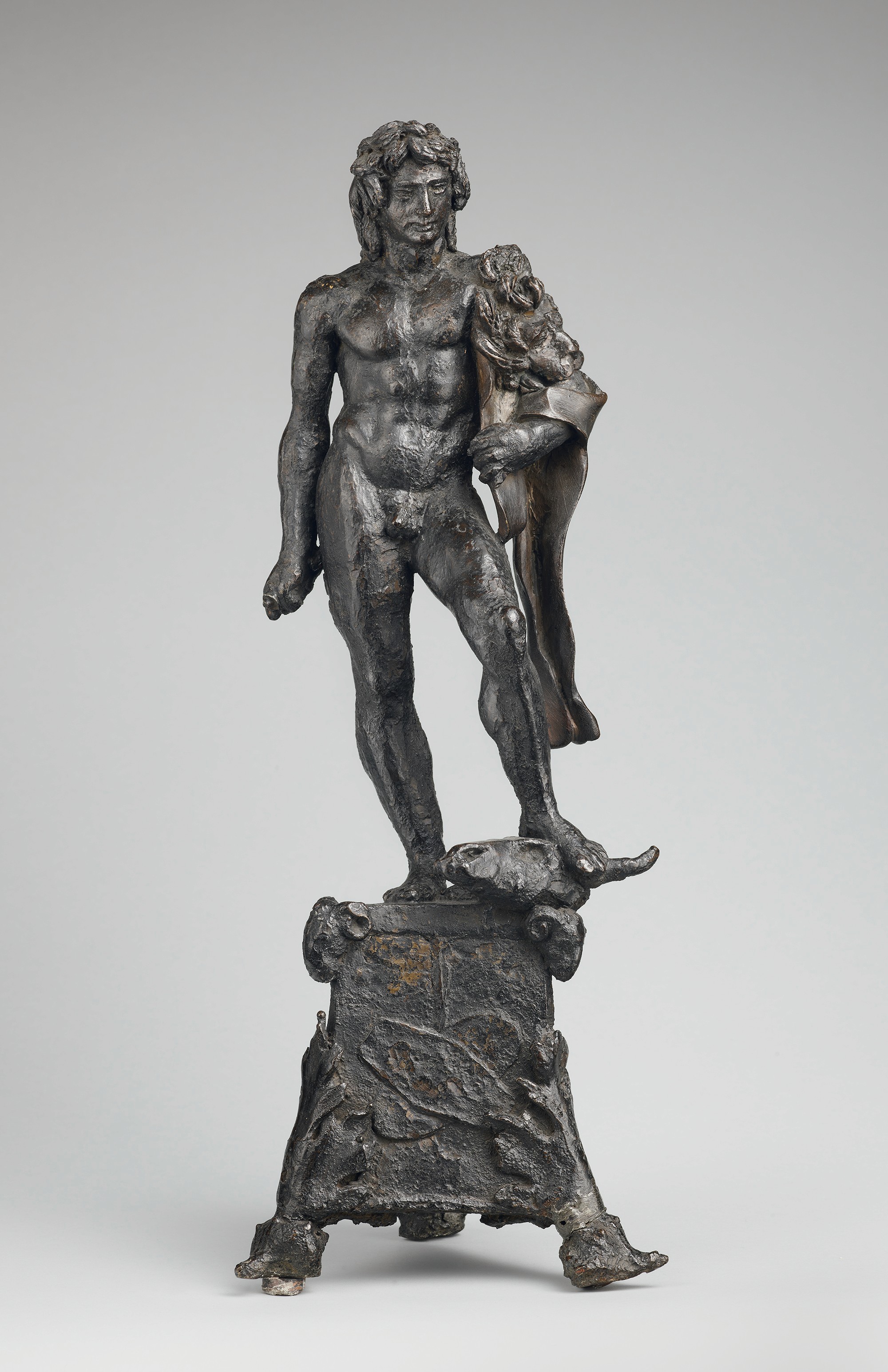
Attributed to Francesco di Giorgio (Italian,
1439−1501)
Hercules Triumphing over Achelous
Late 1480s (?)
Copper alloy
17 5/8 × 11 3/4 in. (44.8 × 29.8 cm)
The Frick Collection, New York
It culminates in a remarkable representation of Hercules confronting the river god Achelous, attributed through new research to Giovanni di Stefano.
The sculpture captures an unusual moment: Hercules smiles.
Rather than presenting heroism through force alone, the artist introduces wit, confidence, and personality.
The effect is unexpectedly human.
Restoring Siena to the Story
The exhibition ends around 1500, but the artistic legacy it examines extends well beyond that date.
The experiments of Siena's sculptors in anatomy, movement, emotion, and material helped shape the visual environment encountered by subsequent generations, including Leonardo and Michelangelo.
Their achievements challenge the idea that Renaissance innovation followed a single path outward from Florence.
Instead, the exhibition presents a more interconnected history, shaped by competition, collaboration, political circumstance, and the movement of artists and ideas.
For the Frick, this reassessment also reflects a longstanding institutional commitment to sculpture. Henry Clay Frick himself envisioned an expanded gallery for Renaissance and Baroque works, a plan that remained unrealized during his lifetime.
More than a century later, the museum continues that interest through exhibitions that unite close looking with new scholarship.
At the conclusion of the press preview, Dalvit offered a simple observation:
“Art history is always a story.”
It is a fitting conclusion to an exhibition that asks not only what the Renaissance produced, but how its history came to be written.
Siena does not need to replace Florence at the center of that history.
It deserves to be seen as an essential part of it.
ⒸAll Images and Press Materials Courtesy of The Frick Collection
EXHIBITION INFORMATION
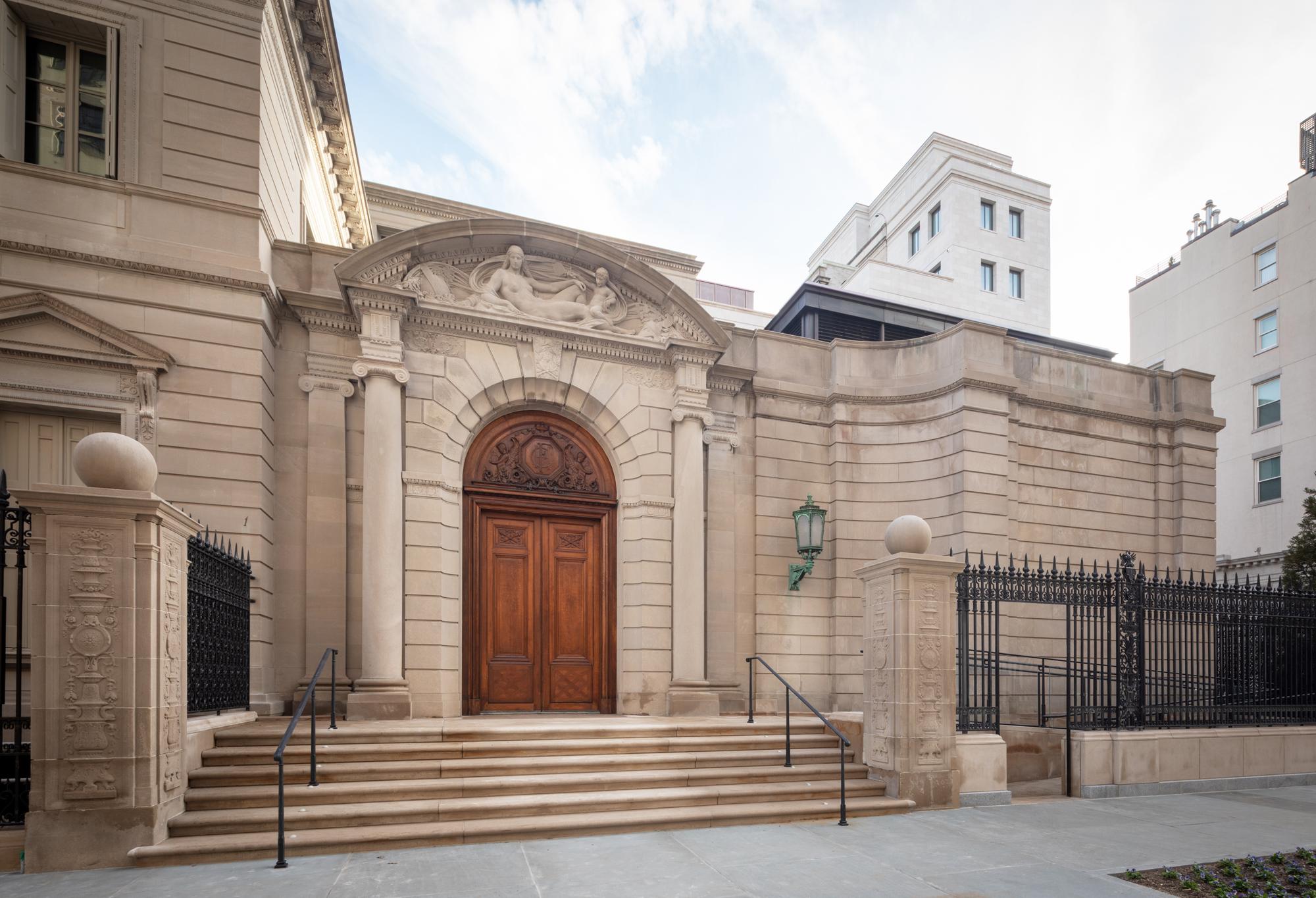
The Frick Collection
Siena: The Art of Bronze, 1450–1500
October 15, 2026 – January 18, 2027
Ronald S. Lauder Exhibition Galleries
1 East 70th Street, New York
Curator: Giulio Dalvit, Associate Curator
