Amanza Smith Is Making Room for Herself

There is a particular kind of loneliness in being the person everyone depends on. You can love that role deeply and still wonder whether you are enough. You can keep a family moving while carrying fears that have nowhere obvious to go.
Amanza Smith is an interior designer and artist known for her appearances on Netflix’s Selling Sunset. She is also a mother to two children, Noah and Braker. In this written interview with Brunch Magazine, she reflects on a difficult childhood, raising her children without their father present, and a serious illness that left her needing care herself—and shares the creativity, joy, and hope she carries into her next chapter.
When Amanza Smith speaks about motherhood,love and uncertainty sit side by side.
“Being a mother gave me a new suit of armor but also a new anxiety about raising my kids and whether I could be enough for them.”
Armor and anxiety. Protection and uncertainty. In that pairing is a version of strength many women will recognize: the kind that asks you to show up before you feel ready.
Across her answers to Brunch Magazine, Smith returns to the people she loves, the life she did not plan, and the parts of herself she refuses to lose. Her story includes a difficult childhood, raising her children without their father present, and a serious illness that left her needing care herself. She speaks about those experiences with gratitude, but without suggesting gratitude makes the pain disappear.
“I never want to pretend that anything I've been through has been easy to navigate or that it still doesn't affect me today.”
That honesty is where her story begins.
The Protection She Wanted to Give

Becoming a mother changed the way Smith understood her own childhood.
Looking at her daughter, she found herself confronting what had happened to her with a different kind of clarity. What she had once endured as a child became something she could scarcely imagine allowing another child to experience.
“I distinctly remember looking at my daughter and thinking, if even a quarter of what happened to me happened to her, I would be furious.”
The feeling was rage, she says. Motherhood brought into focus how much a child needs protection—and how profoundly she had missed it.
For some women, caring for a child also means meeting an earlier version of themselves: the girl who needed someone to notice, intervene, or stay. Smith describes a possibility within that complicated encounter.
“It's a crazy reality but a beautiful one because by being there for my children I get to rewrite some of my own story.”
Her past remains part of her. Yet the care she gives now allows her to make different choices, one relationship at a time.
Loving Through a Life She Had Not Planned

Smith had wanted her children to grow up with their father there for them.
“I wanted the full family. I wanted their dad to be there for them forever. I wanted them to have the security, protection and love that I never had.”
There is grief in those sentences: for the family she imagined, and for the security she hoped her children would never have to question.
When their father was no longer present, she was unprepared for the change. She says it has been tough. Her commitment to her children, however, is clear.
“I love them and I would do anything for them. That love is what guides me, and it's what drives me to do whatever it takes to make sure they always feel protected.”
Love does not give her control over every circumstance. It gives her a direction.
Asked what she hopes Noah and Braker will learn from watching her life, Smith acknowledges how much falls outside anyone’s control. Plans unravel. Dreams take a different shape. There are moments when making it through feels uncertain.
She wants her children to remember that she got back up. She also leaves space for frustration—a small but meaningful allowance in a story about resilience. Recovering does not require pretending you were never hurt.
When She Needed Someone Else

Then came a moment when determination could no longer carry her through the day.
During her serious spinal infection and surgeries, Smith found herself unable to do the things she was accustomed to doing.
“I felt helpless. For the first time, my body stopped me from doing anything.”
For someone whose children depended on her, that loss of independence was demoralizing. It disrupted daily life and challenged her understanding of herself as the person who could keep going.
But it also gave her time to consider what she wanted their life to feel like.
She wanted her family to be happy. She wanted more joy that did not depend on money, access, or fame. And she began to understand strength differently.
“Being strong isn't always about doing it all yourself.”
It is a simple sentence with a difficult lesson inside it. Women who are used to being needed may find it hard to become the one who needs. Accepting care can expose the vulnerability that competence has kept hidden.
For Smith, that experience changed her perspective for the better. A life built around caring for others also had to make room for her own needs.
A Woman With More Than One Name
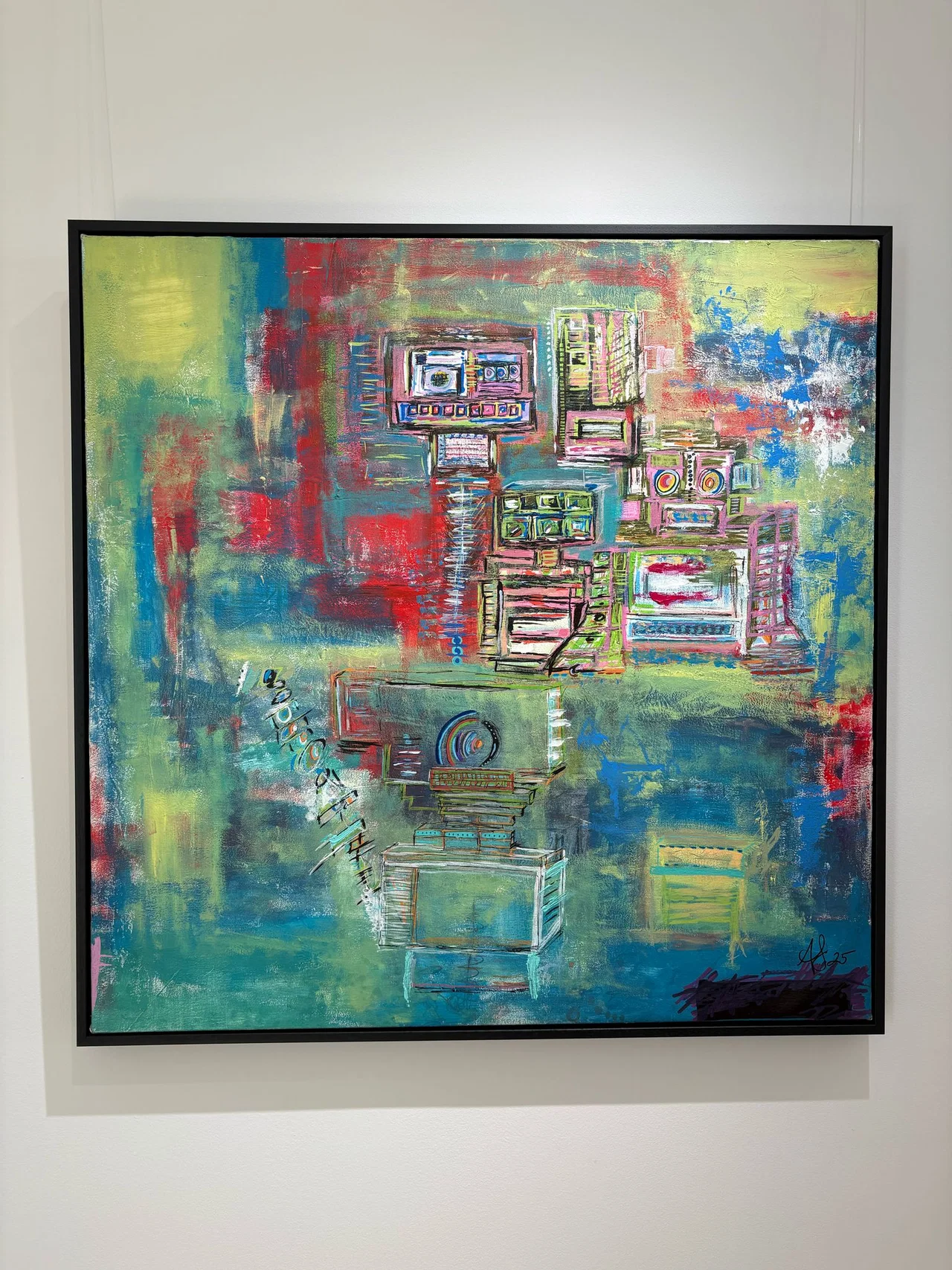
ⒸAmanza - Botsqi
Asked who she is when motherhood, work, and public recognition are set aside, Smith does not settle on a single identity.
She is a creative, a dancer, an encourager, a friend, a fashion lover—and, with a laugh, an “‘aging like fine wine’ enthusiast.”

ⒸMichelle-Behre-Photography_Amanza Smith x Transformer Table-Day One Evening
There is pleasure in that answer. After speaking about responsibility and survival, she gives herself permission to be many things.
“I am all of these things and more and I promised myself I would never dim any part of me.”
That promise reaches beyond a career ambition. It is about keeping access to the parts of a woman that can become quiet while she attends to everyone else: her playfulness, her friendships, her appetite for beauty, her desire to be loved.
Smith wants to live each of those parts fully. Together, she says, they make her who she is.
Making Room for Life

ⒸMichelle-Behre-Photography_Amanza Smith x Transformer Table-Day One Evening
Her collaboration with Transformer Table brings that idea into the home.
Smith is drawn to furniture that can adapt to the way people actually live. Some days she hosts four people; other days, ten. A friend might arrive with eight children. The space needs to respond.
“I call it furniture with a plot twist.”

ⒸMichelle-Behre-Photography_Amanza Smith x Transformer Table-Day One Evening
The phrase carries her humor, but it also reflects something she knows about change. As an artist, she paints over pieces and reworks them. A home, too, can allow its inhabitants to reconsider what they need.
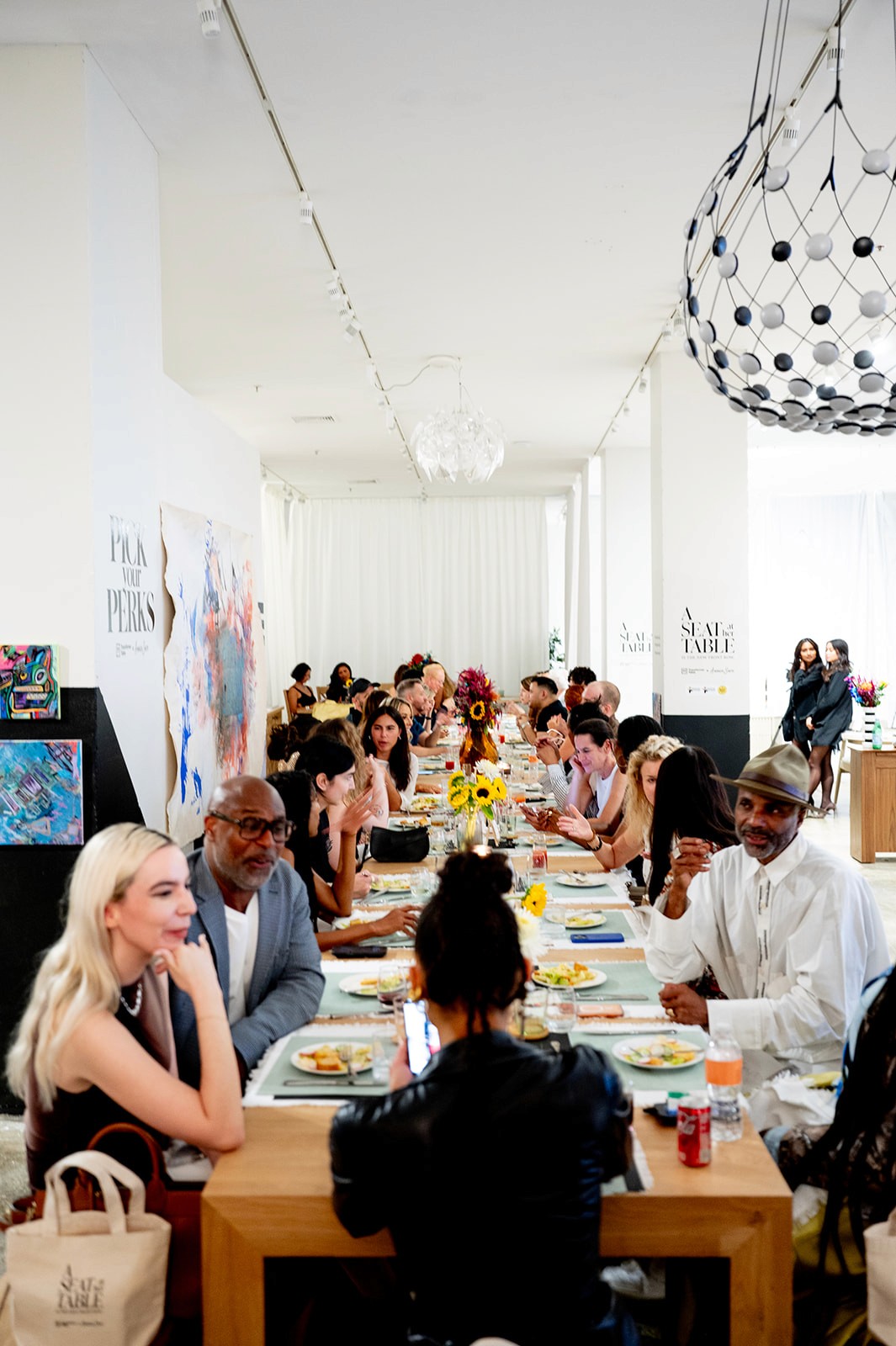
ⒸMichelle-Behre-Photography_Amanza Smith x Transformer Table-Day One Evening
In discussing the collaboration and the SoHo exhibition, A Seat at Her Table, she returns to hospitality: making room for people she loves, new faces, and new ideas.

ⒸMichelle-Behre-Photography_Amanza Smith x Transformer Table-Day One Evening
“Your home should grow with your life, not hold it back.”
After so many chapters shaped by circumstances she could not choose, there is something moving about that wish for flexibility. A space can welcome the life that arrives, even when it looks different from the one imagined.
Something to Look Forward To

When Smith considers the future, she allows herself a little romance.
“I'm a lover girl deep down, and I would love to meet someone who sweeps me off my feet.”
There are creative projects ahead, too. But the tenderness of that answer matters. The woman who has spent so much of her life protecting others still wants affection, surprise, and the pleasure of being swept away.
She hopes women of every age and background will see possibility in her story.
“Most of all, I want women of all ages and all backgrounds to know that it is never too late to shine and to do what you want.”

ⒸMichelle-Behre-Photography_Amanza Smith x Transformer Table-Day One Evening
Smith wants her children to remember a mother who never gave up. She also wants to live as a woman who never dimmed herself.
Those hopes belong together. The life she is making room for includes her children, her work, the people who gather around her table—and Amanza herself.
all photos courtesy of Transformer Table