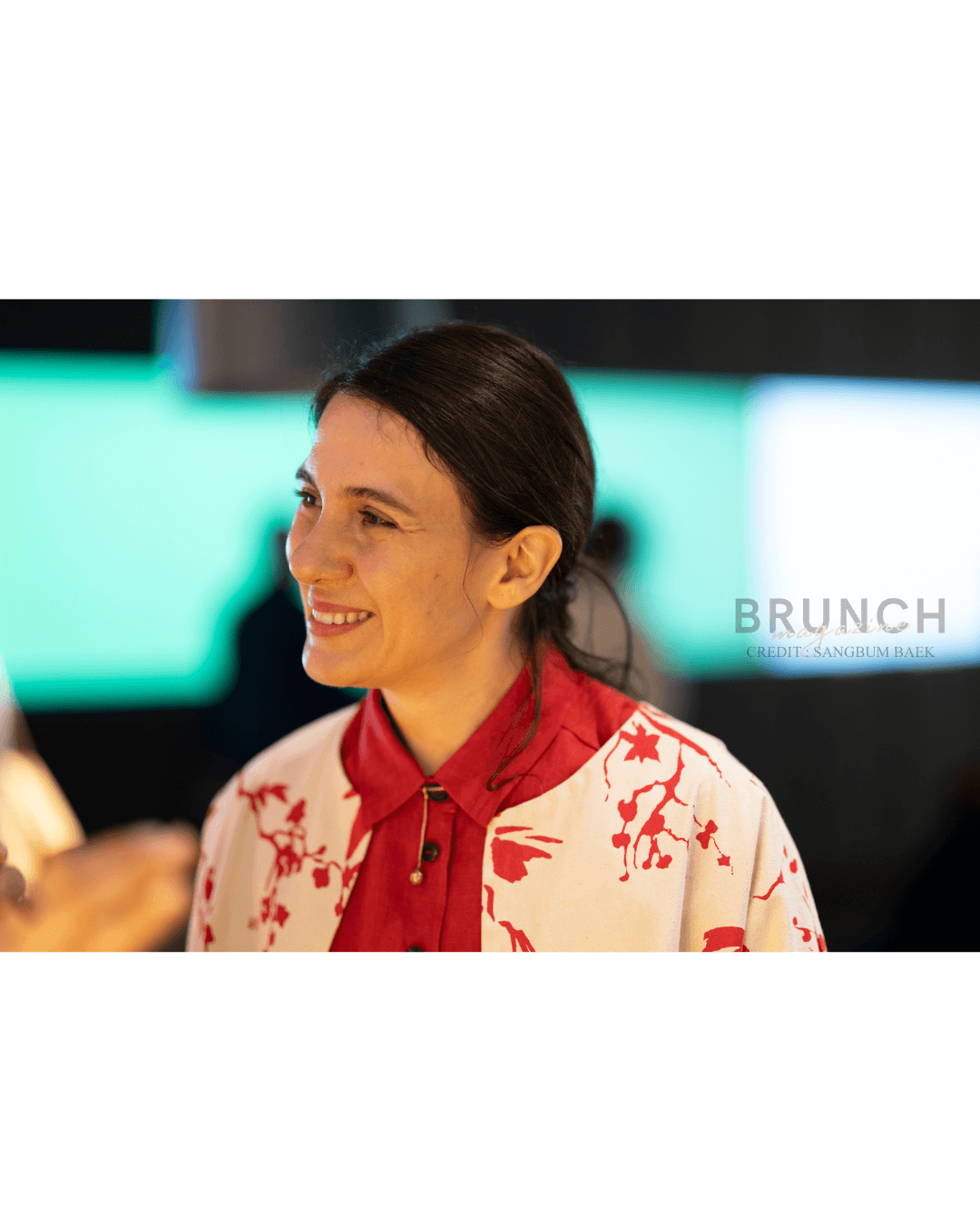
The Most Beautiful Festival of the Year : Salone del Mobile.Milano
Sanghee Gil
With 1,900 exhibiting brands and 316,342 visitors, Salone del Mobile.Milano 2026 was defined by extraordinary scale. Yet what impressed Brunch Magazine most was not its magnitude, but the leadership that transformed immense complexity into order, culture, and a clear sense of direction.
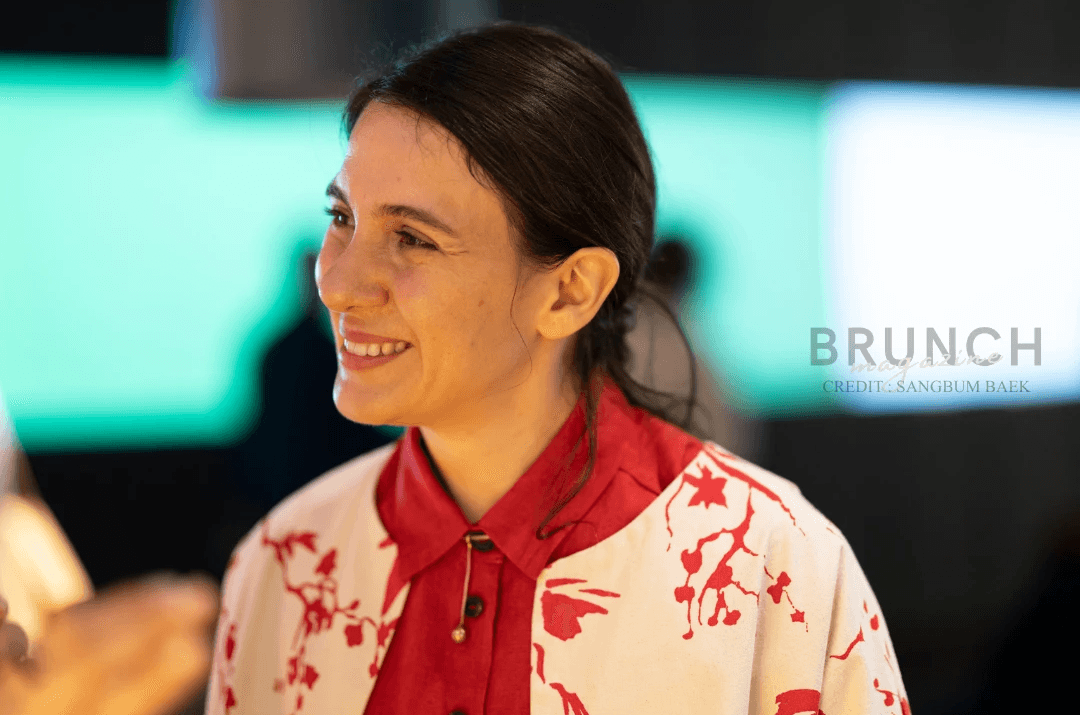
(Beyond the stage, Maria Porro treated every person she met with the same warmth, respect, and genuine smile)
In April 2026, Brunch Magazine witnessed the movement of a great river in Milan.
Companies, designers, architects, buyers, journalists, cultural leaders, and emerging creatives arrived from across the world, each carrying a different language, purpose, and story.
Yet their movements did not collide in disorder.
They came together like individual streams forming a powerful river, flowing naturally and confidently toward a wider sea.
This was Salone del Mobile.Milano 2026 as Brunch Magazine experienced it.
Behind that immense current, Maria Porro’s vision and attention could be felt throughout the fair.
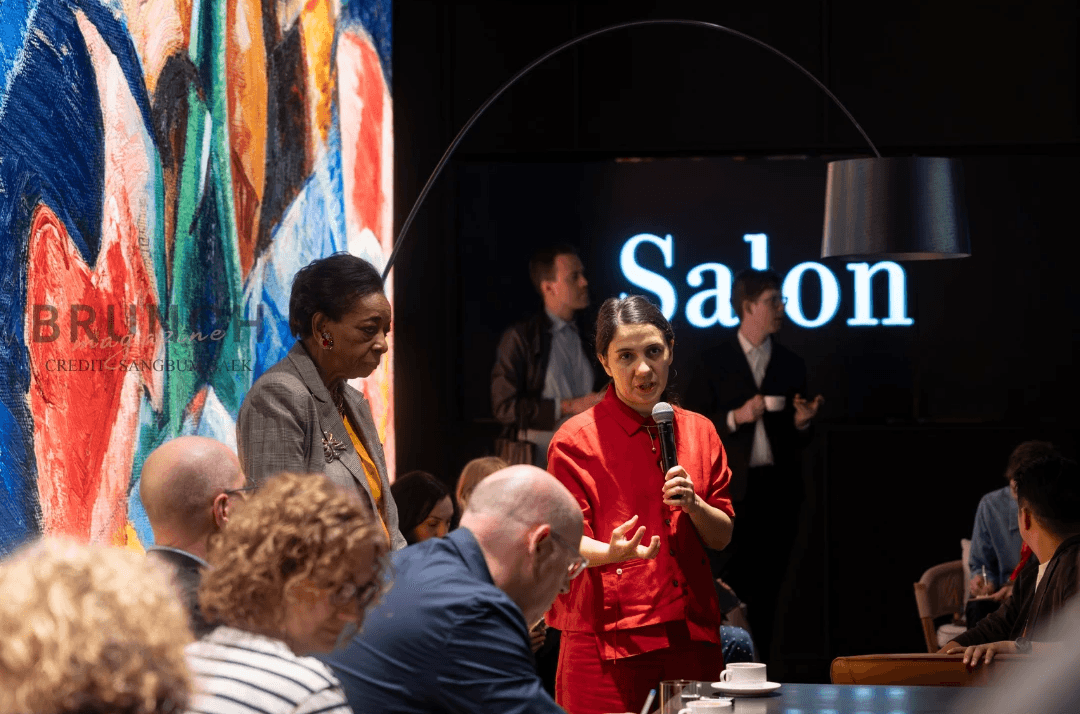
(Maria Porro answering every question with sincerity and thoughtful attention during the International Press Conference.)
A Vast System Beyond the Numbers
Held from April 21 to 26 at Fiera Milano Rho, the 64th edition of Salone del Mobile.Milano brought together 1,900 exhibiting brands from 32 countries.
More than 169,000 square meters of net exhibition space had been fully allocated before the event began, while 316,342 visitors from 167 countries attended over six days.
The result represented a 4.5 percent increase from the previous year, with international visitors accounting for 68 percent of professional attendance.
The numbers alone were remarkable.
The event recorded 6,039 media visits, including 2,828 from international press, while 8,057 Italian students and 6,361 international students attended.
At SaloneSatellite, 700 designers under the age of 35, representing 39 countries, presented their work.
The present and future of the global design industry had gathered in one place.
Yet what most impressed Brunch Magazine was not simply the size of the event.
At the world’s largest design fair, hundreds of thousands of people moved through an environment filled with thousands of presentations, meetings, installations, and conversations.
Nevertheless, the experience never felt like an unmanageable mass.
Entrance procedures, exhibition zones, visitor circulation, media access, business meetings, cultural programs, and institutional activities all appeared to operate within a shared rhythm.
In 2026, Salone introduced a new wayfinding system designed to make the enormous exhibition grounds easier to understand and navigate.
The official application provided an interactive map, exhibitor directories, events, talks, and thematic routes through the fair.
Twenty-four curated itineraries helped visitors discover companies, ideas, and projects that might otherwise have remained unseen.
The system did not merely direct people toward destinations.
It created opportunities for discovery and designed the conditions for encounters between people, brands, and ideas.
Excellent organization rarely calls attention to itself.
It prevents visitors from becoming lost or overwhelmed. It makes complexity appear clear and allows vast systems to move organically.
The ability to make the complicated feel effortless is one of the highest expressions of thoughtful design.
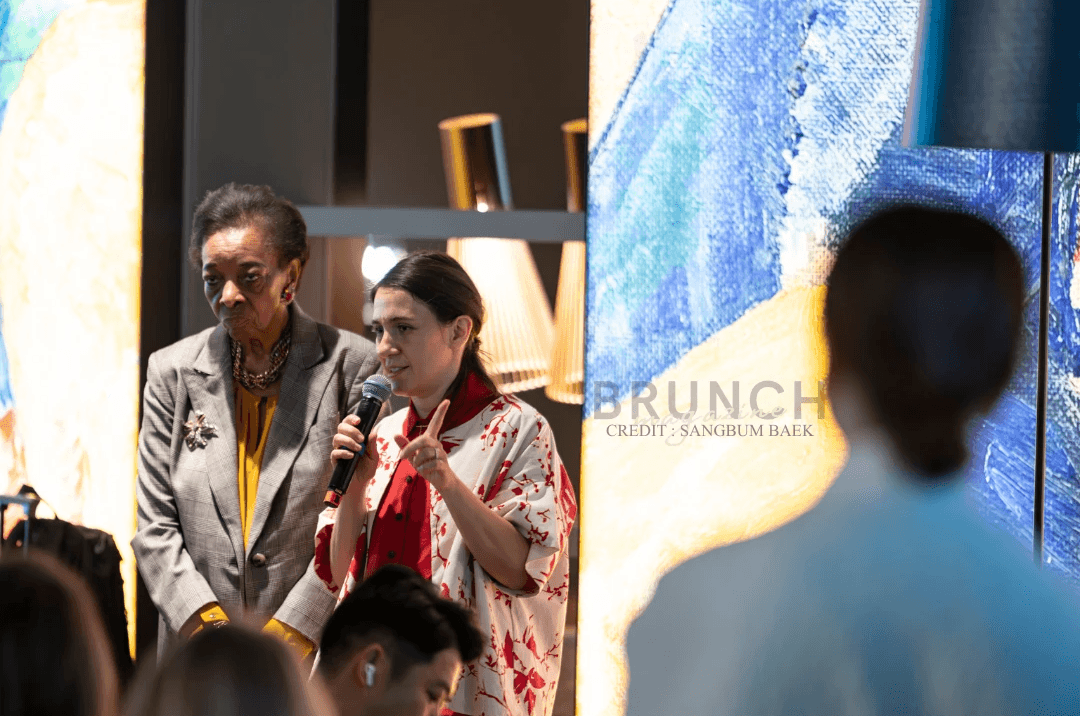
(Maria Porro joined Marva Griffin Wilshire, founder and curator of SaloneSatellite, in reaffirming a shared commitment to supporting the next generation of designers through culture, education, and international exchange.)
“Without Culture, There Is No Project”
In her conversation with Brunch Magazine, Maria Porro did not describe Salone as a conventional furniture trade fair.
For her, Salone is an ecosystem in which industry, culture, education, archives, hospitality, experimentation, and international exchange remain in constant dialogue.
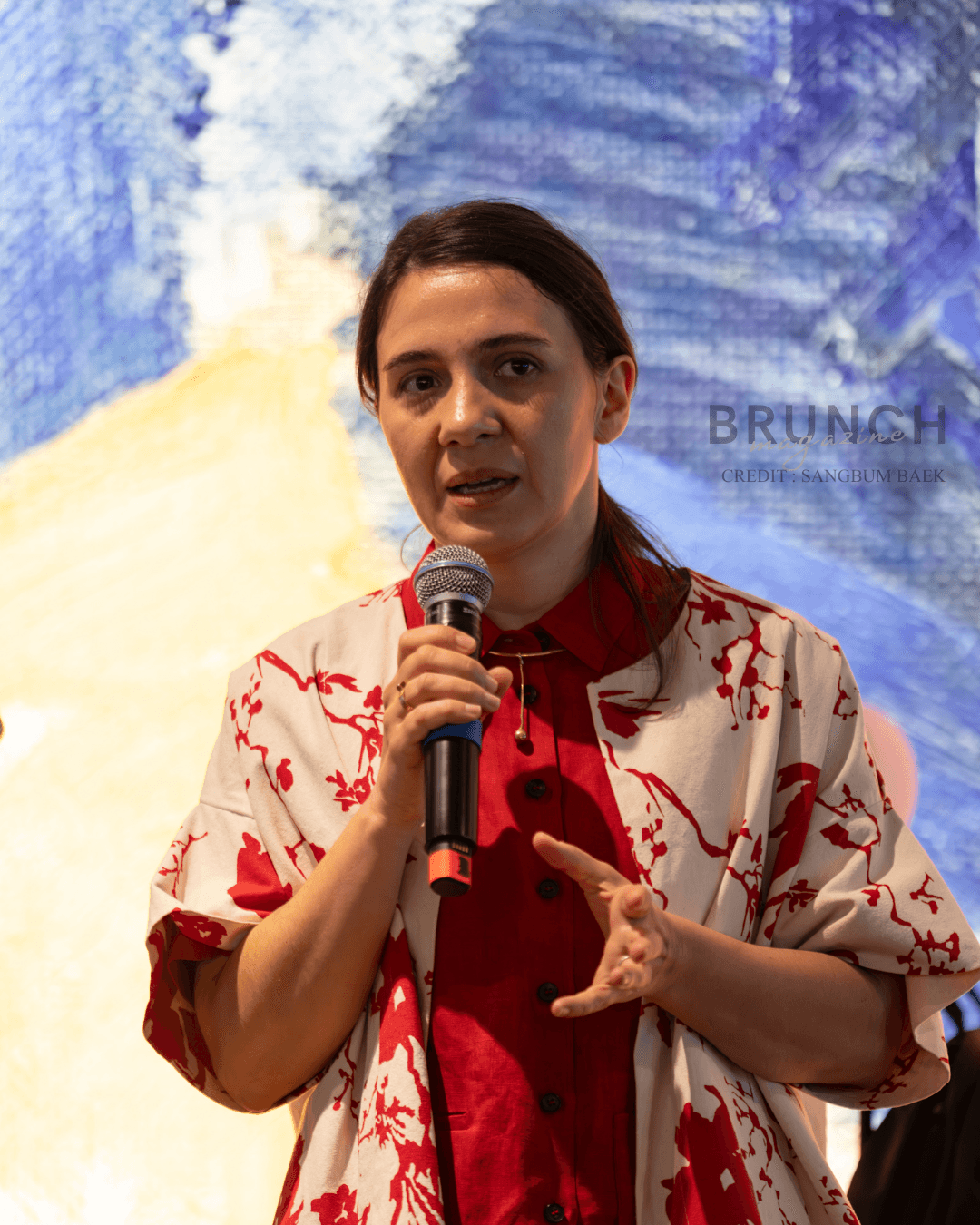
“Without culture there is no project, and without project there is no Salone.”
Her words resonated throughout the entire 2026 edition.
Furniture, lighting, kitchens, bathrooms, materials, and technology were not presented as isolated commercial objects.
Objects were connected to spaces.
Spaces were connected to human behavior, emotion, and well-being.
Design became a language through which industries and societies could ask how people might live together more thoughtfully.
As Porro told Brunch Magazine:
“Design communicates how we choose to live together.”
Design reveals priorities, values, and behavior.
It shows how people relate to time, resources, technology, the environment, and one another.
Porro’s understanding of design extends far beyond form.
For her, design is a language through which societies communicate the lives they wish to build.
That philosophy was embedded in the structure and programming of Salone del Mobile.Milano 2026.
From Products to Systems
The 2026 edition protected Salone’s heritage while boldly expanding its boundaries.
The newly introduced Salone Raritas brought together 28 galleries from 12 countries.
By welcoming collectible design, rare works, craftsmanship, and experimental objects into a fair traditionally rooted in industrial production, Salone created a new conversation between mass production and unique pieces, commerce and culture, industry and art.
Salone also revealed the masterplan for Salone Contract, developed with OMA under the direction of Rem Koolhaas and David Gianotten and scheduled to launch in 2027.
The project expands the discussion beyond individual products toward complete environments and systems, including hospitality, public spaces, workplaces, real estate, marine design, and large-scale architectural projects.
The memory of the city also became part of the contemporary design conversation.
Through Common Archive: La Notte Bianca del Progetto, the Salone Observatory brought together 19 public and private institutions.
More than 150 historical architecture and design collections were opened to international visitors through guided tours and public discussions.
The program sold out.
This was more than an elegant presentation of the past.
It connected archives with contemporary designers, researchers, students, and industries, allowing historical knowledge to become a starting point for new forms of education and creation.
As Porro has explained, heritage does not remain alive through passive preservation.
It survives when each generation is willing to reinterpret it.
“A legacy only remains alive if it is capable of evolving.”
The tradition she protects is not a static past.
It is a cultural inheritance that must be continuously translated in order to move forward.

(Italian Prime Minister Giorgia Meloni Visits Salone del Mobile.Milano 2026)
How the World Viewed Milan in 2026
International media also recognized the energy and transformation of Milan Design Week 2026.
Despite war, economic uncertainty, and travel disruptions, international coverage described Milan as a place filled with vitality and exchange.
The fair and the citywide programs were presented as one of the most dynamic meeting points in the global design calendar.
Architectural Digest described Milan Design Week as the design world’s most beloved festival.
The publication also observed that, after years in which the expansion of citywide events had drawn some members of the design community away from the fairgrounds, stronger curation and initiatives such as Salone Raritas were encouraging visitors to return to the core of Salone.
Wallpaper presented the week as the year’s largest design event, following Salone Raritas, the OMA-led Contract initiative, and the many exhibitions, installations, cultural programs, and newly activated locations across Milan.
Interior Design noted that few voices were as influential as Maria Porro’s at a moment when the world’s most important design platform was redefining its future.
International observers were not responding to scale alone.
They were responding to the ability of Milan to bring tradition and new markets, industry and culture, established global companies and emerging generations into the same conversation.
The result was not a competition in which one force displaced another.
It was a platform capable of generating new possibilities through coexistence and exchange.
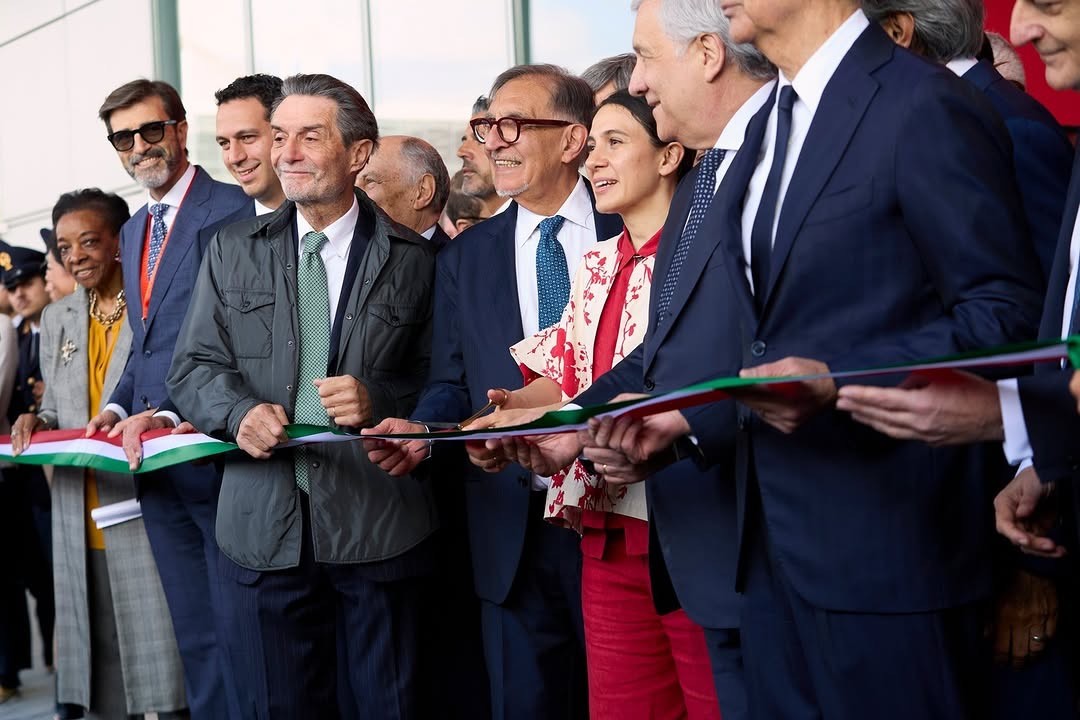
When Leadership Becomes Visible
Maria Porro studied scenography and worked in theater before joining Porro, the family design company now in its fourth generation.
Her experience across art, performance, industry, and family enterprise may help explain why she appears to understand Salone as an immense stage.
It is not a stage dominated by a single figure.
It is a stage on which thousands of participants must be able to find their roles and contribute to the complete picture.
In 2021, at the age of 37, Porro became President of Salone del Mobile.Milano and the first woman to hold the position.
Yet it would be insufficient to explain her leadership only through the symbolism of being the organization’s first female president.
Her influence is visible not merely in representation, but in outcomes, systems, relationships, and a renewed strategic direction.
Porro told Brunch Magazine:
“Leadership, especially today, is less about imposing a vision and more about creating connections.”
Her leadership operates precisely in this way.
She connects companies with designers, industry with art, and Milan with the wider world.
She connects historic archives with young creatives and Italian manufacturing traditions with emerging design sensibilities across Asia and other global regions.
As she explained in her conversation with Brunch Magazine, the future of Salone does not depend on reproducing Milan in other cities.
“The future is not replication. It is connection.”
Milan remains the center, but not a center that asks the rest of the world to become like Milan.
It is a center capable of respecting the cultural identities, institutions, universities, industries, and creative communities of other cities while building long-term relationships with them.
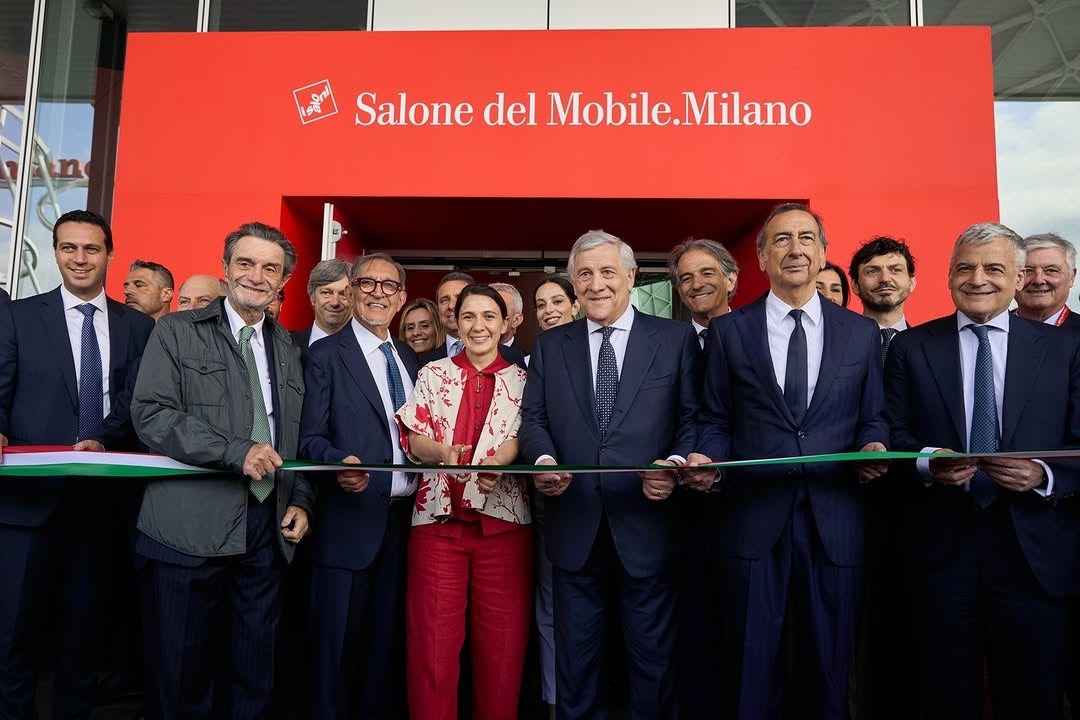

A Mother of Three and a Leader in Global Design
Maria Porro is also a mother of three.
She has spoken in previous interviews about taking her children to La Scala in Milan and spending time with them camping in the forest.
Her desire to let her children experience both culture and nature reflects something essential in her design philosophy.
She does not separate industry from culture, work from life, heritage from experimentation, or human experience from professional responsibility.
The fact that she is a mother should not be used as a sentimental accessory to frame the achievements of a female leader.
Nevertheless, there is something deeply admirable about a person who continues to navigate family, work, responsibility, curiosity, heritage, and change while directing the future of the world’s most influential design event.
Porro stands in leadership without erasing any part of her life.
She does not sacrifice her humanity in order to establish authority.
She does not treat sensitivity as weakness, and she does not place the ability to listen in opposition to the ability to make decisive choices.
This is one of the defining strengths of Maria Porro.

Her Hand Was Everywhere, but Her Ego Was Not
Reflecting on the final results of the 2026 edition, Porro explained that Salone does not simply gather the design world in one location.
It makes that world move.
Its role is to transform attendance into relationships, content into opportunity, and complexity into direction.
Her statement closely reflected what Brunch Magazine observed on the ground.
The fair did not move like a great river by accident.
The natural circulation of visitors, the ability of companies to communicate both their history and future, and the opportunity for audiences to think beyond products toward culture and ways of living were all made possible by countless decisions.
Coordination, trust, collaboration, discipline, and attention shaped the flow.
Porro’s hand could be felt throughout the event, but her ego never appeared larger than the event itself.
The most accomplished leadership is often revealed not when the leader becomes the most visible person in the room, but when other people are able to shine within the system the leader has built.
It emerges when teams, partners, creatives, and companies can exercise their own abilities while still moving toward a shared direction.
It appears when complexity is not merely controlled, but given the conditions to develop into meaningful relationships.
For this reason, Brunch Magazine considers Maria Porro one of the defining leaders of 2026.
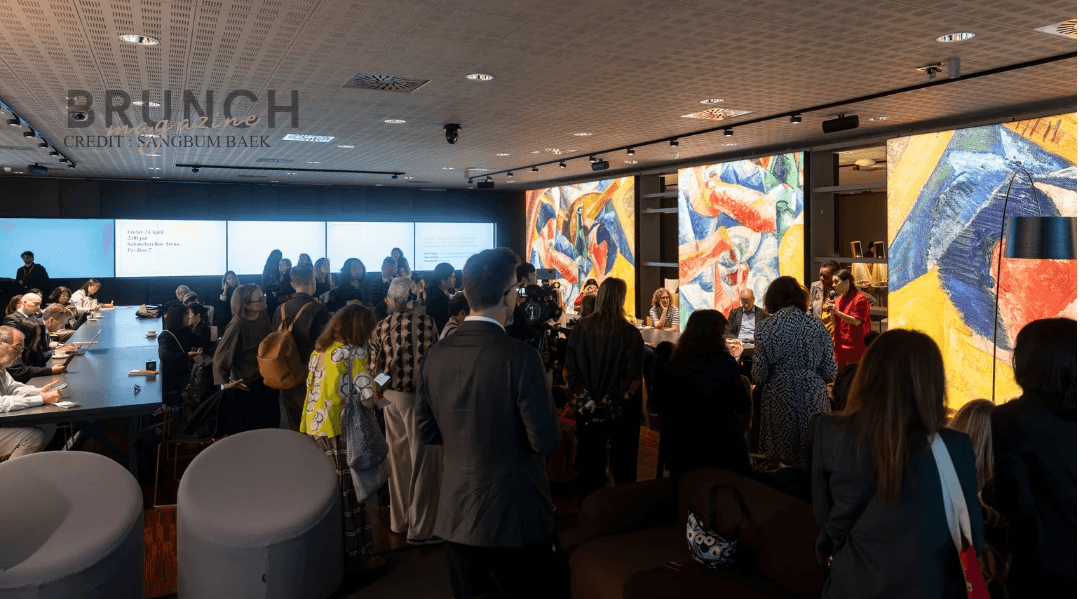
The Most Beautiful Festival of the Year
Salone del Mobile.Milano 2026 offered a model from which the global design market can learn.
It created a future without erasing the past.
It pursued commercial achievement without abandoning culture.
It demonstrated the influence of major international brands while preserving space for young designers whose names are not yet widely known.
It celebrated beauty without avoiding difficult questions concerning the environment, resources, responsibility, longevity, and sustainability.
At the center of that achievement stood Maria Porro.
At the conclusion of her interview with Brunch Magazine, she identified the force that continues to drive her.
It was not authority or ambition.
“Curiosity, above all.”
The desire to observe change, interpret it, and create platforms through which people can share ideas remains central to her work.
At Salone del Mobile.Milano 2026, Brunch Magazine was reminded that design is far greater than the ability to make objects beautiful.
Design is a system that considers how people move.
It is a strategy that helps industries navigate transformation.
It is a language connecting generations, cultures, cities, and the wider world.
Leadership is the act of creating a path through which all of those currents can move toward the same sea without losing their individual identities.
A mother of three, a guardian of a family design legacy, and a leader shaping the future of the global design industry, Maria Porro guided Salone del Mobile.Milano toward becoming the most beautiful festival of the year.
Not simply because it was visually magnificent.
It was beautiful because beneath its extraordinary scale was a profound sense of responsibility toward people, culture, industry, and the future.
Photography by Baek Sang Bum